
Politics
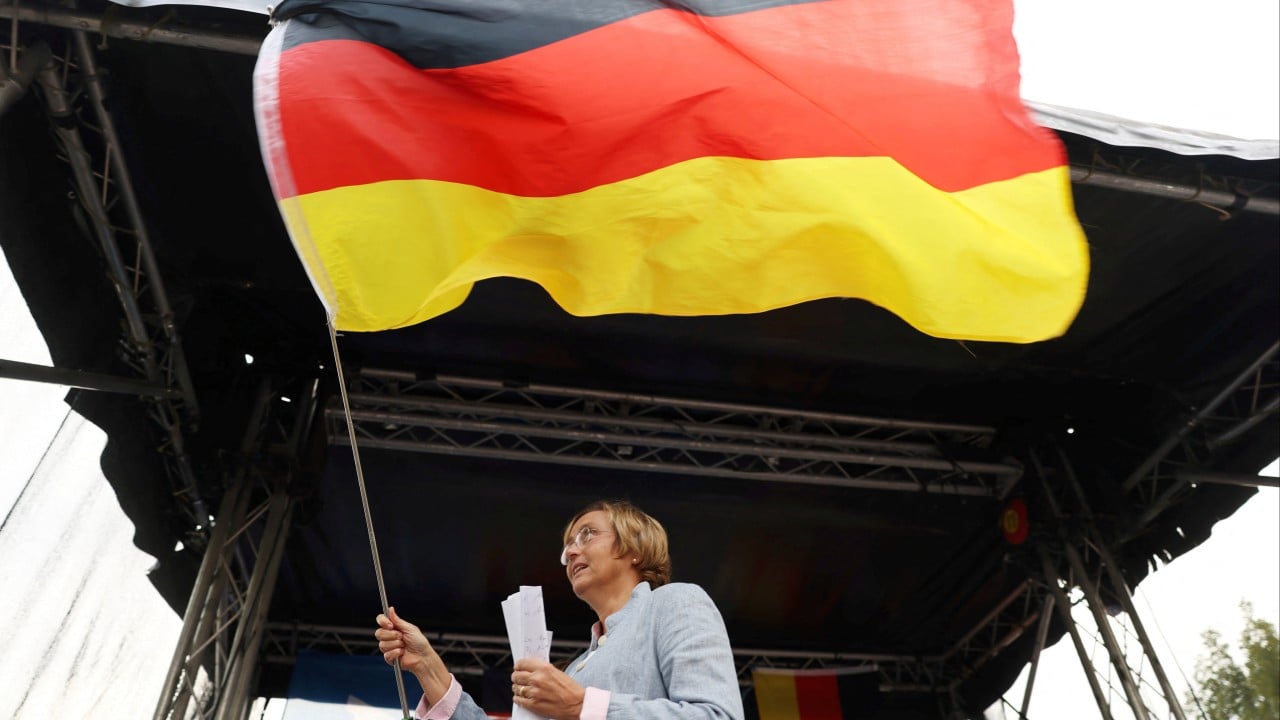
Far-right AfD party won big in Saxony-Anhalt. Will it affect Germany’s approach to China?
Key Points
Far-right AfD party won big in Saxony-Anhalt. Will it affect Germany’s approach to China? In the wake of a key state election, observers say Germany’s economic pressures will persist, no matter who is in power In the state it has governed in coalition since 2002, the CDU’s vote plummeted from 37.1 per cent in the previous election to 17.2 per cent.
Far-right AfD party won big in Saxony-Anhalt. Will it affect Germany’s approach to China?
In the wake of a key state election, observers say Germany’s economic pressures will persist, no matter who is in power
In the state it has governed in coalition since 2002, the CDU’s vote plummeted from 37.1 per cent in the previous election to 17.2 per cent.
The AfD, which calls for expelling immigrants, cutting aid to Ukraine and repairing diplomatic ties with Moscow, looked unlikely to form what could be Germany’s first far-right state government since World War II, because it fell short of a majority and appears unable to form a coalition with other parties.
AfD co-leader Alice Weidel said in Berlin that the party was aiming for 40 per cent in the 2029 general election, up from its current first-place polling of 28 per cent.
Analysts say the results in Saxony-Anhalt will have an indirect effect on Germany’s China policy.