
Politics
Government to study quality of life indicators, wary of KPIs that ‘drive the wrong behaviour’: Chan Chun Sing
Key Points
Government to study quality of life indicators, wary of KPIs that ‘drive the wrong behaviour’: Chan Chun Sing Mr Chan also responded to MP suggestions during the debate on political salaries, such as providing clearer targets to ascertain the effectiveness of political leadership. Singapore’s government will look into how it can broaden indicators on the quality of life in the country, but does not want to set the wrong goals that may “drive the wrong behaviour”, said Coordinating Minister...
Government to study quality of life indicators, wary of KPIs that ‘drive the wrong behaviour’: Chan Chun Sing
Mr Chan also responded to MP suggestions during the debate on political salaries, such as providing clearer targets to ascertain the effectiveness of political leadership.
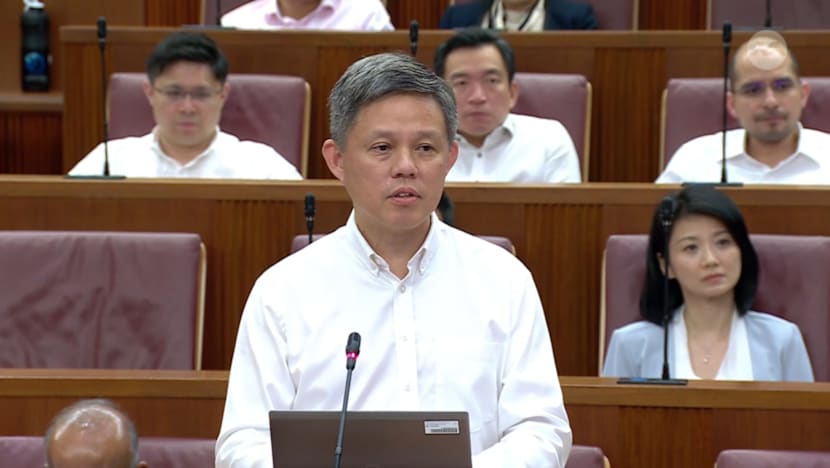
SINGAPORE: Singapore’s government will look into how it can broaden indicators on the quality of life in the country, but does not want to set the wrong goals that may “drive the wrong behaviour”, said Coordinating Minister for Public Services Chan Chun Sing on Thursday (Sep 10).
He was speaking in parliament during a debate on the government’s response to a review committee’s recommendations on salaries for political appointment holders and Members of Parliament (MPs).
The committee had recommended that a quality of life measure be included in the national bonus framework, which determines part of the variable pay component for political appointment holders.
The national bonus is currently tied to four indicators: the unemployment rate, real income growth rate at the median level, real income growth rate at the bottom 20 per cent and real gross domestic product growth rate.
During the debate, Nominated Member of Parliament (NMP) Kenneth Poon said a quality of life indicator would ask a broader question on whether Singaporeans are doing well.
He suggested four dimensions of social progress for consideration: material adequacy, access to essential services, social connectedness to Singapore and subjective well-being.
Another NMP, Dr Haresh Singaraju, asked who would build the quality-of-life measure, when it would be presented to parliament and whether it would be published, even if it does not count toward the national bonus.
Mr Chan said the government wants to broaden the indicator, but there has to be data that can be collected and organised into a stable series before targets can be set.
It is not easy to set such indicators because they may be qualitative rather than quantitative, and some factors should be measured over multiple years, rather than a single year, he said.
“We certainly do not want to set the wrong KPI (key performance indicators) to encourage or drive the wrong behaviour,” he added.
Mr Chan said some important things in life cannot be measured, and Singapore must be careful not to only value the things that can be measured.
He said the Public Service Division will look into this and come up with a proposal on what is feasible and possible.
Mr Chan, who is also defence minister, responded to a question on whether the government would consider including indicators that reflect Singapore’s capacity to thrive in the medium- and long-term, beyond the immediate social and economic performance.
“The job of the Cabinet, the job of the leadership team, is not just about meeting the KPIs on a yearly basis, and the here and now,” he said.
In his years of public service, he learnt that pre-empting a problem so that the public does not even need to deal with it or know about it is the “mark of success”.
“The mark of success is not how well we do the firefighting. The mark of success ... more often than not, is how we have prevented the fire in the first place,” he said, adding that this generally requires leaders to take a longer-term view.
OTHER SUGGESTIONS
NMP Kenneth Goh suggested that the benchmark salary formula should consider the wages of roles in the private sector that “reflect the skills, judgment, complexity and weight of responsibility we expect of political office holders”, instead of using the median annual income of the top 1,000 Singaporean earners.
Mr Chan said the top 1,000 Singaporean earners serve as a broad proxy, and are not meant to identify jobs comparable to ministers.
He added that when the framework first started, only certain vocations were used, but that format was deemed too narrow.
“We agree with you that we would like to find job roles that are more comparable rather than just from a financial perspective. Then the question is, how do we identify those roles, and will we get back to the same situation where we first started?” he said.
Associate Professor Goh also suggested considering the average earnings of the comparative group in the private sector over three to five years, as there may be fluctuations from year to year.
Mr Chan said that is a fair idea, but noted that the performance of the government cannot be measured year by year, and that there could be a change in government.
“Those are practical difficulties as we consider this particular suggestion,” he said, adding that the time cycle for results can differ widely across different government ministries.
In response to Dr Singaraju’s suggestion that the government be clear about what its target was for outcomes that it reports, Mr Chan said governance is not about a series of KPIs, and Singapore has to be careful about how and what is published.
“There are many things that we may not be able to publish. How do we account for the tough negotiations that MTI (Ministry of Trade and Industry) has to undertake behind the scenes to secure our trade agreements?” asked the minister.
“How do we share with the public the sensitive things that MFA (Ministry of Foreign Affairs), MINDEF (Ministry of Defence) or MHA (Ministry of Home Affairs) has to work behind the scenes to keep the threats at bay?”
GIVING SINGAPORE A BETTER CHANCE
Mr Chan also reiterated that increasing the salaries of political appointment holders is meant to give Singapore a better chance of assembling a strong team of leaders that can and will take the country forward.
The most important factor is the burden of responsibility to get it right for Singaporeans, he said.
“This is not a business venture. It is about the lives and livelihoods of Singaporeans. If a business fails, we can start a new one. But if Singapore fails, we are finished,” he said.
Money should not be the primary consideration, but it should be discussed as one of many practical considerations.
Singapore needs a diverse team comprising younger members who bring fresh energy, ideas and perspectives, as well as experienced people who can take on more significant responsibilities.
It must also not exclude established individuals with deep experience who can contribute substantially.
“Finding that combination is hard enough. We should not make it harder, not just for this government, but for any government, by narrowing the field even before the selection begins,” he said.
“The wider the pool, the more choices we have, the greater our chances of finding and composing the team that Singapore deserves.”
Chan Chun Sing Government (PERSON)
Chan Chun Sing Mr Chan (PERSON)
SINGAPORE (LOCATION)
Coordinating Minister for Public Services (ORG)
Chan Chun Sing (PERSON)
Parliament (ORG)
Kenneth Poon (PERSON)
Singaporeans (ORG)
Dr Haresh Singaraju (PERSON)
Chan (PERSON)
KPI (ORG)
the Public Service Division (ORG)
Cabinet (ORG)