
Technology
Commentary: The changing face of terrorism 25 years after 9/11
Key Points
Commentary: The changing face of terrorism 25 years after 9/11 Twenty-five years after the September 11 terror attacks, Singapore and the region face a rapidly evolving landscape of terrorism and extremism threats, says RSIS’ Kumar Ramakrishna. SINGAPORE: The attacks in New York and Washington on September 11, 2002, that killed nearly 3,000 people were a catalyst for transnational terrorism. Southeast Asia felt its repercussions through the terror bombings of two nightclubs in Bali,...
Commentary: The changing face of terrorism 25 years after 9/11
Twenty-five years after the September 11 terror attacks, Singapore and the region face a rapidly evolving landscape of terrorism and extremism threats, says RSIS’ Kumar Ramakrishna.
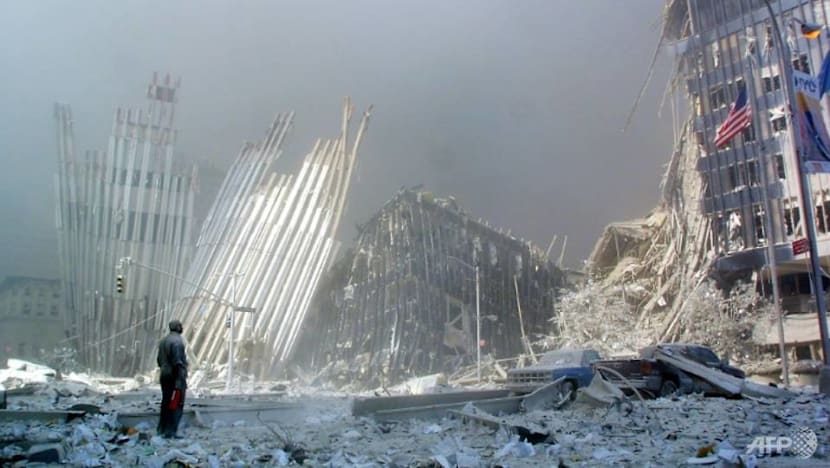
SINGAPORE: The attacks in New York and Washington on September 11, 2002, that killed nearly 3,000 people were a catalyst for transnational terrorism.
Southeast Asia felt its repercussions through the terror bombings of two nightclubs in Bali, Indonesia on Oct 12, 2002, perpetrated by the Al-Qaeda-linked Jemaah Islamiyah (JI) terrorist network.
The threat of organised terrorist networks gripped regional governments throughout the 2000s, but risks have evolved significantly. Since the mid-2000s, militant groups like Islamic State have exploited the internet and social media to spread propaganda, leading to the radicalisation of vulnerable youth.
The landscape is now also defined by the rise of far-right extremism and “salad bar” extremism, which adds complexity to counterterrorism efforts by states and watchdogs.
BEWILDERING RANGE OF EXTREMIST ONLINE CONTENT
The threat from Islamic State-linked regional groups persists, especially in Indonesia and the southern Philippines, though at a generally lower level than in the past.
The bewildering and diverse range of extremist content on social media has enabled even further ideological mutation. Disaffected youth worldwide have idiosyncratically combined individual grievances and diverse ideological elements, producing “composite violent extremism”, or “salad bar extremism”.
In Southeast Asia, young individuals are being influenced by Islamic extremism, far-right extremism, antisemitism, and most recently, nihilistic violent ideas. Nihilistic violent extremism appears to be of increasing importance. Violence is carried out for non-ideological, personal reasons, with the violence often being the end in and of itself.
This trend has been particularly apparent regionally in the form of the so-called True Crime Community – an online community of supporters of mass shooters and serial killers.
Such supporters idolise school shooters and have attempted to carry out similar attacks in real life. For instance, in November 2025, an Indonesian youth attempted to bomb his high school in Jakarta. While he had inscribed on his fake rifle a slew of far-right extremist concepts and names, Indonesian police assessed that the youth had been influenced by the True Crime Community.
In addition, Singapore has experienced a few cases of “salad bar” extremism involving youth. While these cases had been variously influenced by a diverse mix of jihadist, far-left, far-right and misogynistic ideas, they had also been exposed to nihilistic True Crime Community ideas online.
THREE LESSONS LEARNED
Three key lessons emerge from this survey of the ever-evolving terrorism and extremism terrain since 9/11.
First, while for the past decade there has been much policy attention on the youth radicalisation issue, it is clear that transnational militant networks remain a challenge in the region.
It is generally understood today that a judicious mix of military or police power and softer measures addressing extremist narratives and underlying grievances is needed to deal with the threat.
Hence while Indonesian authorities have applied kinetic force against Islamic State-linked networks, they have complemented these with persuasion and negotiations. Through such a mixed strategy, the old JI network formally disbanded in 2024.
Likewise, in the southern Philippines, militant violence has declined since the longstanding issue of Bangsamoro political autonomy was addressed with the setting-up of the Bangsamoro Autonomous Region of Muslim Mindanao (BARMM) in 2019. Counterterrorism legislation, cross-border intelligence sharing and operational cooperation have also been vital for dealing with the physical terror threat across the region.
Second, in the increasingly complex domain of countering youth radicalisation, simply debunking extremist ideologies alone is insufficient. With the rise of composite, nihilistic violent extremism, broader measures are required to build overall youth resilience to violent ideologies.
Such broad-ranging resilience includes building digital literacy among youth; embedding them in stable family, peer and community relationships; providing balanced perspectives on hot-button geopolitical issues like the Gaza conflict; and shielding them as far as possible from online extremist propaganda and disinformation – increasingly AI-enhanced – through legislation like the Online Criminal Harms Act.
Counterterrorism agencies aside, such a holistic approach must involve other stakeholders, including civil society groups, social media firms, think tanks, religious bodies, educators, counsellors and rehabilitated extremists.
Finally, the boundary between counterterrorism and other national security domains such as cybersecurity for instance, may be blurring. A 19-year-old Singaporean youth recently detained under Singapore’s internal security legislation had planned cyberattacks against the websites of local and foreign Muslim organisations he considered deviant.
Twenty-five years after 9/11, Singapore and the region face a rapidly evolving terrorism and extremism threat environment. They will need to apply strategic clarity and a diverse suite of policy tools on a whole-of-society basis.
Kumar Ramakrishna is Professor of National Security Studies, President’s Chair in National Security Studies and Dean of the S Rajaratnam School of International Studies.