
Science
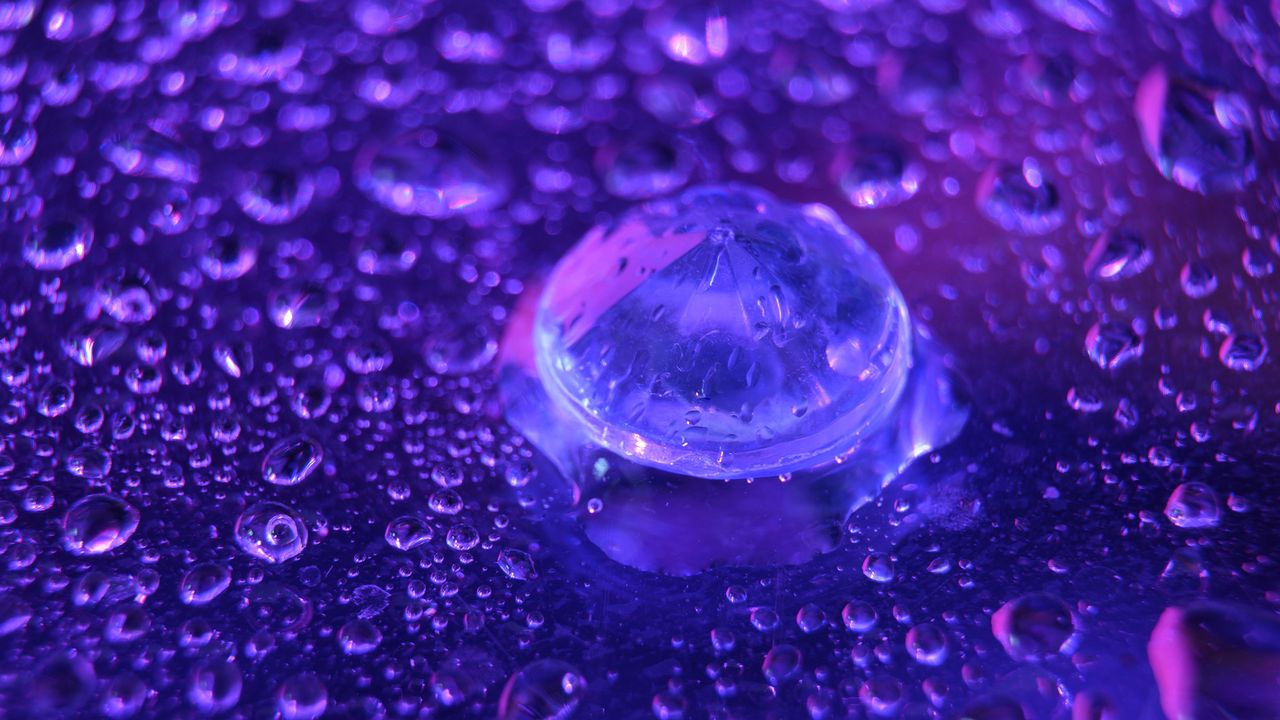
Scientists got diamond's melting point wrong by more than 1,000 degrees, crushing new laser experiment reveals
Key Points
Scientists got diamond's melting point wrong by more than 1,000 degrees, crushing new laser experiment reveals Scientists blasted diamonds with lasers to get the best measurement of the mineral's melting point yet. The new, more accurate numbers could help improve fusion experiments and studies of giant planets. Scientists melted diamonds with a powerful laser to take some of the most precise measurements of the mineral's elusive melting point — and found that previous experiments were off...
Scientists got diamond's melting point wrong by more than 1,000 degrees, crushing new laser experiment reveals
Scientists blasted diamonds with lasers to get the best measurement of the mineral's melting point yet. The new, more accurate numbers could help improve fusion experiments and studies of giant planets.
Scientists melted diamonds with a powerful laser to take some of the most precise measurements of the mineral's elusive melting point — and found that previous experiments were off by more than 1,300 degrees Fahrenheit (700 degrees Celsius).
It's odd to think of diamond, the hardest natural material on Earth, melting — but melt it does when blasted with extremely powerful lasers under the right conditions. Understanding how diamond responds to shock waves from lasers is an important part of developing nuclear fusion, the process that powers stars. Nuclear fusion is also a potential energy source for the future, so researchers have put a lot of effort into developing models that describe and predict how diamond behaves.
However, diamond is weird. Although the experimental data and theoretical models match up pretty well most of the time, there have been some strange discrepancies scientists haven't been able to explain. The biggest one is the 2,240 F (1,244 C) — roughly 20% — difference between previous experimental data and model-predicted melting temperatures of diamond. There's also been some debate about whether diamond reorganizes its atoms into a different kind of solid carbon before turning into a liquid at the end of the melting process.
Researchers have struggled to explain these discrepancies because the conditions diamond melts at are so extreme that it's extraordinarily difficult to measure it in labs on Earth. However, new experiments may finally offer the solution that scientists have pursued for two decades.
In a study published Aug. 13 in the journal Nature Physics, scientists zapped tiny plates of synthetic diamond with an ultraviolet laser, creating shock waves that were so powerful that as they passed through the samples, the diamond changed from transparent to mirror-like. The strong increase in reflectivity is one indication the diamond melted. By combining this change with measurements of how brightly the diamonds glowed while being zapped, the researchers mapped the melting temperature with great precision.
"We were able to take tiny diamond samples and shock compress them to temperatures hotter than the surface of the sun and to pressures higher than the center of Neptune and Uranus — and still measure atomic structure, temperature, density and optical reflectivity," study co-author Marius Millot, a research scientist at Lawrence Livermore National Laboratory in California, said in a statement.
The team found that the diamond sample's melting temperature was more than 1,300 F lower than previously thought — putting the melting point in line with theoretical predictions and finally explaining the long-held discrepancy.
Get the world’s most fascinating discoveries delivered straight to your inbox.
The team also measured the samples' atomic structure with X-ray diffraction and saw that the diamond didn't transition to a different kind of solid carbon before melting, possibly because the energy required to rearrange the atoms was too large, the researchers wrote.
Related stories
However, they also hypothesized that multiple shocks could be powerful enough for this transition to occur and that the way the shocks are applied to the diamond might affect how it changes phase. Understanding this is important for nuclear fusion research, as certain types of experiments involve lasers melting and crushing a diamond capsule to put the capsule’s contents, solid deuterium and tritium, under more than 30 petapascals of pressure and temperatures higher than 180 million F (100 million C), the requisite conditions for a fusion chain reaction to occur.
The researchers found that between about 660 and 1,060 gigapascals of pressure and at around 12,140 F (6,727 C), diamond exists as solid chunks floating in liquid carbon. As the pressure increases, more diamond transitions into liquid carbon, which is thought to be a very strange material. Unlike most forms carbon takes on Earth — like coal, graphite and diamond — liquid carbon is metallic, so it conducts electricity. It's also denser than diamond. So hypothetically, if you somehow were to put liquid carbon in a cup without instantly vaporizing it, a chunk of solid diamond could happily bob around in it like an ice cube in a glass of water.
Knowing how diamond behaves under such extreme conditions is also important for understanding the ice giant planets Uranus and Neptune. Based on measurements from the Voyager 2 spacecraft in the late 1980s and lab experiments on Earth, scientists think it literally rains huge chunks of diamond inside these planets and that their mantles may have liquid carbon oceans with diamonds floating around like icebergs. The new research means scientists can make better predictions about the planets’ interiors and their carbon cycles.
Millot, M., Coppari, F., Lazicki, A., Kim, Y., Landen, O. L., Smalyuk, V. A., Celliers, P. M., & Eggert, J. H. (2026). Diamond melting in shock compression experiments at 1 TPa pressures. Nature Physics. https://doi.org/10.1038/s41567-026-03413-1
See how much you know about gemstones with our gold and gems quiz!
Damien Pine (he/him) is a freelance writer, artist, and former NASA engineer. He writes about science, physics, tech, art, and other topics with a focus on making complicated ideas accessible. He has a degree in mechanical engineering from the University of Connecticut, and he gets really excited every time he sees a cat.
You must confirm your public display name before commenting
Please logout and then login again, you will then be prompted to enter your display name.