
Business & Finance
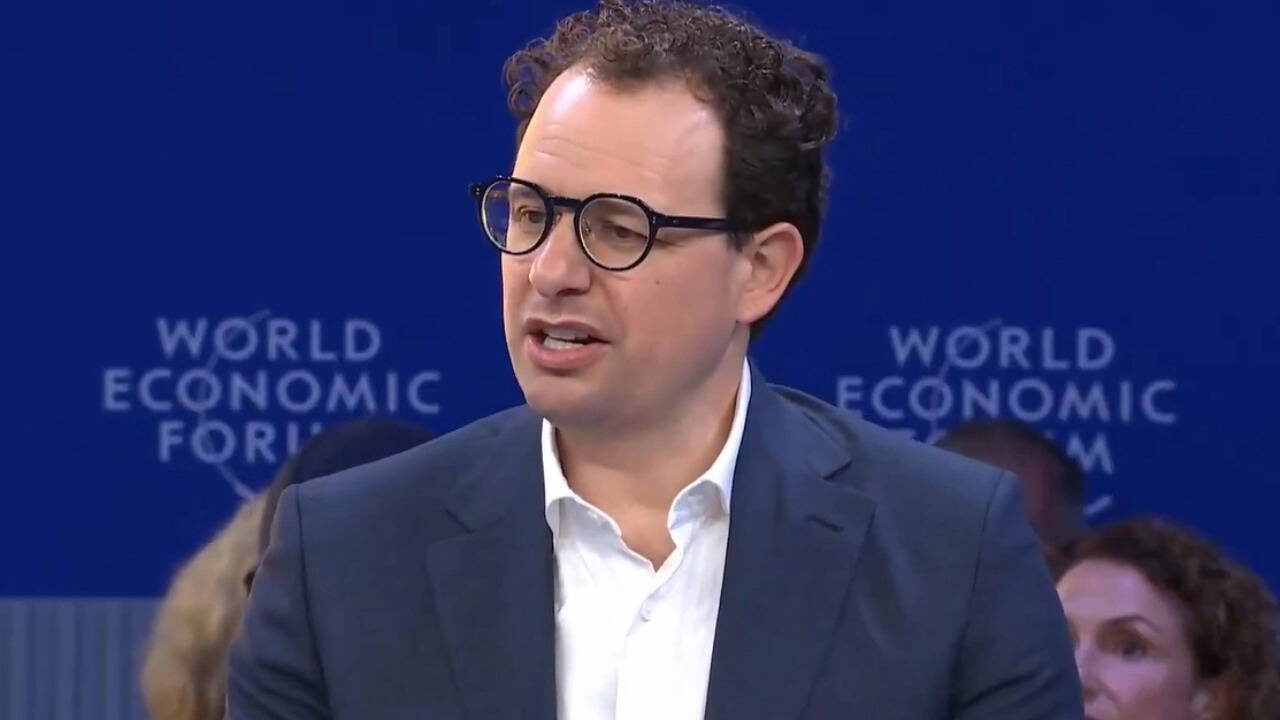
'Do you think AI will kill all humans?' Anthropic CEO Dario Amodei answers
Key Points
Anthropic CEO Dario Amodei has said it is more useful to assess the risks posed by artificial intelligence by examining different possible paths for its development rather than assigning a single percentage to the chances of AI causing catastrophic harm. Addressing warnings from former Anthropic researcher Jacob Coxon and others about the rapid development of increasingly capable AI systems, Cooper asked Amodei: "Do you believe, earnestly believe that AI could kill all humans? What percent...
Anthropic CEO Dario Amodei has said it is more useful to assess the risks posed by artificial intelligence by examining different possible paths for its development rather than assigning a single percentage to the chances of AI causing catastrophic harm.
Addressing warnings from former Anthropic researcher Jacob Coxon and others about the rapid development of increasingly capable AI systems, Cooper asked Amodei: "Do you believe, earnestly believe that AI could kill all humans? What percent chance do you think it is?"
In response, Amodei stated, "It's funny, I agree with Jacob much more than I disagree with him. It's an interesting resignation because when he left, he said, I think Anthropic is the most responsible player."
Amodei said Coxon's concerns were not specifically directed at Anthropic but reflected broader concerns about the pace of the AI industry. "I think Anthropic is the most aware of these issues. He wasn't calling out us, he was calling out the dynamic of the industry as a whole moving too fast," he said.
He also explained why he no longer prefers expressing AI risks through a single probability. "Now, I think I already said, these unconditional probabilities, I used to talk in that way because it's an easy way to express, I think there's some chance that things go wrong, but it's not all that high."
According to Amodei, breaking down the possible outcomes provides a clearer picture of the risks. "Again, I think it's more illuminating to think in terms of how do you decompose those probabilities? What are the paths in which things go well, and what are the paths in which things go poorly? Instead of saying, it's a 10% chance, that sounds like it's a roll of the dice. I think it's much more illuminating to say, well, that forks into different paths. If we take the right paths, then the chance of something going wrong is very low."
He added that the AI industry needed to work together on safeguards. "If we take the wrong paths, then the chance of something going wrong could be even higher than that. Let's focus on our agency and our ability to take the right paths instead of the wrong paths. I think that the way to take the right paths is for the industry to work together."
Amodei also cautioned against slowing AI development without considering who would ultimately control the technology. "Again, we'll talk about the proposal that I've put out today, but at the end of the day, the industry has to work together and it's harder, but to some extent, the world has to work together. If we go too slow, I still believe that the wrong people will be in charge of the technology. That, again, will bring the probability of things going wrong very high."
The comments come amid growing concerns from AI safety researchers. Joe Benton, who said he left Anthropic's safety team two weeks ago, has warned that AI companies are racing to develop systems capable of recursively improving themselves.
Benton said companies were underinvesting in safety and called for greater transparency, reporting of safety incidents and independent assessments of AI systems.
His concerns followed Coxon's resignation from Anthropic, where he had worked on AI pretraining research. Coxon had warned that leading AI companies were moving towards self-improving superintelligence without adequate safeguards.
[Image text:] WORLD
ECONOMIC
FORI
WORLD
ECONOMIC