
Science
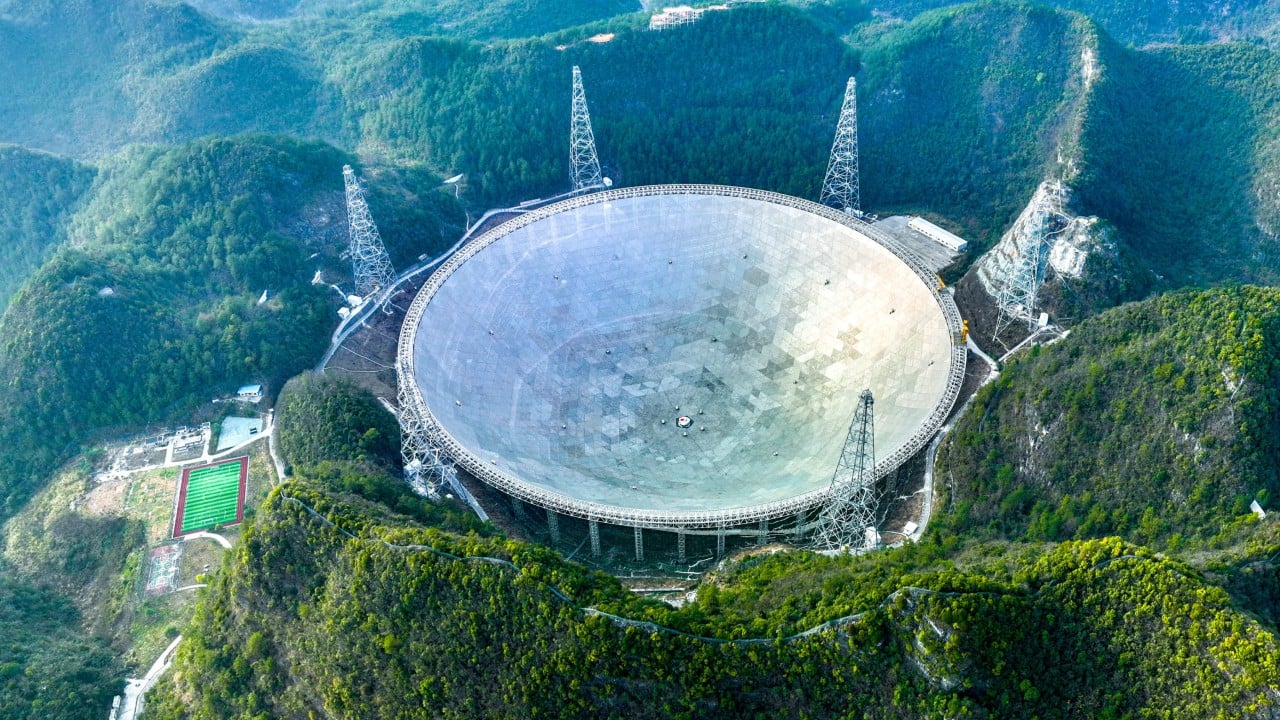
China’s FAST telescope maps neutral hydrogen, the cosmic gas for making stars
Key Points
China’s FAST telescope maps neutral hydrogen, the cosmic gas for making stars Survey identifies more than 156,000 extragalactic sources, offering an unprecedented pool for studying the universe’s biggest questions The publicly available data gives astronomers worldwide an unprecedented pool of galaxies to investigate some of the universe’s biggest questions – from how the vast cosmic web took shape, to why some galaxies thrive while others fade away. Compared with ALFALFA – the landmark US...
China’s FAST telescope maps neutral hydrogen, the cosmic gas for making stars
Survey identifies more than 156,000 extragalactic sources, offering an unprecedented pool for studying the universe’s biggest questions
The publicly available data gives astronomers worldwide an unprecedented pool of galaxies to investigate some of the universe’s biggest questions – from how the vast cosmic web took shape, to why some galaxies thrive while others fade away.
Compared with ALFALFA – the landmark US survey carried out with Arecibo from 2005 to 2012 – FASHI covered about three times as much sky and detected galaxies that were much smaller, fainter and further away, a team led by researchers from the National Astronomical Observatories reported.
For more than half a century, Arecibo’s 305-metre dish was an icon of radio astronomy.
Completed in 1963, it remained the world’s largest single-aperture radio telescope until FAST overtook it in 2016, and was behind a string of major astronomical discoveries before its giant observing platform collapsed in 2020.