
Health
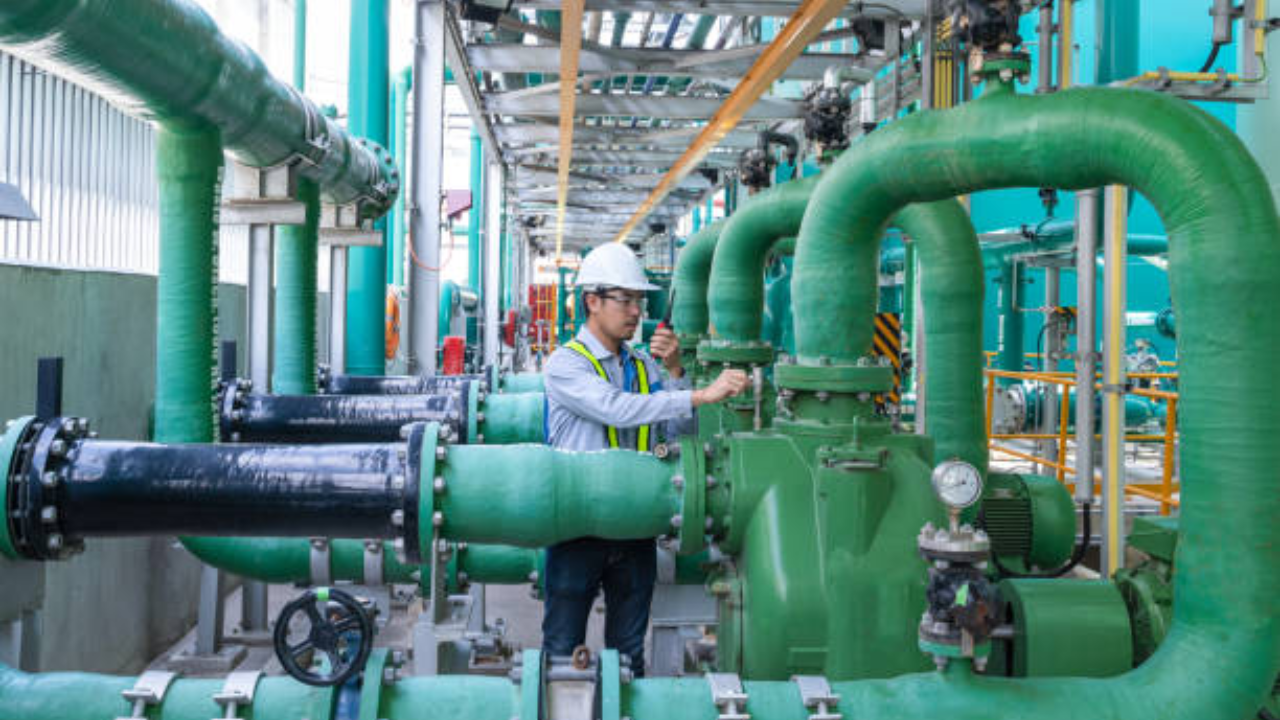
Australia opens $7.8m wastewater plant that treats 700 megalitres a year
Key Points
An average Australian household generates about 350 litres of wastewater daily. Combined across the country, this leads to hundreds of gigalitres of wastewater that is managed in the country by more than 720 sewage treatment plants. While the country turns a major portion of this water into recycled water for agriculture, industry and other fields, it takes immense energy and time for the process to complete.
An average Australian household generates about 350 litres of wastewater daily. Combined across the country, this leads to hundreds of gigalitres of wastewater that is managed in the country by more than 720 sewage treatment plants. While the country turns a major portion of this water into recycled water for agriculture, industry and other fields, it takes immense energy and time for the process to complete.
Now, the country has built a new method of recycling wastewater which uses less energy and works faster than conventional systems. Inventor Troy Warry said his system is about 16 times more efficient at breaking down stubborn pollutants in wastewater than conventional methods. The water treatment scientist explained that it was the product of years of "trial, error and sleepless nights and crying in the shower" for an end result that uses fewer chemicals and processes wastewater faster.
"There are a lot of advanced oxidation [systems] out there, but this is the first titanium dioxide-based one in the world where the catalyst is permanently immobilised inside the reactor while still remaining highly photoactive," he said to ABC News.
"It uses a lot less energy, produces much cleaner water, destroys contaminants in a lot shorter time frame, and sustains high flow rates every day for long periods."
A key highlight for Warry is that rather than filtering out, the reactor destroys contaminants such as pesticides, petroleum hydrocarbons, pharmaceutical residues, antibiotics, hormones and other persistent organic compounds. "Instead of simply capturing those contaminants and creating another concentrated waste stream, the process attacks their chemical structure and tears the molecules apart," he said.
"By accelerating the reaction kinetics, we can destroy difficult contaminants much faster than traditional advanced oxidation, which can substantially reduce energy consumption while producing a much higher-quality treated water," he added.
Being used in Dubbo
The new technology was developed and scaled through trial runs by Warry in Germany, Spain and Norway. It has now been built in Central NSW as part of a new $7.8 million advanced wastewater treatment plant (AWTP), which Dubbo Regional Council switched on this week.
Squadron Energy contributed $3.6 million under an agreement that allows it to draw on the recycled water to build its three wind farms and a firming station in the Dubbo region. Rob Wheals, Squadron CEO, said the company's investment was an effort to reduce demand on local water resources so "drinking water is available for drinking," while leaving it as a legacy to benefit the community hosting its wind farms.
Dubbo mayor Josh Black said the arrangement had helped shore up water security in the region. "[It] means we won't have to choose between drought and development," Mr Black said.
As for Warry, he said he was not surprised that a regional council was the first to use the technology in Australia. "They have a vision that they want to provide better water security," he said. "Australia is going to have to reuse increasingly difficult water sources as populations grow, rainfall becomes less predictable and pressure on our existing supplies increases. It's ridiculous to think that all of the wastewater sitting in those lagoons is just getting wasted," he added.