
Politics
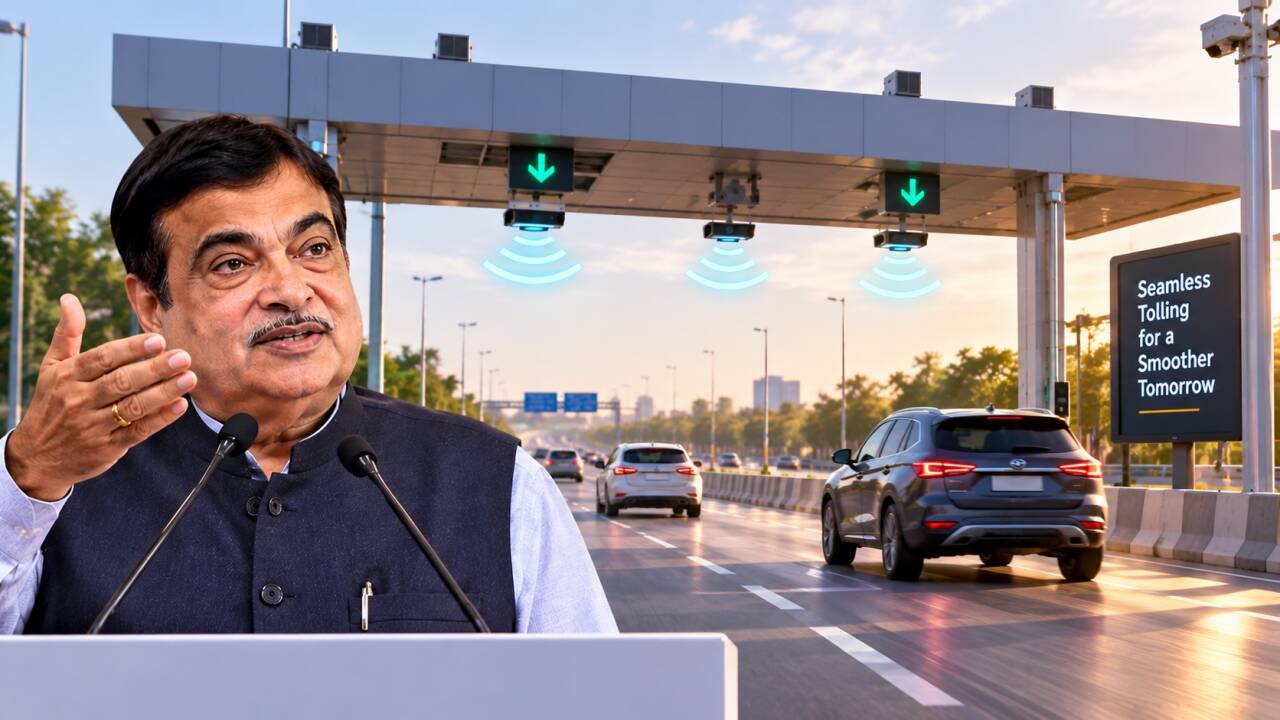
Gadkari: 100% barrier-free FASTag tolls soon; to deliver Rs 25,000 crore benefit
Key Points
Soon, you will be able to travel barrier free across the country with FASTag making the barrier-free tolling system a reality. The full implementation of the electronic toll collection system FASTag could generate an annual benefit of up to Rs 25,000 crore for the government, Union Minister Nitin Gadkari said recently. The Road Transport and Highways Minister said the government plans to make all toll booths on national highways barrier-free by March 2027.
Soon, you will be able to travel barrier free across the country with
FASTag making the barrier-free tolling system a reality. The full implementation of the electronic toll collection system FASTag could generate an annual benefit of up to Rs 25,000 crore for the government, Union Minister
Nitin Gadkari said recently.
The Road Transport and Highways Minister said the government plans to make all toll booths on national highways barrier-free by March 2027.
"When the system will go fully live, then our department alone would deliver a benefit of Rs 20,000-25,000 crore per year to the Government of India because of the use of FASTags," Gadkari said at the Global Fintech Fest.
FASTag adoption has already increased toll collections by 10%, or around Rs 7,000 crore, taking total toll booth revenue to more than Rs 82,000 crore, according to Gadkari.
India's next stage of mobility infrastructure will increasingly depend on intelligent highways, interoperable digital platforms and technology-driven financing, Gadkari said at the Global Fintech Fest 2026.
He stressed that bringing together physical infrastructure, digital payments and data could make transportation networks more efficient and transparent.
Gadkari was speaking at the launch of OneTag, a FASTag portability facility introduced in Mumbai.
The facility enables vehicle owners to connect their existing FASTag to a new bank account through the Rajmarg Yatra app.
According to the minister, the launch reflects India's continuing emphasis on innovation, interoperability and digital infrastructure focused on customer needs.
As the country's highway network and wider mobility ecosystem become increasingly connected, he said there is greater scope to bring tolling, payments, vehicle data and financial services together into a more seamless mobility system.
Barrier-free tolling system
The government is moving towards barrier-free toll collection by combining FASTag with automatic number plate recognition (ANPR), Gadkari said. Multi-lane free-flow (MLFF) tolling was introduced at a Mumbai toll plaza on May 11, 2026, as part of the wider plan to shift the highway network towards barrier-free tolling within a year.
Technology-based toll collection has already delivered economic and environmental gains by cutting waiting periods, fuel usage and leakage, according to Gadkari. He said vehicles previously spent around 12 minutes waiting at toll plazas and underlined the need to bring stoppage times down further through digital systems.
The barrier-free tolling system currently being piloted is expected to generate another 10%, translating into an additional Rs 7,000-8,000 crore, he said.
At the same time, the cost of operating toll booths has fallen sharply. Gadkari said operational expenses have come down to 2-3% from the earlier 12%.
More than 70% of toll booths are expected to become barrier-free by the end of December this year, with the coverage reaching 100% by March next year, Gadkari said.
Motorists are also benefiting through shorter waiting times and lower chances of getting stuck at toll plazas. Gadkari cited studies estimating annual fuel savings of more than Rs 5,250 crore because of the system.
Speaking to technologists at the event, Gadkari also urged the industry to develop technology that can detect overloading in trucks.
He said the country's freight sector currently lacks transparency and assured that efforts would be made to address the issue.
Gadkari also said that one of the operators had been booked by the Central Bureau of Investigation.
Gadkari cited FASTag as an example of how digital technology can upgrade physical infrastructure and make its operation more efficient. FASTag penetration at National Highway toll plazas has crossed 98%, while around 13 crore FASTags have been issued across the country, he said.
The minister also highlighted the scope for digitisation to reduce the cost of operating tolling infrastructure.
Gadkari said the next phase of development would involve deeper integration of mobility-related data across FASTag, vehicles, insurance and banking systems. “The biggest power is interoperability,” he said, while calling for research and recommendations that could support the creation of futuristic infrastructure policies centred on digital systems.
He also stressed the importance of innovation, entrepreneurship, science, technology and research in turning knowledge into wealth. India's young innovators and startups, he said, have the potential to create technologies that can serve not only domestic requirements but also the wider world.