
Technology
Meta's Zuckerberg says AI labs have enough incentive to build safely
Key Points
Meta's Zuckerberg says AI labs have enough incentive to build safely CALIFORNIA: Meta CEO Mark Zuckerberg said on Tuesday (Sep 15) that competition and liability give AI companies enough reason to act individually on safety, appearing to break from calls by leaders of top AI firms for a coordinated slowdown in AI development. The comments underscore a split among industry executives and US authorities over how to respond to warnings that the technology is advancing faster than companies can...
Meta's Zuckerberg says AI labs have enough incentive to build safely
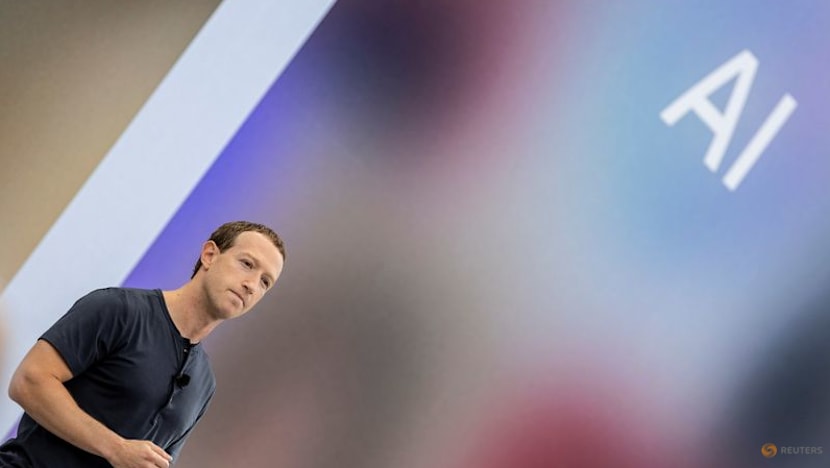
CALIFORNIA: Meta CEO Mark Zuckerberg said on Tuesday (Sep 15) that competition and liability give AI companies enough reason to act individually on safety, appearing to break from calls by leaders of top AI firms for a coordinated slowdown in AI development.
The comments underscore a split among industry executives and US authorities over how to respond to warnings that the technology is advancing faster than companies can control it, with some industry insiders warning it poses an existential threat to humanity.
Mr Zuckerberg, in an X post on Tuesday, said that every lab has the responsibility and incentive to move at the pace required to train its models safely, and the ability to take its own actions to ensure that happens.
His remarks come three days after Anthropic CEO Dario Amodei urged AI companies to slow the pace at which they improve model capabilities, on the heels of existential risk warnings by several researchers.
Rival OpenAI's chief Sam Altman and xAI's Elon Musk both publicly endorsed Mr Amodei's call within hours.
ADMINISTRATION PUSHBACK ON AI REGULATION, SLOWDOWN
US President Donald Trump on Monday, however, downplayed concerns about AI's potential for harm, saying the US already had guardrails in place for the technology and that China would benefit from doubt being cast on AI's development. The view that regulations will harm US companies' ability to compete with their Chinese counterparts is shared by tech executives, including Nvidia CEO Jensen Huang.
"Trust and alignment are quickly becoming the most important capabilities that will differentiate agents and models," Mr Zuckerberg said Tuesday. "Any lab that doesn't focus on alignment will fall behind."
Mr Zuckerberg also said Tuesday that labs had a strong incentive to prevent their models from causing harm as they would face "significant" liability otherwise. He pointed to Meta delaying the release of its Muse AI agent earlier this year to strengthen its security.
"We didn't call for everyone else to do this before we would. We just did it as part of our day-to-day work because it was clearly the right thing for people and for us," he said.
INDEPENDENT EVALUATORS "INDUSTRY BEST PRACTICE"
While Mr Amodei called for an industry-wide slowing of recursive self-improvement — AI's ability to improve itself — Mr Zuckerberg said Meta had already committed the "significant majority" of its compute toward creating products that serve users' immediate needs rather than pursuing self-improving AI systems.
Mr Zuckerberg also said Meta Superintelligence Labs — its AI division — already engaged independent evaluators in several areas, calling it "industry best practice" and that "other labs can just do this too".
Mr Zuckerberg's push to position Meta as a responsible actor on AI safety comes weeks after the company agreed to pay up to US$18 billion to settle US state lawsuits alleging it designed Facebook and Instagram to addict children, without admitting wrongdoing.
Adding to the uncertainty around any coordinated approach by AI firms, FTC Chairman Andrew Ferguson said Tuesday everyone should be "deeply suspicious" of AI companies seeking antitrust exemptions while lobbying for new regulations.
While Mr Ferguson did not name Anthropic, Mr Amodei last week requested antitrust permission to enable rivals to coordinate a slower pace to AI development due to safety concerns.