
World News
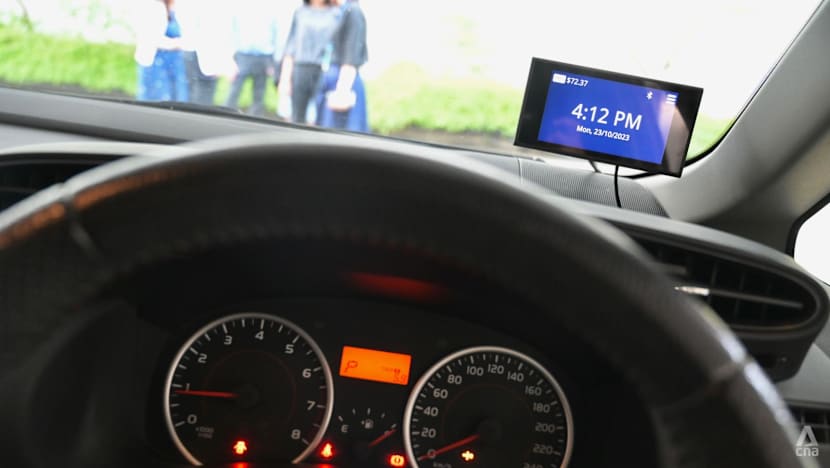
Wiring issues most common fault in ERP 2.0 units ahead of 2027 transition: LTA
Key Points
Wiring issues most common fault in ERP 2.0 units ahead of 2027 transition: LTA Workshops also report issues such as flickering displays and loss of power, while the Land Transport Authority says the proportion of cars requiring follow-ups fell from 1.3 per cent in May last year to 0.2 per cent in July. SINGAPORE: Wiring issues remain the most common problem with the new Electronic Road Pricing (ERP) 2.0 on-board units (OBUs), authorities say, months before Singapore switches to the new...
Wiring issues most common fault in ERP 2.0 units ahead of 2027 transition: LTA
Workshops also report issues such as flickering displays and loss of power, while the Land Transport Authority says the proportion of cars requiring follow-ups fell from 1.3 per cent in May last year to 0.2 per cent in July.
SINGAPORE: Wiring issues remain the most common problem with the new Electronic Road Pricing (ERP) 2.0 on-board units (OBUs), authorities say, months before Singapore switches to the new system.
Around 1,500 cars, or 0.2 per cent of the roughly 700,000 fitted with OBUs as of July, required workshop follow-ups, according to the Land Transport Authority (LTA).
This was down from 1.3 per cent in May last year.
Some cases, however, can be more complicated to fix. LTA said an average of about six cases a month require further troubleshooting and multiple visits to a workshop.
REPEAT OBU INSPECTIONS
Car rental firm MV Auto is among those that have had to send some vehicles back more than once.
The company had expected OBU installation to be a straightforward, one-off process. Instead, it has received repeated notices asking it to send vehicles back for inspection.
Sales manager Darren Ang said the company had received about 40 to 50 notices for OBU inspections after the units were installed.
As its rental cars are often with customers, the company sometimes has to arrange for a vehicle to be returned or travel to the customer to provide a replacement car.
The affected vehicle is then sent for inspection, which Mr Ang said typically takes about half a day, before it is returned to the customer. He said this results in additional costs and inconvenience.
One car in the company's rental fleet had to be sent back for inspection three to four times.
Mr Ang said the company was sometimes told that wiring, card readers or display screens had been changed, but was not given a clear explanation of the problem.
“There are some times when they are very vague. They just tell you, ‘Oh, we've checked the car, we've checked the OBU, and it's done.’ And then you can just take your car and go off,” he added.
WIRING, FLICKERING SCREENS AND POWER LOSS
VICOM and Indeco, which operate authorised OBU inspection centres, told CNA that rectification cases remain low.
Indeco said the percentage of rectification cases among the OBU installations it handles was not significant, although the absolute number may increase as more units are installed.
Common post-installation issues it has encountered include on-screen error messages, blank or flickering displays, intermittent OBU operation and vehicle identification number verification notifications.
VICOM similarly said the number of vehicles inspected for OBU-related issues at its centres has not been significant.
Most cases were isolated and one-off, it said, with no recurring issues observed. The most common fault it sees is a loss of power, which can occur for various reasons.
VICOM said diagnosis and rectification can typically be completed within a single visit.
LTA said some motorists have also experienced unresponsive displays at car parks or gantries, which may be due to hardware malfunctions.
For car parks with electronic parking systems, feedback about gantry detection problems has fallen significantly from 2025 and now averages about two cases a month, according to the authority.
In some instances, a motorist may have difficulty entering a car park because the OBU antenna is not within range of the car park antenna. LTA said this could be resolved by repositioning the vehicle or recalibrating the affected antenna.
LEARNING FROM REPEATED FAILURES
Professor Lee Poh Seng, head of the Department of Mechanical Engineering at the National University of Singapore, said some problems are inevitable in a rollout of this scale.
But cases where motorists have to make repeated visits to workshops warrant closer attention, he said.
"If a motorist has to return several times, it suggests we may be treating the symptom rather than identifying the root cause," Prof Lee said.
"In fact, with a large install base, we should increasingly be able to identify recurring failure modes and develop vehicle-specific installation and troubleshooting protocols."
He said information from failures and repairs should be recorded, with lessons from the cases shared across the workshop network.
LTA said it would continue working with vehicle distributors, authorised dealers and workshops to identify the installation requirements for different types of vehicles.
It will also help expedite appointments at OBU Care Centres and provide on-site technical support.
With Singapore switching to ERP 2.0 from Jan 1 next year, Prof Lee added that the focus should shift to ensuring motorists are charged accurately.