
Politics
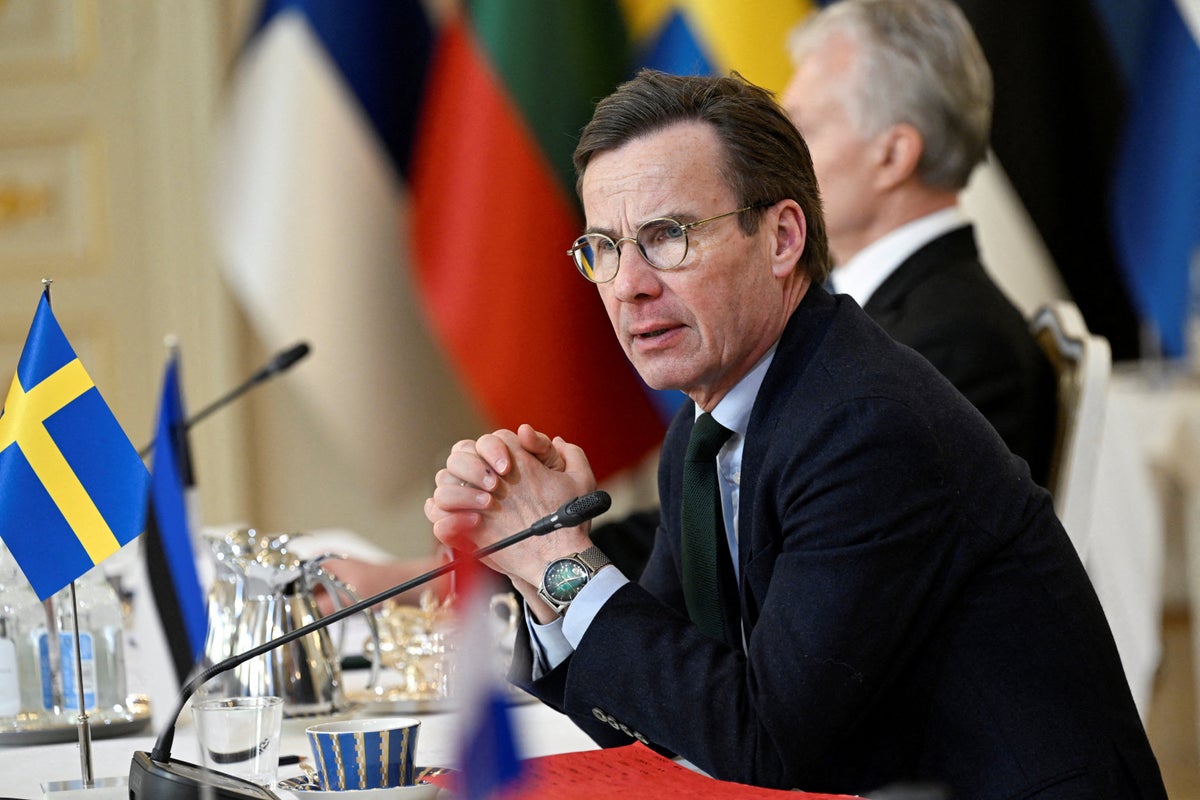
Sweden’s Prime Minister Ulf Kristersson resigns after election loss
Key Points
Sweden’s Prime Minister Ulf Kristersson resigns after election loss Kristersson has led Sweden with a three-party, centre-right coalition - Bookmark - CommentsGo to comments Sweden's Prime Minister Ulf Kristersson will resign after the left-leaning opposition won a narrow majority in the country's parliamentary election. The Swedish Election Authority said the four opposition parties won 176 seats in the 349-seat parliament in Stockholm, the Riksdag, in Sunday’s election. While the four...
Sweden’s Prime Minister Ulf Kristersson resigns after election loss
Kristersson has led Sweden with a three-party, centre-right coalition
- Bookmark
- CommentsGo to comments
Sweden's Prime Minister Ulf Kristersson will resign after the left-leaning opposition won a narrow majority in the country's parliamentary election.
The Swedish Election Authority said the four opposition parties won 176 seats in the 349-seat parliament in Stockholm, the Riksdag, in Sunday’s election. While the four parties that make up or support the outgoing conservative-led government took 173 seats.
Shortly after the final results were announced, Kristersson said he would resign as the head of government in a letter to the parliament’s speaker posted on social media.
"Now it is the speaker who will lead the next stage of the way to a new government. I am herewith requesting that I be relieved of the office of prime minister to allow that work to start immediately," Kristersson said on X.
Former Prime Minister Magdalena Andersson’s centre-left Social Democrats finished as the biggest single party with 99 seats, despite losing eight seats compared with the last election in 2022. She will still face a complicated task to turn the result into a government because of tensions within the left-leaning bloc.
The opposition’s small lead initially was uncertain but was confirmed after early votes that didn’t arrive at polling stations by Election Day, including overseas ballots, were counted.
Kristersson has led Sweden with a three-party, centre-right coalition. The parliamentary majority relied on outside support from the Sweden Democrats, an anti-immigration party that has far-right roots but has moved toward the political mainstream.
Kristersson had held out the prospect of Cabinet seats for the Sweden Democrats this time, if the governing coalition won. However, it was a disappointing election for the Sweden Democrats, who dropped into third place behind the outgoing prime minister’s Moderates and took 62 seats, 11 fewer than four years ago.
Andersson faces the task of overcoming differences in the opposition bloc. The Centre Party, which aligned with the left because it does not wish to govern with the Sweden Democrats, also doesn’t want to go into government with the Left Party at the other end of the spectrum.
Any combinations across the traditional right-left division would also be complicated.
Join our commenting forum
Join thought-provoking conversations, follow other Independent readers and see their replies
Comments
Sweden (LOCATION)
Ulf Kristersson (PERSON)
Kristersson (PERSON)
The Swedish Election Authority (ORG)
Stockholm (LOCATION)
Riksdag (ORG)
Magdalena Andersson (PERSON)
Social Democrats (ORG)
Democrats (ORG)
Cabinet (ORG)
Moderates (PERSON)
Andersson (PERSON)
The Centre Party (ORG)
the Left Party (ORG)
Independent (ORG)