
Politics
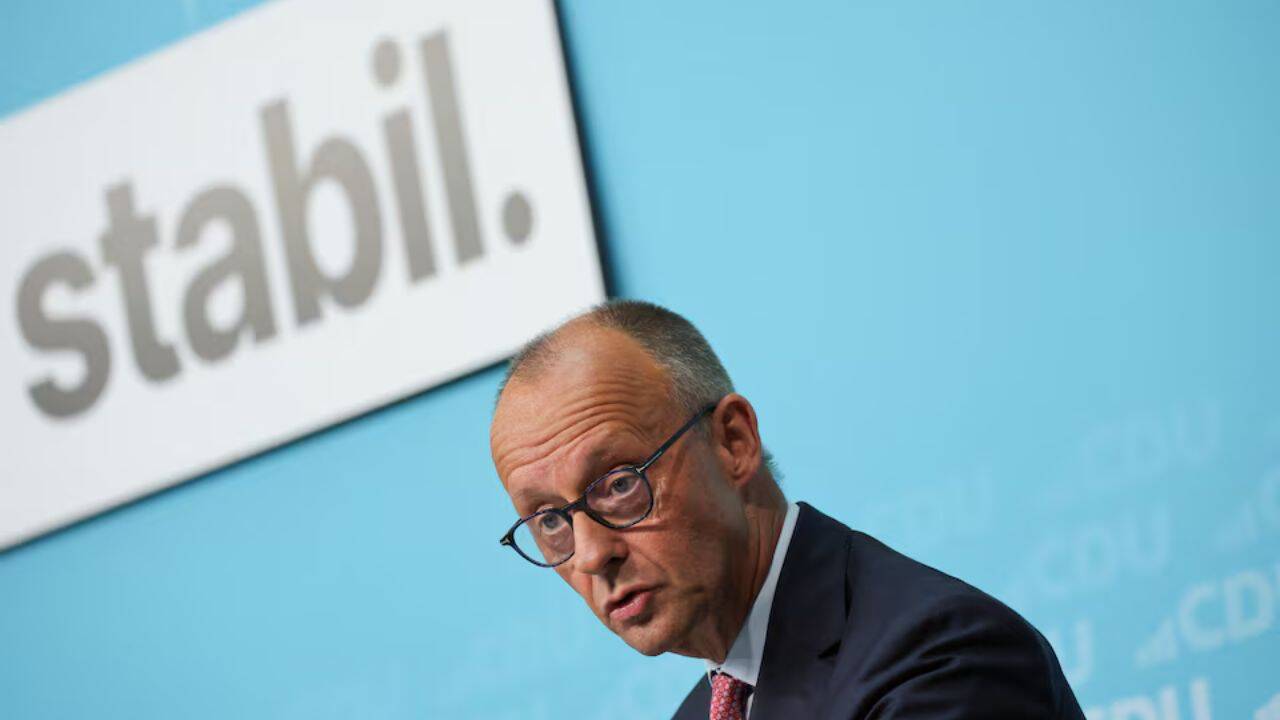
AfD tops another German state poll, Merz’s CDU crashes to historic low
Key Points
Germany's far-right Alternative for Germany (AfD) emerged as the largest party in Sunday's election in Mecklenburg-Western Pomerania, dealing another setback to Chancellor Friedrich Merz's Christian Democratic Union (CDU). According to preliminary results, AfD won 38.3 percent of the vote, ahead of the Social Democratic Party (SPD) at 35.4 percent, while the CDU secured just 4.9 percent, its worst result in a state election since 1949. According to Reuters, the result marked the AfD's second...
Germany's far-right Alternative for Germany (AfD) emerged as the largest party in Sunday's election in Mecklenburg-Western Pomerania, dealing another setback to Chancellor Friedrich Merz's
Christian Democratic Union (CDU).
According to preliminary results, AfD won 38.3 percent of the vote, ahead of the Social Democratic Party (SPD) at 35.4 percent, while the CDU secured just 4.9 percent, its worst result in a state election since 1949.
According to Reuters, the result marked the AfD's second first-place finish in a German state election this month, after it came close to an outright majority in Saxony-Anhalt on September 6.
In Berlin, meanwhile, the Left Party emerged as the largest party with 25.3 percent, followed by the CDU at 19 percent and the AfD at 16.3 percent.
Merz described the Mecklenburg-Western Pomerania result as "a disaster" but said he would remain in office and continue with his reform agenda. "What needs to be done now requires backbone, steadfastness, and patience," Merz said after the results.
The results add to pressure on Merz, whose government has faced criticism over Germany's weak economy, high living costs and proposed pension, tax and healthcare reforms.
The CDU's poor performance also comes as the AfD continues to gain ground in national opinion polls, increasing pressure on the governing coalition.
The AfD's strongest gains have been in eastern Germany, where concerns over migration, living costs and Germany's support for Ukraine have featured prominently in political campaigns.
Mecklenburg-Western Pomerania's SPD premier Manuela Schwesig said opposition to Berlin's Ukraine policy was among the issues influencing voters.
"Many people oppose support for Ukraine, both financial and military," Schwesig told Reuters. She added that some voters also wanted Russian energy supplies through the Nord Stream pipelines to resume.
Despite its growing electoral support, the AfD remains excluded from government because Germany's major mainstream parties have maintained a political "firewall" against forming coalitions with it. The latest results, however, underline the growing challenge the party poses to Germany's established political parties.
AfD (ORG)
German (ORG)
Merz (PERSON)
Germany (LOCATION)
Mecklenburg-Western Pomerania (ORG)
Friedrich Merz's (PERSON)
Christian Democratic Union (ORG)
the Social Democratic Party (ORG)
CDU (ORG)
Saxony-Anhalt (LOCATION)
Berlin (LOCATION)
the Left Party (ORG)
Ukraine (LOCATION)
Mecklenburg-Western Pomerania's (ORG)
SPD (ORG)