
Science
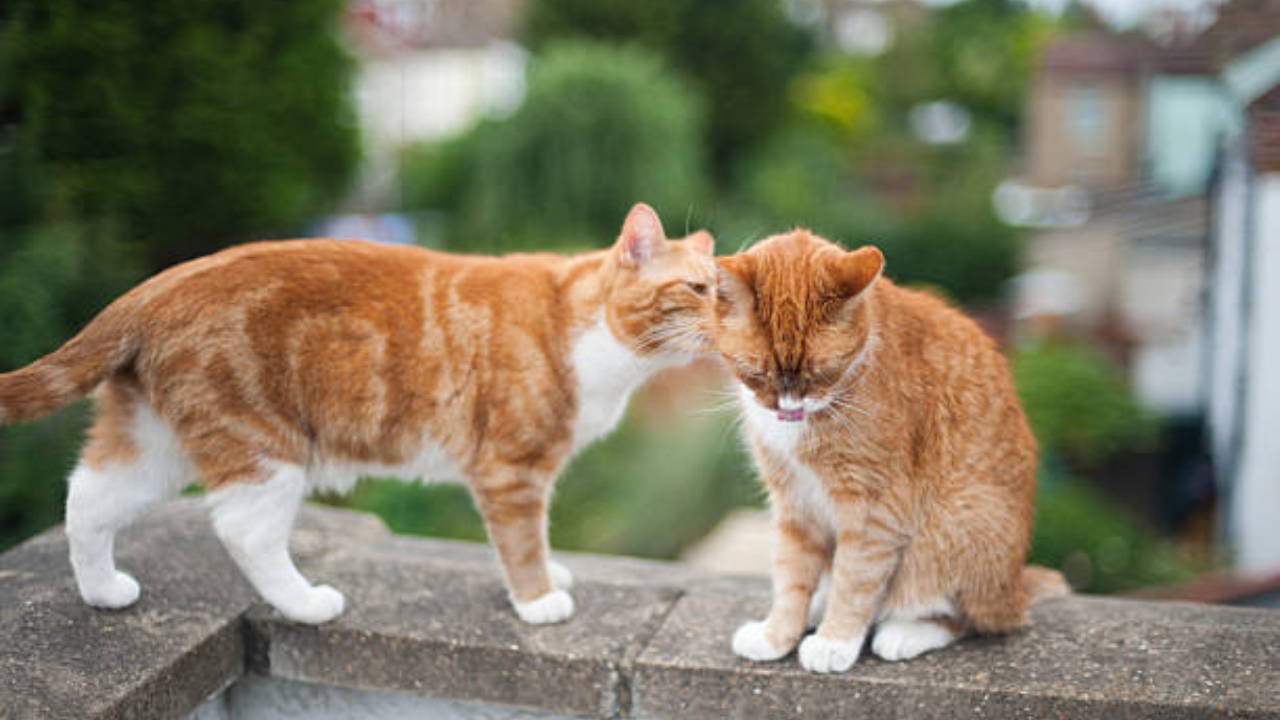
Cats may have their own chemical ID cards, study finds
Key Points
It seems there exists an established yet hidden cat calling system. According to scientists, cats identify one another through a shockingly durable chemical "calling card" made from 13 unusual fatty acids in their urine. Thus, feline friendships might have to do more with their identification than consistent meetings.
It seems there exists an established yet hidden cat calling system. According to scientists, cats identify one another through a shockingly durable chemical "calling card" made from 13 unusual fatty acids in their urine. Thus, feline friendships might have to do more with their identification than consistent meetings.
Cats rely heavily on scent to learn about one another and often, they gather this information from urine and other odour marks left behind in their surroundings. These chemical traces can continue communicating long after the animal that produced them has moved on.
But this leaves us with a puzzle. Many odour molecules evaporate, break down or change over time. If a scent is consistently evolving, how is an animal still able to determine who originally left it? Researchers from Japan, Germany and Spain, led by Iwate University, may have found part of the answer in domestic cats.
Their experiments pointed to a group of unusual fatty acids that could serve as a lasting chemical signature in cat urine. The scientists identified 13 branched-chain fatty acids (BFAs). The particular mixture and proportions of these compounds varied from one cat to another, yet remained relatively consistent within the same animal.
Behavioural tests also showed that cats could detect differences between BFA profiles when the researchers controlled for other lipids in the urine.
The findings suggest that BFAs could function as a durable chemical "calling card" that helps preserve information about individual identity.
Cats remember individual urine scents
Before searching for the chemicals involved, the researchers first needed to establish that cats could distinguish between urine from different individuals. When cats encountered the same urine sample repeatedly, they gradually spent less time investigating it. But when urine from a different cat was introduced, their interest rose again, and they spent more time sniffing.
Even after gaps lasting months, cats continued to show reduced responses to previously encountered urine odours. This pattern suggested that cats may retain long-term memories of particular urine scents. Researchers also examined the flehmen response, the characteristic open-mouthed expression often seen when cats investigate certain odours. Cats displayed this response more often when smelling unfamiliar urine than when smelling their own.
As the same urine was presented repeatedly, the Flehmen response decreased. But when urine from another cat was introduced, the response piqued again. "After confirming that cats can distinguish individual urine odours, we used the flehmen response as a clue to identify urinary molecules that may contribute to individual scent recognition," said Professor Masao Miyazaki of Iwate University, who led the research project.
What helps cats distinguish between individual urine
Using the cats' behaviour as a guide, the scientists narrowed their search to a lipid fraction in urine containing unusual BFAs. Ultimately, they identified 13 of these compounds. Interestingly, each cat has a BFA profile defined by the combination and relative abundance of the different fatty acids. Those profiles varied considerably between animals, while remaining comparatively stable when the same cats were sampled on different dates.
Genetics also appeared to play some role. Related cats generally had more similar BFA patterns, although each animal still maintained its own distinguishable profile even within the same family. The compounds also proved relatively durable. Many volatile chemicals responsible for urine odour begin changing quickly once urine is deposited. BFAs, by contrast, are semi-volatile and evaporate more slowly.
In urine-soaked samples stored at 25°C, the distinctive BFA profiles associated with individual cats remained comparatively stable for at least 24 hours.
Cats can detect the chemical differences
The researchers then tested whether the cats themselves could actually distinguish these BFA patterns. They controlled other lipid components in the urine samples and changed only the donor-derived BFA-containing fraction. Cats that had already become accustomed to the original sample began sniffing more again when the BFA fraction was switched.
That behavioural change provided evidence that cats can perceive differences among individual BFA compositions. The result strengthens the idea that these fatty acids may carry meaningful information about identity rather than simply being unusual chemical byproducts.
Moreover, the experiment also produced an unexpected clue involving the kidneys. Researchers detected BFAs in the kidney but not in the other tissues they examined. Lipids containing BFAs were also present among neutral lipids stored inside droplets in the renal cortex.
These kidney lipid droplets have puzzled scientists for more than a century, since cats are known to have a large quantity of them, yet their biological purpose remained unidentified. The new findings raise the possibility that the droplets act as a storage reservoir for lipids containing BFAs.
Such a reservoir could help keep a cat's chemical signature relatively steady even when diet or physiological conditions temporarily change. By buffering those short-term fluctuations, the kidney might help maintain a more consistent individual chemical profile in urine. "Our findings suggest that one of their functions may be to support a stable chemical signature in urine. How BFAs stored in renal lipids are ultimately released into urine is an important question for future research," said Miyazaki.
Moreover, BFA-related compounds in urine and renal lipid droplets were detected in numerous feline species, including lions, tigers, leopards, jaguars, lynxes and the Iriomote cat. The study will be published in Current Biology.