
Environment
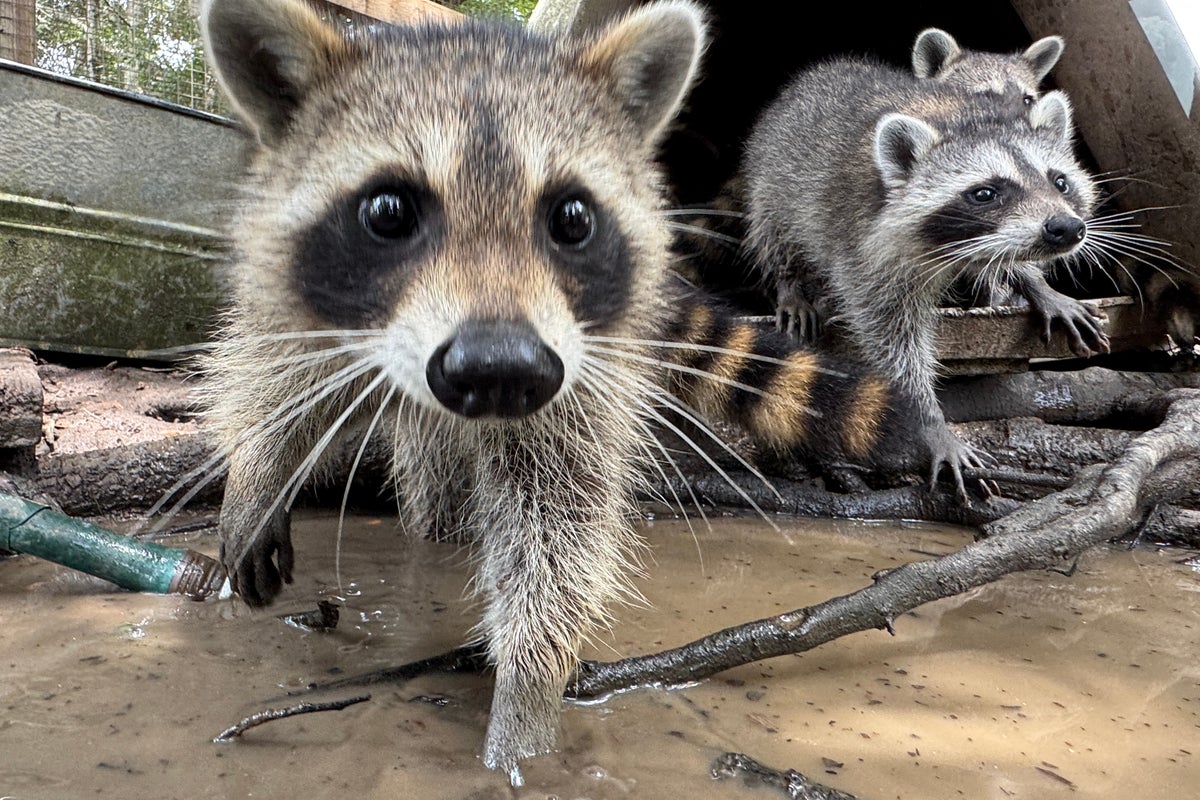
Inside the adorable ‘boot camp’ giving orphaned raccoons a second chance
Key Points
Inside the adorable ‘boot camp’ giving orphaned raccoons a second chance A Mississippi wildlife rescue gives abandoned and injured baby raccoons their best chance of survival through a program they call “raccoon boot camp.” - Bookmark Muddy, soaked in sweat and sometimes scraped, the dedicated team members at a Mississippi animal sanctuary operate like drill sergeants. Welcome to raccoon boot camp, where the goal is to guide sick or injured wild animals as they learn critical survival skills...
Inside the adorable ‘boot camp’ giving orphaned raccoons a second chance
A Mississippi wildlife rescue gives abandoned and injured baby raccoons their best chance of survival through a program they call “raccoon boot camp.”
- Bookmark
Muddy, soaked in sweat and sometimes scraped, the dedicated team members at a Mississippi animal sanctuary operate like drill sergeants.
Their trainees? Young raccoons. Welcome to raccoon boot camp, where the goal is to guide sick or injured wild animals as they learn critical survival skills for the southern Mississippi ecosystem.
Under normal wilderness conditions, these young kits would typically learn all these critical life skills directly from their mothers, most of whom died or became separated from their offspring due to severe storms, vehicular strikes, or other traumatic incidents.
It is a demanding task that leaves Woodside Wildlife Rescue founder Paula Woodside with physical scratches from frightened, defensive raccoons, and emotional pain whenever a young kit cannot be saved at the facility.
"When these babies come in, and they’re so desperate, it’s heartbreaking," said Woodside, who spends most days covered in sweat amid the intense Mississippi heat and dirt from inquisitive kits climbing up her legs and onto her shoulders. "It’s really important for them to get a little bit of a head start."
Wildlife rescue staff teach the raccoons by example
Woodside, a former U.S. merchant mariner, established the rescue center in 2019 after helping rehabilitate an orphaned raccoon kit she found aboard her ship. Located in the coastal town of Pass Christian, the sanctuary typically raises dozens of orphaned kits annually—76 so far this year—alongside various other native wildlife species.
Municipal animal control officers and local residents notify Woodside or rescue director Raquel Priest whenever an orphaned or injured raccoon needs saving. Together, they try to reunite kits with their mothers when possible, or transport the young animals directly back to the rescue facility.
The youngest kits spend several weeks indoors, bottle-fed by dedicated caregivers, until they receive vaccinations against diseases spread by dog populations and feral cat colonies, preparing them for outdoor enclosures.
While the kits maintain close bonds with their human caregivers, they eventually receive permission to explore freely during the day across the sanctuary’s rural 20-acre (8-hectare) property, featuring open fields, thick forest woodland, ponds, and an adjacent flowing river.
That diverse natural setting lets Woodside and Priest guide their young charges on educational excursions—a rare advantage among wildlife rehabilitation centers, Woodside noted.
Woodside and Priest lead by example during training. They bury worms in the dirt to teach kits how to dig for food and crack open pine cones or acorns to expose hidden seeds.
The raccoons' eyes light up when they discover new food, prompting them to rush back and show their find to caregivers before hurrying off to guard it against other kits trying to steal it.
Instead of shouting commands, Priest and Woodside emit a sharp trilling noise mimicking a mother raccoon's warning call, sending the kits scrambling up trees for safety. A brief whistle signals to the troops that the danger has passed.
The kits also practice fishing in shallow water, using clumsy paws to pat the surface tentatively until developing enough speed and agility to catch a snack.
Special live quail exercises offer essential hands-on hunting experience. Although raccoons naturally pick up these instincts, sanctuary staff hope structured wilderness lessons give the young kits a much better chance of survival.
In the property's pond, raccoons learn swimming techniques that prove essential in hurricane-prone southern Mississippi, with caregivers paddling kayaks to prompt kits back and forth across the water.
Outings into dense woods teach kits to move quickly between trees to avoid detection by birds of prey and secure escape routes from snakes or ground dangers.
Raccoons graduate to ‘Pomp and Circumstance Marches’
For their final training step, an unfamiliar volunteer traps the young raccoons in cages, frightening them enough to teach caution around traps and human beings. This encounter encourages the young raccoons to distance themselves from human handlers, a process Priest said occurs naturally as the animals mature.
When a cohort of kits is ready for release, roughly six months after rescue, Woodside and Priest organize a graduation ceremony. They play Edward Elgar’s "Pomp and Circumstance Marches" and read aloud a roll call featuring every graduating kit's name.
A local minister provides a formal blessing for their journey before the animals enter a different wooded sector of the sanctuary property. For kits that die while under care, staff hold a separate memorial service to bless and scatter their ashes.
"It's like watching your children leave home," Priest said. "It's important to see them prosper and go and be the mischievous creatures they were meant to be."