
Breaking News
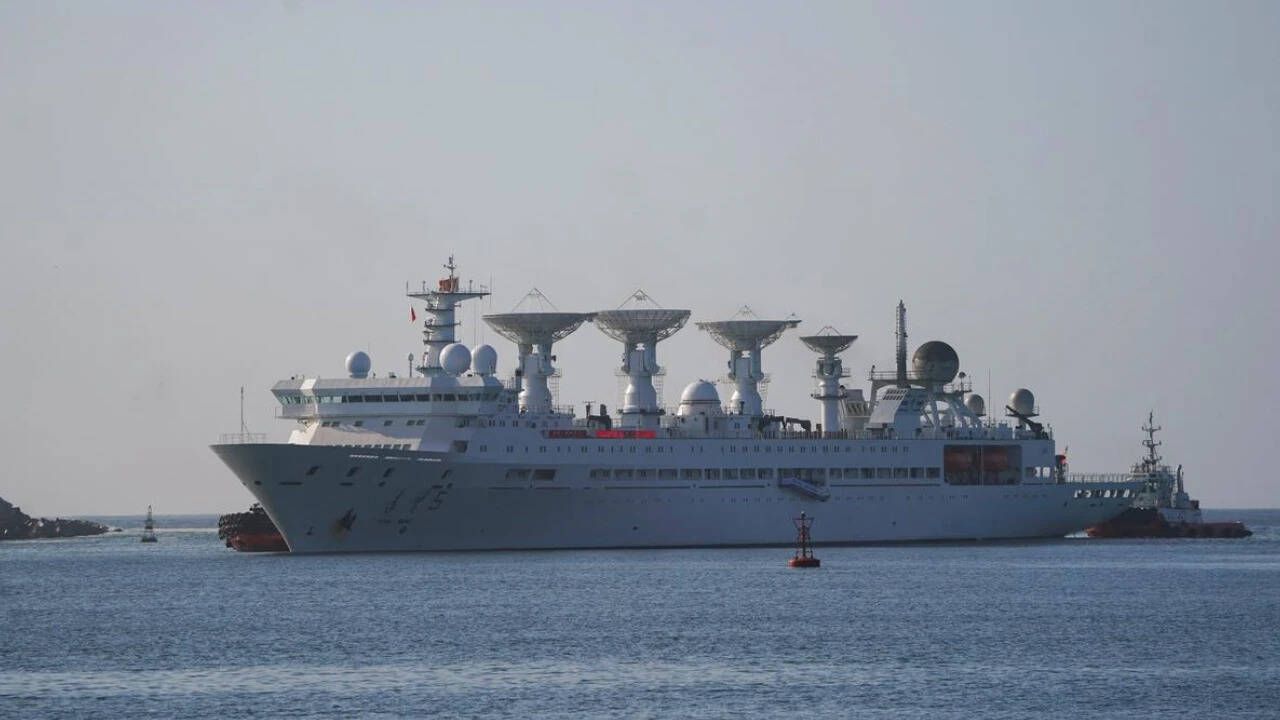
US on alert after China's 'dual-use' research vessels spotted near Alaska
Key Points
The US said it is observing increased activity of Chinese research vessels around the arctic offshores of Alaska, raising mineral and security concerns. These research vessels have been reportedly observed close to the maritime zones near Alaska's Aleutian Islands, into the Bering Strait between the US and Russia, and as far as the North Pole. Four Chinese research vessels have conducted work offshore in the US Arctic since the beginning of 2026, compared to a total of five last year,...
The US said it is observing increased activity of Chinese research vessels around the arctic offshores of Alaska, raising mineral and security concerns.
These research vessels have been reportedly observed close to the maritime zones near Alaska's Aleutian Islands, into the Bering Strait between the US and Russia, and as far as the North Pole.
Four Chinese research vessels have conducted work offshore in the US Arctic since the beginning of 2026, compared to a total of five last year, according to commander of US Coast Guard's Arctic District, Rear Admiral Bob Little, cited by Reuters.
While the Chinese ships remain in international waters, they do not notify their presence in advance as usual practise done through diplomatic channels, raising suspicion.
"Where I have responsibility, interest and concern is when they are operating in and around US sovereign space," said Little, adding that the vessels usually mention their purpose as scientific research or operations in international waters.
Hybrid vessels
China reportedly has the world's largest fleet of civilian research vessels that survey the Earth’s oceans.
According to Center for Strategic and International Studies, a Washington based think tank, While these ships support scientific and commercial objectives, they are also being used to advance Beijing’s strategic ambitions.
Many vessels that claim to undertake missions for peaceful purposes may also be capable of providing the PLA with critical information that can be either used against its adversaries.
Washington is concerned that Beijing could be involved in scientific research focused on the mineral exploitation of the seabed in US regions, Little said, adding that such activities could "provide them (the Chinese) with a military advantage or pose a security threat to the United States".
China calls itself a "near-Arctic" state and wants to create a "Polar Silk Road" in the Arctic, has stepped up its presence in the polar region in recent years.
Indian concerns
Such threats are not limited to the arctic. Chinese research and survey vessels have been docking at Sri Lankan port of Hambantota, have raised security concerns in India because of their proximity and the ability to conduct oceanographic, seabed and satellite-tracking activities.
The 2022 visit of the Chinese tracking vessel Yuan Wang 5 to Hambantota drew particular attention, while the research vessel Shi Yan 6’s 2023 visit to Colombo prompted Sri Lanka to impose a temporary moratorium on foreign research vessels. More recently, Reuters reported that Chinese research vessels have conducted extensive surveys across the Indian Ocean, including waters between Sri Lanka and Indonesia and approaches to the Malacca Strait, collecting seabed and oceanographic data that can have potential military applications.
US (LOCATION)
China (LOCATION)
Alaska (LOCATION)
Chinese (ORG)
the arctic offshores (LOCATION)
Aleutian Islands (LOCATION)
the Bering Strait (LOCATION)
Russia (LOCATION)
the North Pole (LOCATION)
the US Arctic (LOCATION)
US Coast Guard's (ORG)
Arctic District (LOCATION)
Bob Little (PERSON)
Earth (LOCATION)
Center for Strategic and International Studies (ORG)