
Science
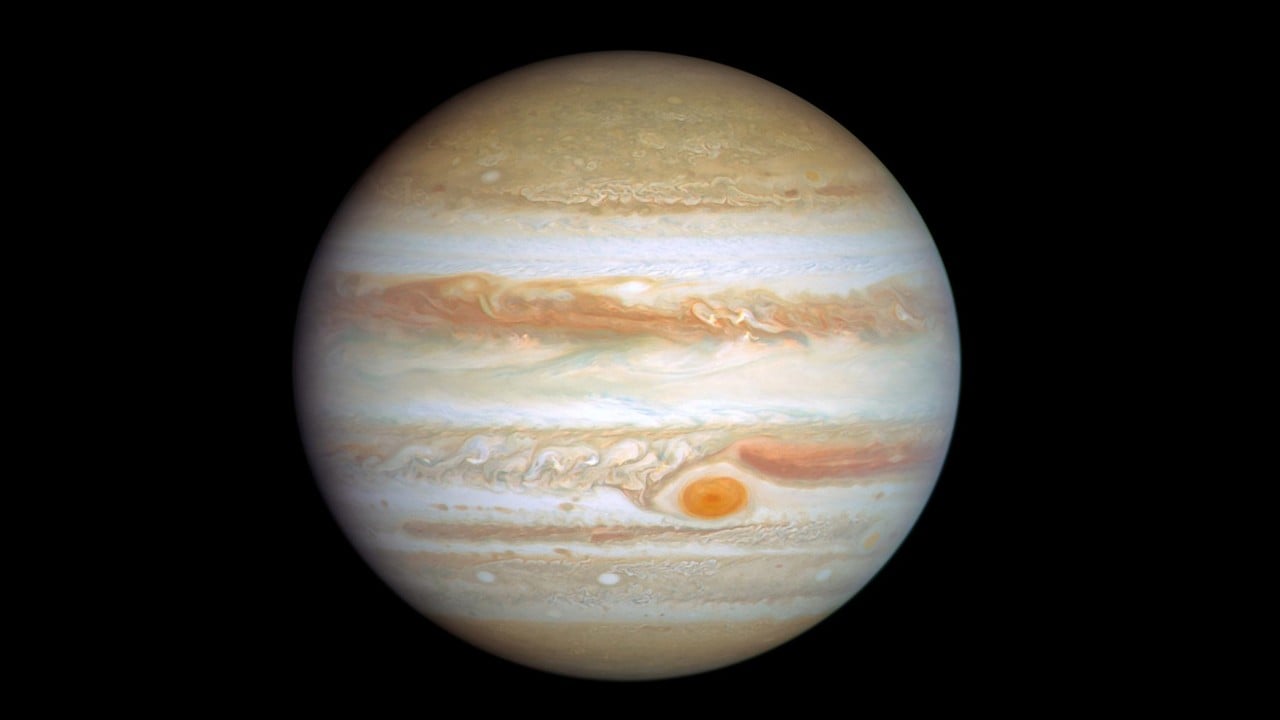
China gets closer to Jupiter mission by bringing Nasa’s StarNAV concept to life
Key Points
China gets closer to Jupiter mission by bringing Nasa’s StarNAV concept to life The tech uses subtle shifts in starlight to track speed and position, allowing spacecraft to navigate deep space alone Known as stellar aberration navigation, the approach uses tiny shifts in the relative position of stars to work out how fast a probe is moving and in what direction, allowing autonomous real-time navigation without constantly relying on tracking and commands from Earth. In a low-Earth-orbit...
China gets closer to Jupiter mission by bringing Nasa’s StarNAV concept to life
The tech uses subtle shifts in starlight to track speed and position, allowing spacecraft to navigate deep space alone
Known as stellar aberration navigation, the approach uses tiny shifts in the relative position of stars to work out how fast a probe is moving and in what direction, allowing autonomous real-time navigation without constantly relying on tracking and commands from Earth.
In a low-Earth-orbit experiment in January, the Tianhui-7 satellite used this method to determine its position to within about 5km (3.1 miles), a performance comparable to Nasa’s antenna-based Deep Space Network.
Jupiter can be up to 900 million km from Earth, with radio signals taking more than 50 minutes to travel one way. That made it impossible for ground controllers to intervene in real time, wrote researchers from the China Academy of Space Technology – the country’s main spacecraft manufacturer – in a paper that will be published in the Journal of Deep Space Exploration.