
Business & Finance
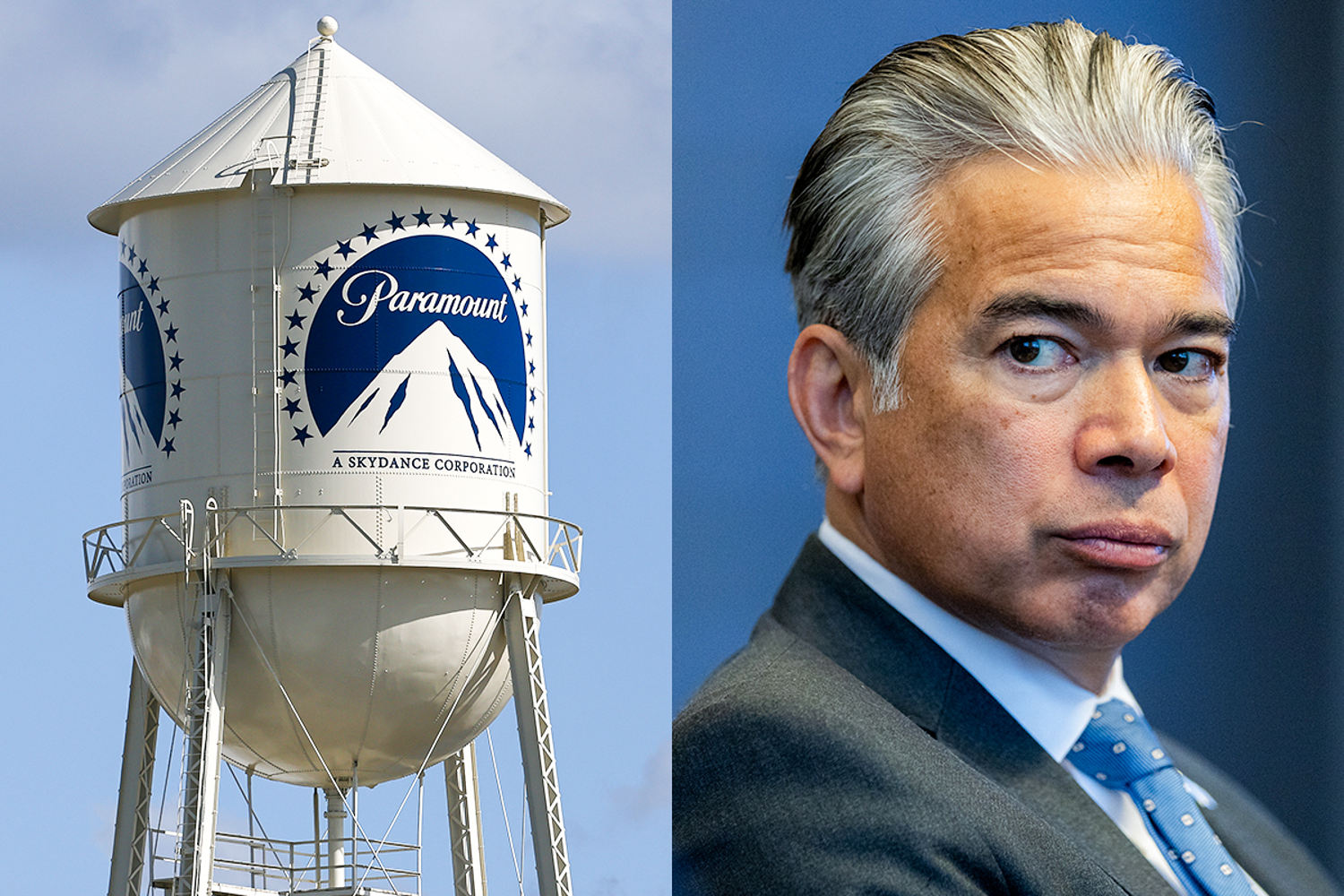
Paramount reaches deal with California, other states over Warner Bros. Discovery merger
Key Points
The California’s attorney general’s office announced a settlement Monday resolving a 12-state legal challenge to Paramount Skydance’s $110 billion merger with Warner Bros. Discovery, clearing a key hurdle for the transaction. The merger would join together two historic film studios (Paramount Pictures and Warner Bros. Pictures), two popular streaming platforms (Paramount+ and HBO Max) and two news organizations (CBS News and CNN) under the leadership of 43-year-old mogul David Ellison. The...
The California’s attorney general’s office announced a settlement Monday resolving a 12-state legal challenge to Paramount Skydance’s $110 billion merger with Warner Bros. Discovery, clearing a key hurdle for the transaction.
The merger would join together two historic film studios (Paramount Pictures and Warner Bros. Pictures), two popular streaming platforms (Paramount+ and HBO Max) and two news organizations (CBS News and CNN) under the leadership of 43-year-old mogul David Ellison.
The states opposing the deal, led by California Attorney General Rob Bonta, sued to block the merger on July 13, arguing in a 38-page complaint that it would “extinguish competition” in Hollywood.
Paramount agreed to freeze the merger until either the antitrust challenge was resolved or June 1, 2027 — whichever came first. Judge Araceli Martínez-Olguín of the U.S. District Court for the Northern District of California, who is presiding over the case, had scheduled an antitrust trial for early March.
The terms of the settlement include a pledge by the company to release 30 films per year for the first two years of the deal, followed by 32 films in each of the following three years — or pay a fee for missing that target. Paramount is also pledging to establish independent editorial boards overseeing the operations of CNN and CBS News.
Bonta also said that the combined company would invest more than $1 billion in production and film releases in the United States.
Shares of both Paramount SkyDance and Warner Bros. Discovery soared more than 10% as reports of the settlement circulated Monday.
The lawsuit challenging the deal was filed by Bonta and his fellow Democratic attorneys general from Arizona, Colorado, Connecticut, Massachusetts, Minnesota, Nevada, New Jersey, New Mexico, New York, Oregon and Washington.
They argued that the transaction violated Section 7 of the Clayton Antitrust Act of 1914, a federal law that bars mergers likely to reduce competition. The states said the deal would lessen competition in three areas: wide-release theatrical film distribution, anticipated top-grossing movie distribution and the market for distributing basic cable channels to cable and satellite providers.
Paramount rejected those claims, arguing that the states’ suit is “wrong on both the facts and the law” and “one of the weakest merger challenges in modern antitrust history.”
Paramount executives had been eager to wrap up the deal as soon as possible partly because the company agreed to pay Warner Bros. Discovery shareholders a “ticking fee” of 25 cents a share each quarter if the transaction did not close by Sept. 30 — a penalty worth more than $600 million every three months.
In August, Paramount’s lawyers asked Martínez-Olguín to require the merger’s legal opponents, which also includes the Writers Guild of America, to put up a nearly $1.9 billion bond. The money, the company said, would cover the costs of delays caused by the antitrust lawsuit.
The Department of Justice threw its support behind Paramount’s demand that the opponents should be forced to post a bond as the price of continuing to block the merger. Martínez-Olguín had scheduled a hearing on Paramount’s bond request for Sept. 24.
Paramount had already received regulatory clearance from the Justice Department, which approved the deal on June 12, and it has touted similar approvals from other foreign territories, including Australia, Canada and China.
The deal was also given the green light by the European Commission on July 21, which required the company to divest its stake in United International Pictures and not enter any film distribution deals with Universal in the European Economic Area for 10 years.
The merger also has the backing of AMC Theatres and Regal Cinemas, the largest movie theater chains in the U.S. by number of locations and screens.
But many outspoken actors, writers and producers in Hollywood have rallied behind efforts to block the merger, arguing in an open letter earlier this year that further corporate consolidation of the entertainment industry will “threaten the sustainability of the entire creative community.”
Paramount has repeatedly insisted the deal is “lawful, pro-competitive, and will benefit consumers, creators, workers, and the entertainment industry.”
The company has argued that big studios face healthy competition from smaller film distribution labels, including recent hitmakers Amazon MGM (“Project Hail Mary”), A24 (“Backrooms”) and Lionsgate (“Michael”).
Paramount (ORG)
California (LOCATION)
Warner Bros. Discovery (ORG)
Paramount Skydance’s (ORG)
Paramount Pictures (ORG)
Warner Bros. Pictures (ORG)
HBO Max (ORG)
CBS News (ORG)
CNN (ORG)
David Ellison (PERSON)
Rob Bonta (PERSON)
Hollywood (LOCATION)
Araceli Martínez-Olguín (PERSON)
the U.S. District Court (ORG)
the Northern District (LOCATION)