
Politics
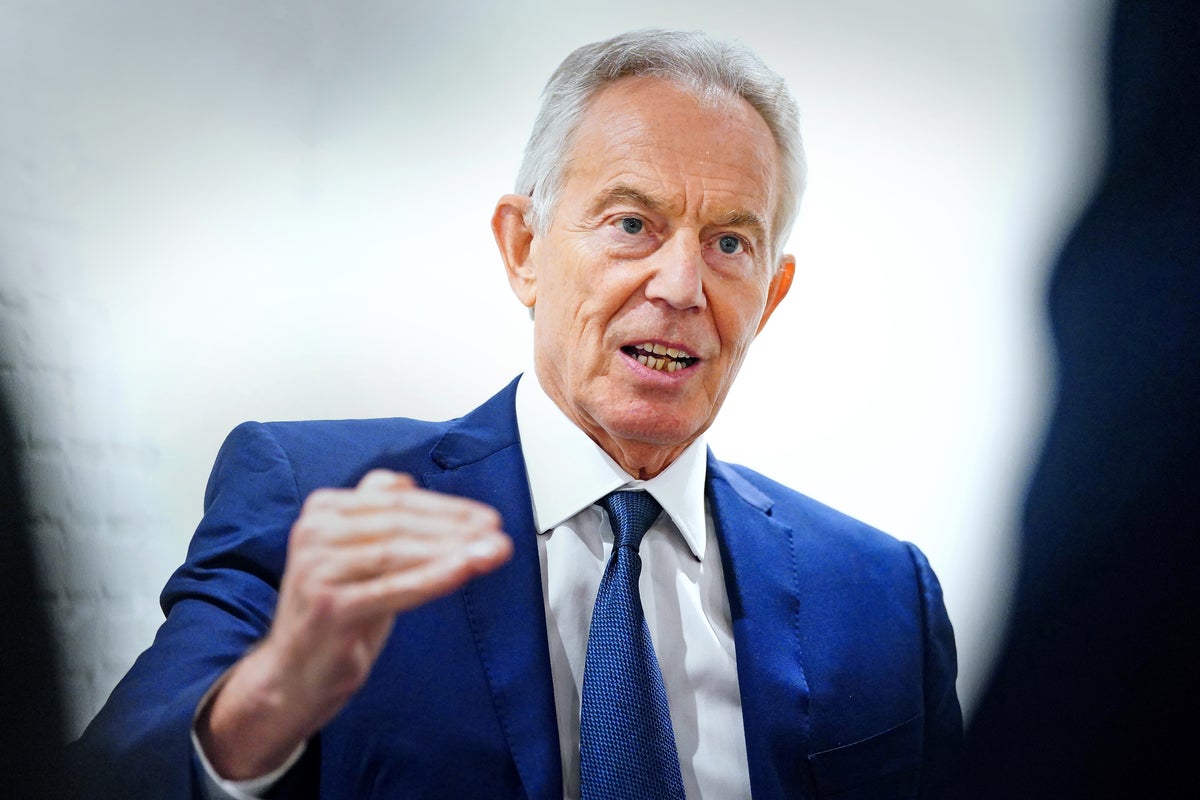
Stop giving cash benefits to young people with anxiety to end Neet crisis, Tony Blair urges
Key Points
Stop giving cash benefits to young people with anxiety to end Neet crisis, Tony Blair urges A new report also calls for a pause on plans to equalise the minimum wage for younger workers - Bookmark - CommentsGo to comments Young people with “non-work-limiting” health conditions like anxiety and depression should stop receiving cash benefits, Sir Tony Blair’s research unit has suggested. In a major new report, the Tony Blair Institute for Global Change (TBI) calls for a radical overhaul of the...
Stop giving cash benefits to young people with anxiety to end Neet crisis, Tony Blair urges
A new report also calls for a pause on plans to equalise the minimum wage for younger workers
- Bookmark
- CommentsGo to comments
Young people with “non-work-limiting” health conditions like anxiety and depression should stop receiving cash benefits, Sir Tony Blair’s research unit has suggested.
In a major new report, the Tony Blair Institute for Global Change (TBI) calls for a radical overhaul of the UK’s welfare and employment systems to combat a growing crisis among young people not in education, employment, or training (Neet).
One of the key proposals backed by the former Labour prime minister’s unit would see welfare cash payments for some under-25s redirected into mental health treatment, skills training, and job placements. Their proposal would see entitlement to both the Personal Independence Payment (Pip) and Universal Credit’s health element affected.
The TBI argues that the current welfare model is encouraging long-term inactivity by offering extra financial support without an emphasis on workforce participation.
The findings echo comments made by Alan Milburn, who is currently leading a government-commissioned review into young people and unemployment.
His work comes as the number of young people considered Neet continues to hover around the one million mark, recording a slight fall between April and June from 1.01 million to 981,000.
Delivering his interim findings earlier this year, the former health minister said that there is a “catastrophic system failure,” adding that “more young people are getting trapped on benefits when the overwhelming majority of them want to work.”
However, disability campaigners have pushed back amid speculation that Mr Milburn’s final report will recommend benefit cuts for younger claimants in the autumn.
In August, a coalition of more than 40 charities including Action for Children and Trussell told Mr Milburn that any change must be “built around the principles of support and opportunity, rather than the failed punitive approaches of the past.”
Responding to the TBI report, Abdi Mohamed, head of policy at disability equality charity Scope said: “Young disabled people are already on a financial knife edge and taking away benefits would risk plunging many more into poverty rather than helping them into jobs.
“The Government must use every lever available to help disabled young people who want to work into suitable employment. That means removing barriers by investing in apprenticeships, flexible working and training opportunities, not cutting the vital support many rely on.”
New prime minister Andy Burnham has committed to reducing Britain’s welfare bill, with spending on health benefits estimated to be £77.1 billion in 2025/26, up from £36 billion in 2019/20.
However, the prime minister’s spokesperson added last week that this “doesn't mean crude cuts that simply push people into crisis and create bigger costs elsewhere”.
Plans to change Pip – Britain’s most-claimed health benefit – are set to be announced later this year once a review into the payment by disability minister Stephen Timms concludes. The work was announced after 100 Labour MPs rebelled against plans to restrict the benefit last year.
Turning to the job market, the TBI report also argues that the cost to employers of hiring young people has grown too high. According to its researchers, the cost of employing an 18-year-old has surged by 40 per cent since 2015, spiking since Covid.
To address this, researchers propose a halt to Labour plans to equalise minimum wage rates between younger and older workers to reduce the cost to employers.
Their research highlights that the Netherlands has an 18-year-old minimum wage equal to just 50 per cent of the adult rate, while Britain’s sits at 76 per cent. The nation meanwhile has one of the lowest Neet rates in Europe at just 4 per cent, compared to Britain’s 13 per cent.
Ryan Wain, senior director of policy & politics at TBI, said: “Britain has a Neets crisis and the government is right to make it a priority. But getting young people ready for work – training, support, skills – is the easier half of a hard problem.
“The harder half is making sure there’s a job waiting when they are. Years of layered policy, compounded by economic stagnation has made things worse. Hiring a young person today is now more expensive and riskier than it ever needed to be. Most policies were well-intentioned on their own. Combined, they risk failing a generation.
“There is a way through. Back young people to step up while making it as cheap and simple for employers to hire them. That’s the opportunity bargain. It works both ways and it’s the only way we end this crisis.”
A Government spokesperson said: “This government is committed to reforming welfare through opportunity and work, and the final recommendations from the Timms and Milburn Reviews will lay the foundation for future reform.
“We are already creating more youth apprenticeships, offering £3,000 payments to businesses to hire unemployed young people and reforming sickness benefits to address the culture of people being signed off and written off.”
Join our commenting forum
Join thought-provoking conversations, follow other Independent readers and see their replies
Comments
Neet (LOCATION)
Tony Blair (PERSON)
Young (PERSON)
the Tony Blair Institute for Global Change (ORG)
TBI (ORG)
UK (LOCATION)
Labour (ORG)
the Personal Independence Payment ( (ORG)
Universal Credit’s (ORG)
Alan Milburn (PERSON)
Milburn (PERSON)
Action for Children (ORG)
Trussell (ORG)
Mr Milburn (PERSON)
Abdi Mohamed (PERSON)