
Science
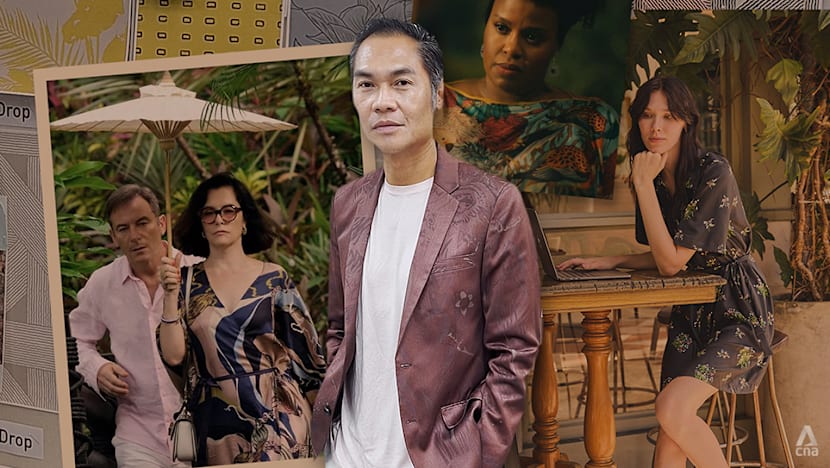
Thai silk house Jim Thompson is evolving for a new generation – with Be Inthavong leading the way
Key Points
Thai silk house Jim Thompson is evolving for a new generation – with Be Inthavong leading the way The Lao-American designer is helping modernise the 75-year-old Thai silk house while drawing on his own family heritage of handweaving. At Jim Thompson, the legendary Thai silk house, Be Inthavong holds the title of Fashion and Creative Design Director – the man tasked to patiently reshape a 75-year-old marque for a new generation, while staying rooted in the heritage that built it. Tall, urbane...
Thai silk house Jim Thompson is evolving for a new generation – with Be Inthavong leading the way
The Lao-American designer is helping modernise the 75-year-old Thai silk house while drawing on his own family heritage of handweaving.
At Jim Thompson, the legendary Thai silk house, Be Inthavong holds the title of Fashion and Creative Design Director – the man tasked to patiently reshape a 75-year-old marque for a new generation, while staying rooted in the heritage that built it.
Tall, urbane and always in full-throated laugh, Inthavong was born in Vientiane, the son of an aviation mechanic and a mother who ran restaurants alongside a jewellery manufacturing business. In other words, he was born into a family that made things well. When he was eight, the family settled in Texas. He studied biology at Texas Christian University, a path that gave little hint of what would come after. It was a move to New York, and a chance venture into hair accessories, that first pulled him toward the world of fashion.
For years, he kept his distance from anything Lao in his own work. “I didn’t want my creative work to be seen as ‘ethnic’ or ‘predictable’,” he said. A trip back to Laos in 2003 narrowed that distance. What began as a visit stretched into almost a year, much of it spent at the family looms beside his aunt. He describes it as “the eureka moment I had been seeking in my work”, when he discovered what he calls “the creative language of the hand-weaving craft” and what it might become in his hands.
That unexpected unlocking shaped everything that followed. First came Be & D, the New York handbag label he founded with Steve Dumain in 2004, which made its way into Bergdorf Goodman and Neiman Marcus and, by 2008, into a licensing collaboration with the great Diane von Furstenberg.
At the end of 2009, Inthavong chose to step away from the label and the partnership, and returned once more to Laos – this time to take the weaving somewhere new, coaxing leather into ribbons soft and slender enough to pass through a silk loom, a pace so unhurried it could take a full day to produce a single inch of cloth. He patented the technique in 2010 and, from it, built his own label, Be Inthavong.
Jim Thompson entered his life nearly a decade later. In 2019, the brand released a fabric collection under his name using that same leather-and-silk process. That year, he was appointed the house’s Fashion and Creative Design Director.
Inthavong occupies a kind of in-between space: Lao-born, raised in America and, as he puts it, “Proudly, I say I'm Lao-American.” That position, he feels, lets him hold the East-West tension the Jim Thompson brand has always lived inside. He grew up understanding part of Thai culture, he says, but because he was raised in the US, he is “foreign enough to the brand” to see it clearly. What’s more, Lao and Thai weaving traditions share deep roots, he notes, so his own ancestors' craft already sits somewhere within Jim Thompson's heritage patterns, recognised or not.
The point is, Jim Thompson was also someone who arrived from elsewhere. He founded the brand in 1951, making 2026 the brand’s 75th anniversary. An American who fell for Thai silk, built a company around it, and then vanished without a trace in the Malaysian jungle in 1967, Thompson is a mystery the brand still carries softly within its identity.
Inthavong's title spans the full fashion range of apparel, resort wear and accessories, with a daunting brief to keep it feeling of today. Much of his time so far has gone into gentle, careful tending. He says internal research showed that the company’s products were beginning to feel “old-fashioned” and “elephant-focused”. Which explains why he has spent his tenure refining the collection, easing out what no longer serves it, introducing new pieces, and guiding the brand toward what he calls “a truly lifestyle brand – the first from Asia”. He remains closely involved in product decisions, and leaves store styling and photoshoots largely in the hands of his teams, trusting them to carry the vision forward.
That vision sits alongside a much larger business. Jim Thompson's textiles have dressed five-star interiors for decades, with hotel groups including Aman, Anantara and Park Hyatt among its long-standing clients, and its wall-coverings and fabrics swathe hospitality and residential projects around the world.
Looking ahead, he speaks in broad, easy strokes about what comes next. “I would say all of it is possible,” he said of growth over the next five years – new markets, a younger customer, wider reach. Sidebar: Inthavong was behind the kaftans and textiles worn by the cast of The White Lotus season three – a name-drop that turned Jim Thompson's silk into television's most-photographed fabric of 2025.
Three-quarters of a century after its founding, the brand is looking beyond Thailand. “We are planning to go out of Thailand – so please stay tuned,” is all Inthavong will say for now. The house’s milestone 75th-anniversary is already being celebrated with a pair of limited-edition capsules, each carrying its own print story. The first, Endless Journey comprising kaftans, scarves, and clutch and beach bags in vibrant-hued silk patterns made in partnership with the Tourism Authority of Thailand has already launched; a second series follows this November.
Meanwhile, the eponymous label Inthavong built after leaving Be & D has never gone away – it continued discreetly through the years that followed, patented weave and all, even as Jim Thompson became the larger stage. His more personal hope is smaller and more precise: for Lao craft to be recognised internationally, distinct from the broader “Southeast Asian textiles” label it usually gets folded into, and known specifically as being "rooted on the indigenous skill of handweaving to the highest standards”. He has also just inked an agreement with local Singaporean textile supplier, Bode to distribute his personal line.
In that sense, he belongs to a small, rarified lineage of designers: the kind who can revive a storied house by day and keep a namesake label alive alongside it, in the tradition of Karl Lagerfeld steering Chanel while never letting go of his own name, or Marc Jacobs doing the same at Louis Vuitton. Two names, carried gently, by the same steady hands.
[Image text:] Orop
Drop
cna
Thai (ORG)
Jim Thompson (PERSON)
Inthavong (PERSON)
Lao (ORG)
Fashion and Creative Design (ORG)
Vientiane (LOCATION)
Texas (LOCATION)
Texas Christian University (ORG)
New York (LOCATION)
Laos (LOCATION)
Steve Dumain (PERSON)
Bergdorf Goodman (ORG)
Neiman Marcus (PERSON)
Diane von Furstenberg (PERSON)
America (LOCATION)