
Science
Google's TPUs to catch some rays in orbit next week
Key Points
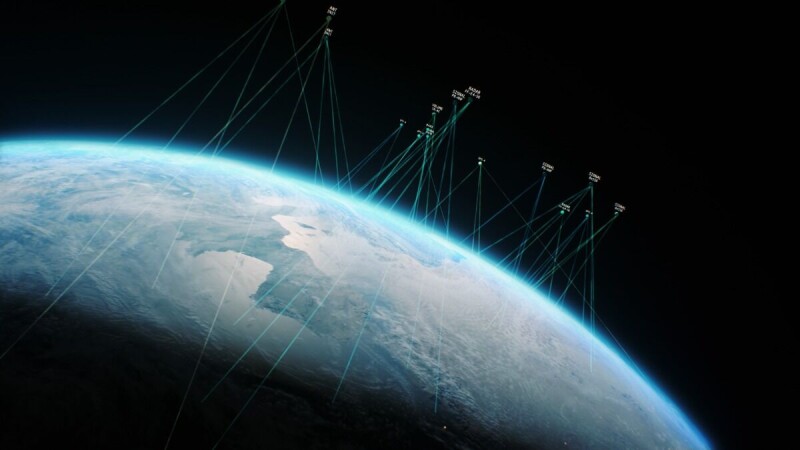
Google will loft its tensor processing units (TPUs) into orbit aboard a SpaceX rocket next week, in the latest phase of its previously announced Project Suncatcher space datacenter initiative. The launch is part of a test mission to better understand how its homegrown compute platform will handle both the rigors of launch and the harsh environment of space. Long term, the Chocolate Factory believes that space-based datacenter clusters powered by a limitless supply of solar energy from our...
Google will loft its tensor processing units (TPUs) into orbit aboard a SpaceX rocket next week, in the latest phase of its previously announced Project Suncatcher space datacenter initiative. The launch is part of a test mission to better understand how its homegrown compute platform will handle both the rigors of launch and the harsh environment of space. Long term, the Chocolate Factory believes that space-based datacenter clusters powered by a limitless supply of solar energy from our sun could hold the answer to more sustainable AI. Not everyone is convinced. Earlier this year, Gartner analyst Bill Ray described the idea as “peak insanity.” He argued that space-based datacenters won't be viable for decades and in the end won't serve terrestrial needs. But that hasn't stopped the likes of Nvidia and Google from trying. Google has been particularly pragmatic relative to others like SpaceXAI, which like any other Musk-run outfit can't help but set ambitious targets like 250-kilowatt satellites. Rather than grand plans and satellite concepts backed by dubious launch economics, Google's Project Suncatcher is being treated for what it is: a moonshot. Like past moonshots, it may ultimately go nowhere. Remember Project Loon? Google is still in the early stages of development here. It hasn't announced a space-rated TPU and instead has subjected its existing Trillium accelerators, which we looked at back in 2024, to a series of tests here on Earth to understand whether it can be done. The challenges are numerous, as Suncatcher's project leaders explained in a recent blog post touting the proof-of-concept launch. The first challenge is surviving the trip into space. During launch, they explain that the chips will be subjected to as much as 50-100 gravities worth of amplified forces. If not accounted for, the systems could literally shake themselves to pieces. Since announcing Project Suncatcher last year, Google's moonshot team has conducted several tests, including one involving a vibration table, to simulate these forces, but it won't know for sure if its kit will survive until it's actually in orbit. As you probably already guessed, once in orbit, the challenges facing Google's systems are far from over. Beyond the atmosphere, the chips will be subject to solar activity and cosmic rays that could cause single-event upsets, such as bit flips, as well as cumulative damage from ionizing radiation. By bombarding its TPUs with energetic particles using UC Davis' Crocker Nuclear Laboratory's proton beam, Google is reasonably confident that its TPUs won't fizzle out shortly after reaching their target orbit, but once again lab tests can only tell you so much, and there is a lot more that can go wrong. In particular, there's the issue of cooling. Heat can't be carried away by convection in the vacuum of space, and so these satellites will ultimately have to rely on radiation to reject it. According to Google, it will need roughly 1.3 square meters of radiator area to dissipate the heat generated by a single TPU, and the search and advertising giant hopes to pack dozens of TPUs into each satellite. This translates to a rather large radiator area. Once again, Google arrived at this conclusion based on testing within a temperature controlled vacuum chamber. However, this is only part of the challenge. There's also the issue of getting the heat from the TPU to the radiators in the first place. Here Google is exploring existing technologies like heat pipes and pumped coolants. With its first launch, Google aims to see what works, what doesn't, and to identify points of failure that can be addressed in future missions. The test sat is scheduled to launch aboard the Transporter-18 rideshare mission aboard a SpaceX Falcon 9 rocket on October 1. However, Google's challenges extend far beyond the chips themselves. Even if Google can figure out how to build space-rated TPUs without breaking the bank, the available launch systems put a practical limit on how big they can be built. Because of this, space-based AI training and inference will have to be spread across multiple satellites, necessitating high-speed interconnects. At the distances required, this means laser-based communication, which Google argues is well understood, but hasn't been adapted for the requirements of orbital AI just yet. Most existing inter-satellite communications have relatively low bandwidth over a wide area. Its clusters will need the exact opposite: extremely high bandwidth over relatively small distances. But even if Google can prove that orbital datacenter clusters can be made to work, there's no guarantee it'll be economical. Speaking with El Reg earlier this year, space datacenter startup Orbital admitted the entire venture depends on rockets from SpaceX and others driving the cost to orbit from around $7,000 per kilogram today to just $10 per kilogram, a target that many have expressed skepticism SpaceX will actually be able to deliver. Speaking of SpaceX, the rocket company's AI wing SpaceXAI aims to put its first space-based test systems into orbit by the end of next year. If all goes to plan, the simplified system will be the first of what could eventually become a constellation of up to one million satellites. But as is often the case with Elon Musk's claims, and Google's moonshots for that matter, their dreams don't always become reality and even when they do, it doesn't always happen as quickly as they'd hope. ®