
Business & Finance
Asian markets mixed after recent oil surge
Key Points
Asian markets mixed after recent oil surge HONG KONG: Asian markets were mixed on Friday (Sep 25) after recent oil price surges, as US and Japanese bond yields hit multi-year highs with no clear end in sight for the Middle East war. A two-month extension of a trade truce between the United States and China left several issues unresolved, analysts said, shifting lingering risks into the future. Oil prices eased slightly on Friday, with Brent Crude shedding 0.8 per cent after spiking more than...
Asian markets mixed after recent oil surge
HONG KONG: Asian markets were mixed on Friday (Sep 25) after recent oil price surges, as US and Japanese bond yields hit multi-year highs with no clear end in sight for the Middle East war.
A two-month extension of a trade truce between the United States and China left several issues unresolved, analysts said, shifting lingering risks into the future.
Oil prices eased slightly on Friday, with Brent Crude shedding 0.8 per cent after spiking more than 3 per cent on Thursday to extend previous gains.
Global stocks had mostly fallen on Thursday, as the benchmark US 10-year Treasury yield rose to its highest level since 2007, and the 30-year yield reached its highest since 2004.
Japan's 10-year yield also reached a fresh 30-year high Friday.
"Bond yields are bouncing around like a see-saw," Kathleen Brooks, research director at XTB, wrote in a note.
"There is no clear direction for markets," she said, listing unknown factors such as "are we in a bond crisis or not?" and "Is the Iran war getting worse or is the situation improving?"
"While these questions remain unanswered, volatility will continue to dominate, especially in the commodity and bond markets," Brooks said.
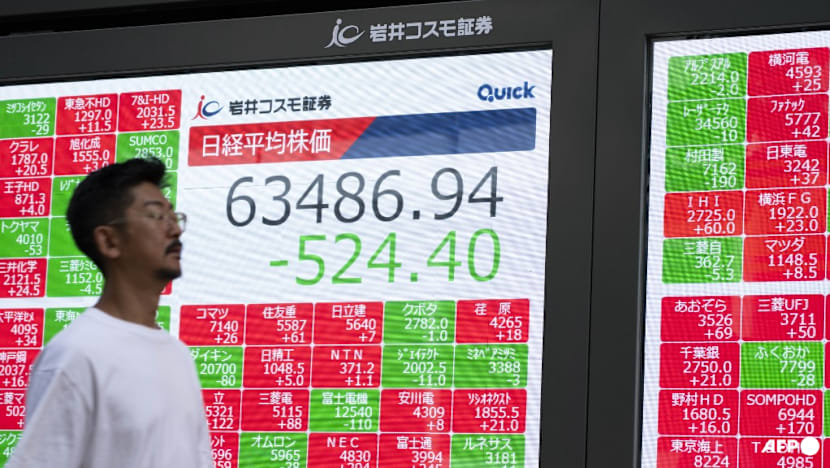
Tokyo closed 1.3 per cent higher, but Hong Kong fell 1.3 per cent, with Sydney and Jakarta also down. Shanghai, Taipei and Seoul were closed for holidays.
London opened 0.6 per cent higher, with Frankfurt and Paris up too.
Stock dips this week have been mild, along with "fairly moderate" movements in foreign exchange markets despite a "clear preference for the dollar", Brooks said.
Japanese Finance Minister Satsuki Katayama told reporters that US President Donald Trump had expressed concerns over the weak yen during a bilateral meeting in Washington this week.
Meanwhile, Trump hosted China's Xi Jinping for a lavish state dinner at the White House on Thursday, after a day of pomp and ceremony that masked deep tensions between the rival superpowers.
While business was on the menu at the state dinner, expectations of any major breakthroughs from Xi's visit were low.
One minor success - the extension of a trade truce by two months until January - was less than the two years that the Chinese had been hoping for.
Lloyd Chan at MUFG said that "renewed geopolitical risks in the Middle East are occurring against an already tight oil-market backdrop, raising concerns over both supply and inflation".
"Meanwhile, US-China trade risks remain in the background," he added.
"The trade truce has been extended by just two months to Jan 10, leaving issues over tariffs, agricultural purchases, rare earths, and technology restrictions unresolved."
[Image text:] OTHD
7&I-HD
29
1297.0
3122
+11.5
+23.5
NEICEE
SUMCO
1555.0
1787.0
+20.5
0521
FTHD
4010
2513
1152.0
Cuick
63486.94
524.40
JRy
7140
+26
20700
5587
+61
BIAT
1048.5
+5.0
5640
+7
NTN
371.2
+1.1
A
5965
12540
NEC
4830
2782.0
.0
2002.5
4265
+18
3388
4309
8+
3994
1855.5
+21.0
17
3181
4523
77t97
5742
3242
+37
FG
2735.0
1922.0
+23.0
362
E5
E#UFJ
3526
3711
+50
+69
T
2750.0
+21.0
SHD
SOMPOHD
1680.5
$990
+16.0
E
TAEP
8224
4985