
Politics
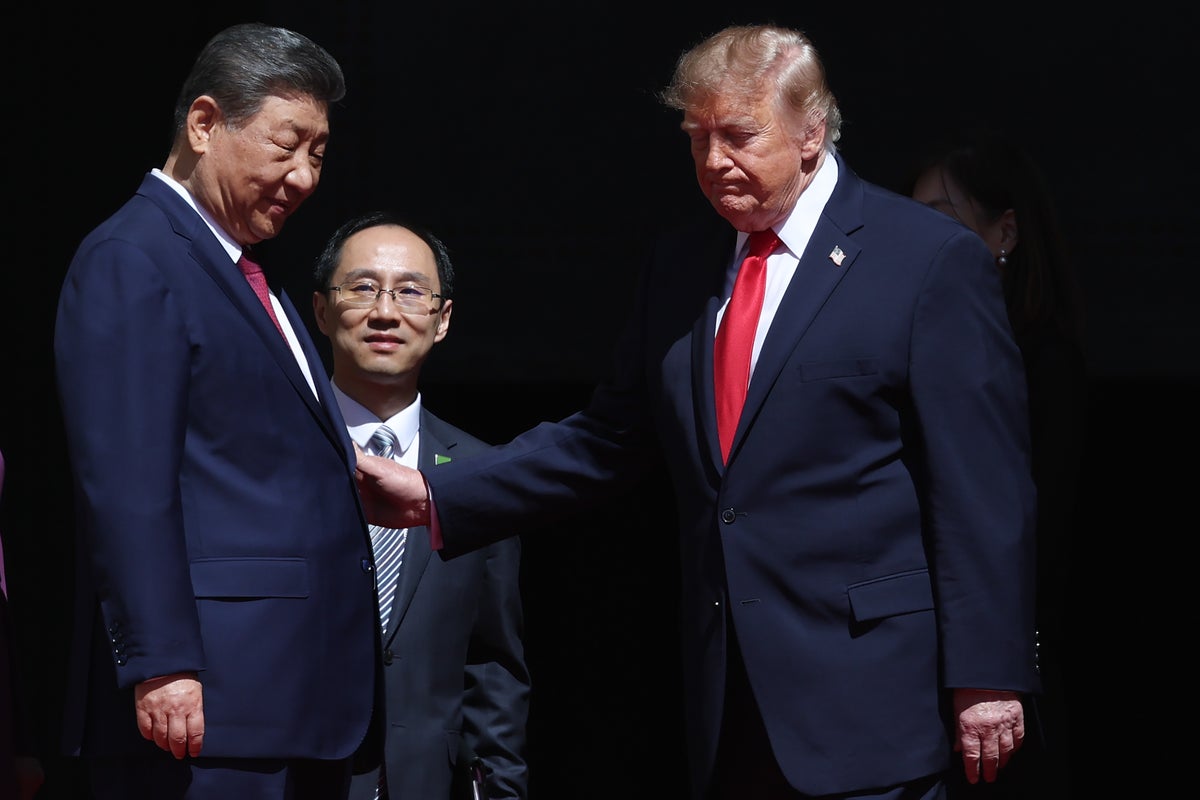
Taiwan celebrates after Xi Jinping leaves US empty-handed
Key Points
Taiwan celebrates after Xi Jinping leaves US empty-handed Xi pressed Trump to handle the matter of Taiwan ‘with prudence’, but secured no commitments from the White House - Bookmark - CommentsGo to comments Become an Independent member to bookmark this article Already a member? Log in Taiwanese officials are celebrating after Chinese president Xi Jinping returned from his three-day US visit without any substantial agreement on the self-governed island. Mr Xi's first visit to the White House...
Taiwan celebrates after Xi Jinping leaves US empty-handed
Xi pressed Trump to handle the matter of Taiwan ‘with prudence’, but secured no commitments from the White House
- Bookmark
- CommentsGo to comments
Become an Independent member to bookmark this article
Already a member? Log in
Taiwanese officials are celebrating after Chinese president Xi Jinping returned from his three-day US visit without any substantial agreement on the self-governed island.
Mr Xi's first visit to the White House in a decade appeared to be a bonding opportunity for the leaders to strengthen their personal diplomacy rather than achieving big public breakthroughs on a host of contentious issues, which included Taiwan.
One tangible outcome of the visit was that the US and China agreed to extend by two months a trade truce that was due to expire on 10 November. Details of the agreement will be released on Monday, said US trade representative Jamieson Greer.
Beijing claims sovereignty over Taiwan, which has its own democratically elected government, and hasn’t ruled out using force to bring the island under its control.
Mr Xi pressed Mr Trump on Taiwan on Thursday, saying he hoped the US would "handle the Taiwan question with prudence." He hoped that "the US side will adhere to the correct position of opposing 'Taiwan independence'," according to the Chinese state media.
The US, akin to most nations, has no formal diplomatic relations with Taiwan, but is bound by US law to provide the island with the means to defend itself. Washington is the biggest single arms exporter to Taiwan.
Washington's Asian allies were watching closely to see how Mr Trump talked about Taiwan following Mr Xi's visit.
Chinese state media outlet The People's Daily reiterated in an editorial that Taiwan was "the core of China's core interests and the first unbreakable red line in China-US relations".
Following his own state visit to Beijing in May, Mr Trump paused what would have been the largest-ever arms sale package to Taiwan, worth about $14bn, describing it as a “very good negotiating chip”.
That was seen as a big victory for Beijing’s campaign to drive a wedge between Taipei and Washington. But there have been no indications that Mr Xi secured any further concessions on Taiwan during this week’s trip.
Wang Hung-jen, a political science professor at Taiwan's National Cheng Kung University, said so far the outcome of the summit was better than had been expected, with Mr Xi not apparently directly raising arms sales and Taiwan not the main focus.
"Looking at the results, many things we thought would be very bad didn't happen," he said. Mr Wu said the Taiwanese government had been in "continuous communication" with Washington about the summit.
Taiwan's deputy foreign minister Francois Wu gave the government’s response on Saturday morning, suggesting Mr Trump had done the right thing for America’s own interests by not bowing to Chinese pressure on the issue.
He said that maintaining weapons sales to Taiwan and thereby giving the island the capability to defend itself so it does not have to live under Chinese rule, as well as “allowing Taiwan's semiconductor industry to continue contributing to the world”, were “important US interests”.
Taiwan is one of the leading producers of the advanced chips powering the AI revolution, something Mr Trump has taken great interest in promoting lately – he has suggested rebranding AI more positively as “super intelligence” and dismissed any concerns over the technology’s safety.
David Perdue, the US ambassador to China, told CNBC that there has been no change in Taiwan policy by Mr Trump, including on the 1979 Taiwan Relations Act which mandates arms sales to the island.
"We want peace across the strait. We don't want coercion. We don't support independence and we think that, you know, President Xi has gotten that message. President Trump has shown respect and listened to their side of that argument," Mr Perdue said.
US Senate Democrats have criticised Mr Trump for being unable to secure a pact on AI and failing to publicly address China's military pressure on Taiwan and called for the immediate delivery of approved military aid and arms sales to the island.
“It was such a layup,” rued Ro Khanna, member of the House of Representatives’ select committee on China.
“If [Trump] had just said, look, we have established technical working groups and we’ve agreed to a framework that has called for DeepSeek and Moonshot and Alibaba to sit down with Anthropic and OpenAI and Gemini and with technical experts and they’re going to commit to at least a pause on any self-improving AI, he could have looked like he was a statesman taking the lead," he said, according to The Guardian.
“I believe Xi Jinping would have agreed to at least some of the technical working groups. But he [Trump] didn’t want to, he has no interest in doing that.”
Join our commenting forum
Join thought-provoking conversations, follow other Independent readers and see their replies
Comments