
Business & Finance
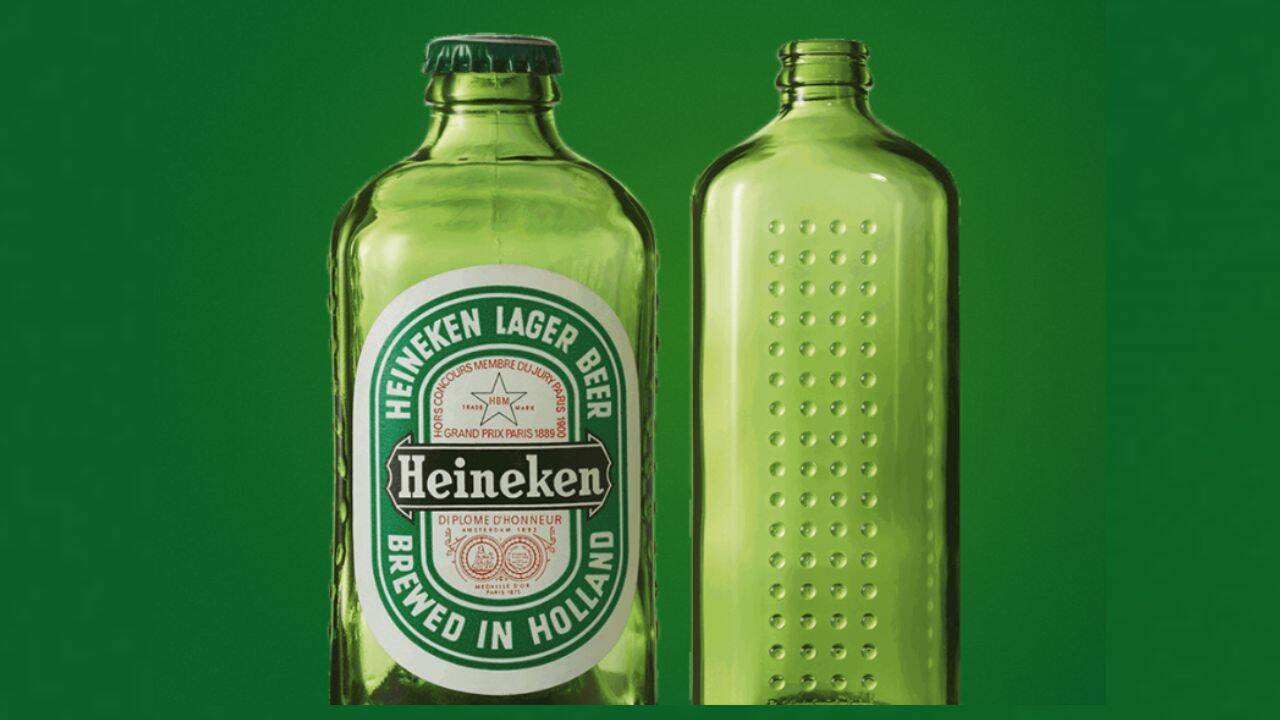
Heineken's 50,000 bottle-bricks in 1963 built a house in 1965, then hit a wall
Key Points
In 1963, Heineken produced 50,000 rectangular bottles designed to work as both beer containers and building bricks. The idea came from Alfred Heineken, who wanted the bottles to serve a second purpose after the beer had been consumed. Two years later, a prototype glass house was built using the unusual bottles, but the concept never reached the market because of technical and commercial problems.
In 1963, Heineken produced 50,000 rectangular bottles designed to work as both beer containers and building bricks. The idea came from Alfred Heineken, who wanted the bottles to serve a second purpose after the beer had been consumed. Two years later, a prototype glass house was built using the unusual bottles, but the concept never reached the market because of technical and commercial problems.
According to Smithsonian Magazine, the idea began with a trip to the Caribbean island of Curacao in 1960. Alfred Heineken noticed that Heineken bottles were scattered across the beaches. At the time, bottles were commonly returned to breweries for refilling and could make around 30 trips between consumers and breweries. But Curacao did not have enough infrastructure to collect and reuse all the bottles.
At the same time, Heineken saw another problem. Some of the impoverished communities he visited had limited access to proper building materials. He began thinking about whether the same bottle causing a waste problem could also become part of a solution. That led to the idea of a 'brick that holds beer'.
Back in the Netherlands, Heineken worked with architect John Habraken to develop the concept.
The result was called the Heineken World Bottle, or WOBO. Unlike the company's familiar cylindrical beer bottle, the WOBO was rectangular and designed to be used as a building component after the beer was finished.
How the bottle was designed
The long sides of the WOBO had interlocking grooves. When the bottles were placed horizontally, these surfaces were intended to help them fit together and be stacked using mortar or cement. A small 10-foot-by-10-foot shack would have needed about 1,000 bottles to build.
Yu Ren Guang described the thinking behind the design in Packaging Prototypes 3: Thinking Green- “On returning to Holland, Alfred set about conceiving the first ever bottle designed specifically for secondary use as a building component, thereby turning the function of packaging on its head,” Guang said as quoted by Smithsonian.
The idea also attracted attention from designers. Martin Pawley described WOBO in Garbage Housing as “the first mass production container ever designed from the outset for secondary use as a building component.”
But creating a bottle that could hold beer and also work as a brick was not simple. Several versions of the prototype were considered before the final design was produced.
One major problem was the bottle's neck. A beer bottle needs a neck so that people can pour and drink from it. But that same protruding neck made the bottle harder to stack after use. A brick-shaped bottle therefore had to balance the requirements of a drinking container with those of a building material.
The final WOBO design came in two sizes, 350 and 500 millimetres. The smaller bottle was intended to work as a half-brick, helping builders even out rows during construction. In 1963, Heineken produced 50,000 WOBO bottles for commercial use.
WOBO bottles had interlocking grooves to help them stack horizontally with mortar or cement.
Why the brick bottle never reached market
Despite the unusual design, the WOBO did not become a commercial beer bottle. The problems were not limited to its shape.
The bottle had to be made with thicker glass because it was designed to be laid horizontally. That increased the cost of producing it. Conventional cylindrical bottles were cheaper and could also be produced faster.
There was another issue. Customers were already familiar with cylindrical bottles and found them easy to hold. The rectangular WOBO changed that familiar experience.
Earlier designs also faced criticism. Two models were ultimately rejected by Heineken. One prototype was described by the company's marketing team as too “effeminate” because of the shape of the bottle.
Although the bottle did not enter the market, Heineken did build a working demonstration. In 1965, a prototype glass house was constructed near Alfred Heineken's villa in Noordwijk, outside Amsterdam.
The project went beyond the bottles themselves. Plastic shipping pallets that had been intended for transporting the WOBOs were also reused as sheet roofing for the structure. The two buildings still stand at the former brewery site that is now the Heineken Experience museum.
The idea continued beyond WOBO
Heineken's failure to commercialise the brick bottle did not end the wider idea of designing bottles for secondary uses. Another company, EM1UM, later developed bottles that could be connected lengthways or sideways. Their designs used knobs and depressions that allowed the bottles to attach to one another.
EM1UM's bottles were easier to manufacture using automatic bottling machines than the Heineken design and saw most of their success in Argentina. The company also received awards for bottle designs including prisms, cubes and cylinders.
The WOBO idea was revisited again in 2008. French design company Petit Romain developed plans for a product called the Heineken Cube. Like the original WOBO, it was designed to be stackable and easier to pack than conventional cylindrical bottles. But unlike WOBO, the Cube was intended to save space during travel rather than become a building material. The Heineken Cube also remained a prototype.
Heineken (ORG)
Alfred Heineken (PERSON)
glass house (ORG)
Smithsonian Magazine (ORG)
Caribbean (LOCATION)
Curacao (LOCATION)
Netherlands (LOCATION)
John Habraken (PERSON)
the Heineken World Bottle (EVENT)
WOBO (ORG)
Yu Ren Guang (PERSON)
Packaging Prototypes (EVENT)
Holland (LOCATION)
Alfred (PERSON)
Guang (PERSON)