
Science
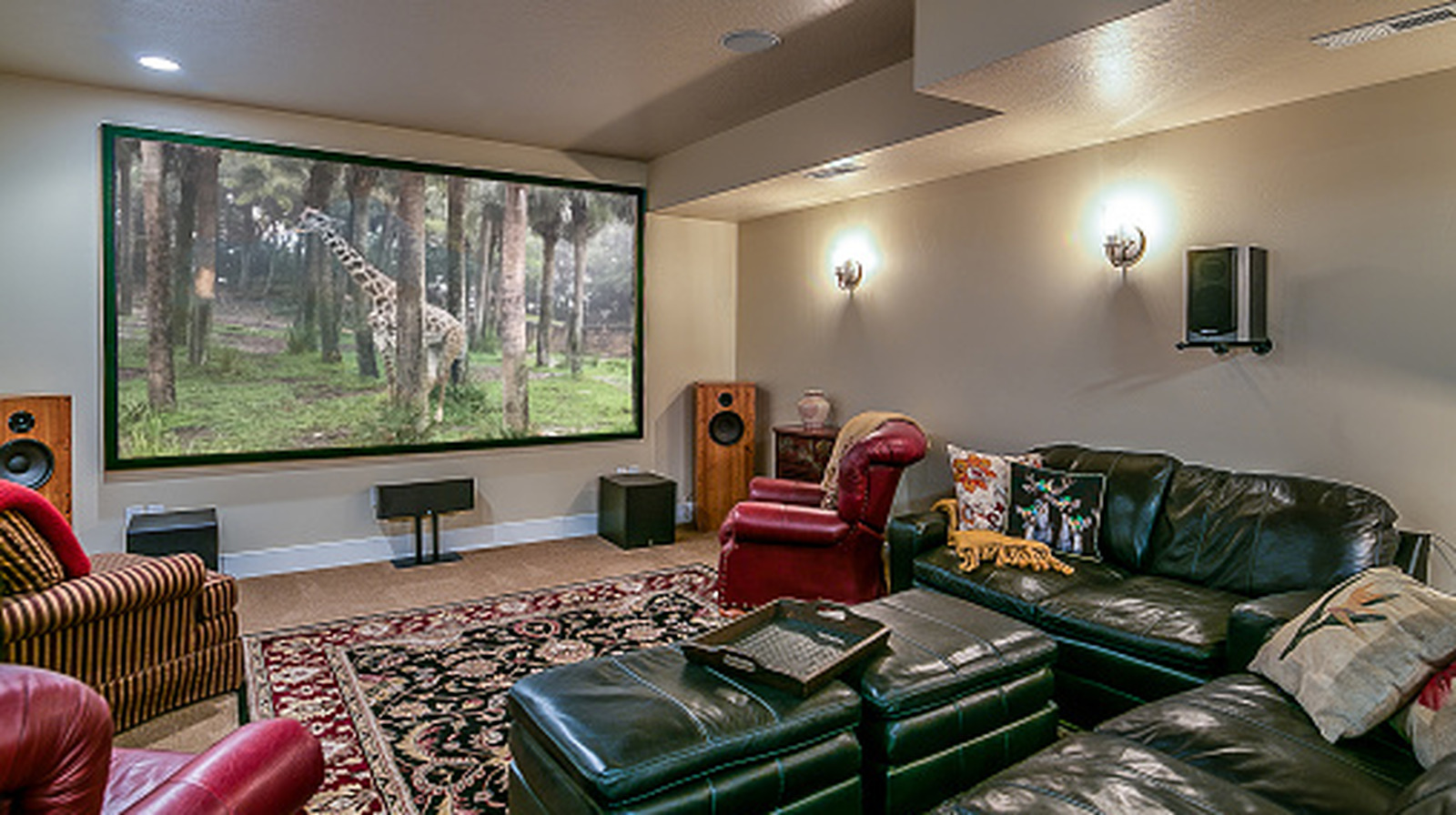
How high is too high for speakers in your home sound system?
Key Points
How high is too high for speakers in your home sound system? Too much height makes dialogue and fine details sound less direct. Setting up a home sound system is an exciting prospect, but can be surprisingly complicated.
How high is too high for speakers in your home sound system?
Too much height makes dialogue and fine details sound less direct.
Setting up a home sound system is an exciting prospect, but can be surprisingly complicated. Physics, it seems, has its own opinion on where and how high your speakers should be. Every room is different, and though most are roughly rectangular or square, you still have to contend with different sizes and furniture layouts. For the front, left and right speakers in a home sound system, "too high" typically means the speakers are mounted or placed well above your ears when you're sitting down. For the most part, a straight and level pathway from the speakers to your ears (while you're sitting down) is the best way to go.
This rule doesn't necessarily apply to certain speaker types, like subwoofers or upward-firing speakers designed to bounce sound off the ceiling. Usually, the front, right and center channels are forward-firing and high-frequency, which is more directional than bass. If these speakers fire over your head, some of the dialogue detail, cymbals and positional effects are lost.
For example, a bookshelf speaker placed at the highest point will produce plenty of sound, but the rich details will sound less clear or muted. Shifting the speakers down to seated ear height will rectify the problem. This may require some creative renovations in your soon-to-be home theater setup, but if you want the best out of your shiny new speaker system, it's worth the effort.
High placement depends on the speaker's role
Front speakers do most of the heavy lifting with dialogue, music and on-screen action, so they produce the best results at seated ear level. But this same height rule doesn't apply to every speaker. The center-channel should be as close to the height of the front and left as possible, but doesn't have to be perfect. For instance, if you have to place it at the bottom of the TV, tilt it upward a bit so it's aimed at the listener.
Surround speakers are a little more flexible because you can place them above seated ear level, as much as 2 or 3 feet. You shouldn't place them so high that the effects seem to roll off the ceiling, like a height/upward-firing speaker. Installing them too high will blur the separation between sounds from behind or beside you and sounds from overhead.
Subwoofers are the exception to the rule. Since they produce low-frequency sound effects, their drivers don't have to be aimed right at your ears and are much less sensitive to vertical height. Subwoofers placed on the floor are fine and typical of most setups. Just keep in mind that a subwoofer's position in the room still has a substantial impact on the bass, so not every placement position is equal.
What is the 38 percent rule for speaker placement?
Think of the 38 percent rule as a starting point for positioning the primary listening seat in a rectangular room. Measure the room from the front wall (where your front speakers and TV sit) to the back wall, and place your primary seat about 38 percent of the room's length away from the front wall. For instance, if your measurement is 20 feet, the primary listening seat will sit roughly 7.6 feet from the front wall. The idea is fairly simple: The 38 percent rule avoids sitting directly in the center of the room, where the bass buildup and dips are more noticeable. There's no guarantee that it will be absolutely perfect, however, and that's especially true in an irregularly shaped room.
Once you have your primary listening seat in place, it's time to switch the rules. The 83 percent rule is a speaker placement check, and the distance between the front speakers should be about 83 percent of the distance from the listening seat to the midpoint between them. If your primary seat is 10 feet from the midpoint between the left and right front speakers, start by placing the two speakers about 8.3 feet apart from each other.
Keep in mind that the 38 percent and 83 percent rules apply to distances, not speaker height. After you establish the distances, make sure the primary speakers are placed so their high-frequency drivers are close to your seated ear level and aimed toward the main listening seat. Again, since every room and furniture arrangement is different, consider these general height and distance rules as a baseline. You can always shift them around incrementally until the sound is as close to perfection as it gets.