
Education
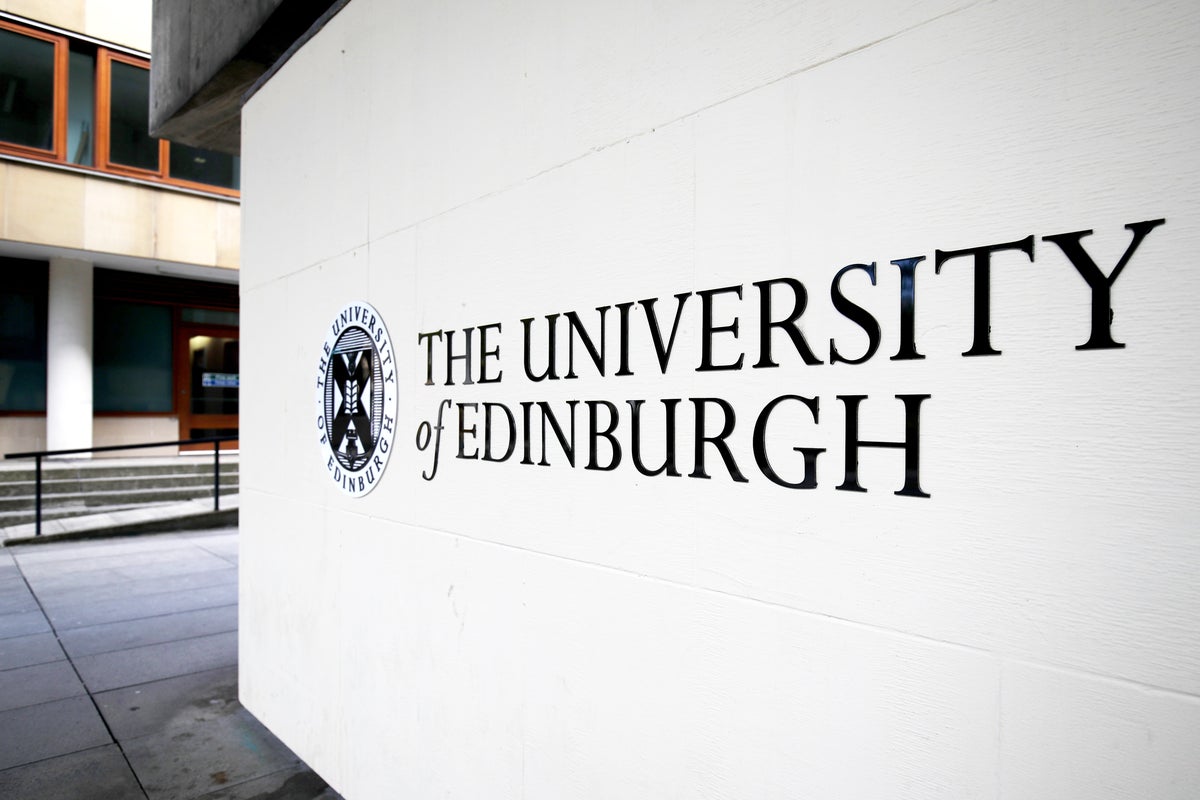
Thousands of staff at top UK university to begin five-week strike action
Key Points
Thousands of staff at top UK university to begin five-week strike action The strike action is scheduled to last until late October - Bookmark - CommentsGo to comments Become an Independent member to bookmark this article Already a member? Log in Around 3,000 staff members at the University of Edinburgh are set to launch five weeks of industrial action over £140 million in spending cuts and compulsory redundancies.
Thousands of staff at top UK university to begin five-week strike action
The strike action is scheduled to last until late October
- Bookmark
- CommentsGo to comments
Become an Independent member to bookmark this article
Already a member? Log in
Around 3,000 staff members at the University of Edinburgh are set to launch five weeks of industrial action over £140 million in spending cuts and compulsory redundancies.
Members of the University and College Union (UCU) begin their strike on Monday, with the disruption scheduled to last until 30 October.
The industrial action comes as the institution prepares to scrap 90 academic programmes, following an announcement by university leadership two years ago outlining £140 million in savings alongside enforced job losses.
Unions estimate that 1,800 posts will ultimately be eliminated, though representatives noted that senior management could halt the strike by agreeing to key demands.
UCU leaders are demanding an immediate guarantee against compulsory redundancies, a halt to cuts targeting fixed-term and hourly-paid workers, a revised surplus target, and a focus on reducing capital expenditure rather than staffing budgets.
Cecile Menard, UCU Edinburgh branch co-president, said: "The very last thing staff want to be doing at the start of term is standing on a picket line.
"We want to be welcoming new and returning students, and getting on with the excellent teaching, research and student support that this university’s staff are known for.
"The fact that, instead, we’re on strike and that students are seeing the start of term disrupted is entirely down to university senior management.
"Senior management can stop this strike today by acting on what our members are asking for: prioritise cuts to non-staff budgets and stop the redundancies that are decimating our university while leaving those who remain with an unmanageable workload and exhaustion.
"Senior management cannot keep cutting staff and expect students to receive the education and support they deserve.
"That 90 of our programmes are facing closure is a stain on the university’s name and demonstrates the failure of senior management.
"Management has already pushed through hundreds of hidden redundancies, with some classes doubling in size over the past couple of years as a result.
"We’re striking to stop more jobs being lost, but also for a university that respects its core educational purpose and its duty to students."
UCU general secretary Jo Grady said: "Staff at Edinburgh have taken multiple days of strike action and participated in a marking and assessment boycott but management have still, despite reserves over £3 billion, refused to rule out compulsory redundancies.
"With a new minister responsible for universities in place, I’m repeating the union’s demand that ministers use their influence to ensure that universities put staff and students ahead of profits, and that Edinburgh uses its reserves to prevent job cuts."
University principal Professor Sir Peter Mathieson said : "We are extremely disappointed that, despite ongoing discussions, the University and College Union has announced five weeks’ strike action, which will unfairly and deliberately target our students’ first semester of the academic year.
"While we recognise the right of staff to take this action, I want to assure our students that we will continue to do everything we can to mitigate the impacts of that action on them.
"In addition, we remain firmly committed to constructive and transparent engagement with our joint unions.
"To enable the university to thrive, and protect its position as a world-leading institution, we must take responsible and sometimes difficult decisions.
"Using reserves to cover day-to-day outgoings is not a reliable or responsible way to solve the underlying problem long-term.
"We need to create a sustainable model that enables the university to continue educating students, advancing research and innovation, and – ultimately – making the world a better place."
He added: "As society changes, like other institutions, we undertake regular evidence-based reviews of our academic portfolio to make sure it continues to align with student demand, a constantly evolving job market and other external demands.
"Decisions regarding our future academic offering have been guided by in-depth consideration of data and disciplinary insights from academics and experts in their field. Proposals have then followed our robust governance processes.
"We will continue to share information and support our community as we navigate the necessary steps to shape our future."
Join our commenting forum
Join thought-provoking conversations, follow other Independent readers and see their replies
Comments
[Image text:] THE UNIVERSITY
fEDINBURGH