
Entertainment
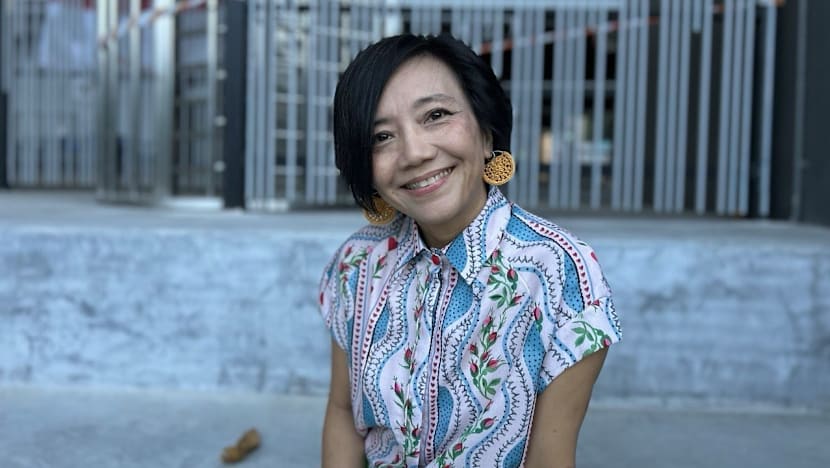
She once interviewed boy bands – now she fights for migrant workers’ dignity and rights
Key Points
She once interviewed boy bands – now she fights for migrant workers’ dignity and rights Almost two decades of advocating for migrant workers in Singapore have changed how Stephanie Chok sees everyday life. From restaurant staff’s work passes to whether a domestic worker gets her day off, the HOME executive director says she is always alert to the inequalities migrant workers face. For most people, dining out or visiting someone at home is an ordinary, even routine, experience.
She once interviewed boy bands – now she fights for migrant workers’ dignity and rights
Almost two decades of advocating for migrant workers in Singapore have changed how Stephanie Chok sees everyday life. From restaurant staff’s work passes to whether a domestic worker gets her day off, the HOME executive director says she is always alert to the inequalities migrant workers face.
For most people, dining out or visiting someone at home is an ordinary, even routine, experience. But for Stephanie Chok, it might leave her feeling unsettled or uneasy.
In a restaurant, she might observe the waitstaff and wonder what kind of work pass they’re on. What might they be earning? Is everything about their employment above board?
On the street, encountering a migrant worker might prompt her to wonder if they’re from an approved source country, or what their recruitment fees were like.
If she’s in someone’s home, and it’s a Sunday, she might notice if the helper doesn’t have the day off.
Work-life balance? Try work-life boundary blurriness instead.
After almost two decades of working with and advocating for migrant workers, the executive director of the Humanitarian Organization for Migration Economics (HOME) and mother of two said she no longer knows how to switch off.
“I don’t know how to separate [my work life and private life] anymore,” Chok said. “I don’t feel off duty. Maybe I won’t check my emails, but if I’m out somewhere and I see a migrant worker in distress or who needs assistance, I wouldn’t say, ‘Oh, I’m not involved, I’m not going to call the helpline. I’m not going to ask questions’.
“I don’t think that kind of separation is so neat.”
Chok is perhaps best known for being one of the key figures who supported Indonesian domestic worker Parti Liyani throughout her high-profile, four-year legal ordeal, in which she was accused of stealing from her employer, former Changi Airport Group chairman Liew Mun Leong, and his family.
To think that Chok almost trod a path in entertainment and lifestyle journalism instead – in her younger days, she wrote for the now-defunct Lime and i-S magazines. And while she enjoyed her time there, those stints did little to satisfy her deep-rooted yearning to help others.
LEARNING TO LOOK
Chok, 53, grew up with a prominent architect father and a medical social worker mother. Her late father, Chok Yan Hoi, was the brains behind two of Singapore’s most iconic structures: Tan Boon Liat Building in Outram and the former Crown Prince Hotel on Orchard Road (where Pullman Singapore Orchard stands today).
While her dad played a role in shaping Singapore’s built environment, her mum, Judy Chok, who worked at the former Woodbridge Hospital (now the Institute of Mental Health), also contributed to society in her own quiet way.
As a child, Chok would sometimes tag along on outings with her mother’s patients. Later, when her mother volunteered at Singapore Cheshire Home, which supports adults with physical disabilities, she went along too.
“I watched her being part of interactions with people who are generally stigmatised in the community, but were not treated as stigmatised in that setting,” she recalled.
Perhaps being exposed to that distinction from a young age made her more attuned to those who existed on the fringes of society.
As a young woman, she volunteered with the Society for the Prevention of Cruelty to Animals and wrote complaint letters to newspapers and magazines when celebrities appeared in fur. In her 20s, she travelled alone to Cambodia to volunteer at a children’s home, an experience that exposed her to different forms of inequality and human trafficking.
FROM BOY BANDS TO MARINA BAY SANDS
In her late 20s, Chok landed a job at Lime, a youth-oriented magazine whose pages were filled with celebrity gossip and pop culture buzz. The job was enjoyable enough but she couldn’t foresee herself endlessly asking boy bands their favourite things or who they would take to a desert island. Neither could she envision a future revolving around reporting on restaurant openings.
Her breakthrough came when she decided to return to Murdoch University in 2006 to do a PhD. She already had a master’s degree in development studies from the same institution in Perth, Australia, where women’s rights, environmental issues, development and inequality were part of her academic landscape.
Her doctoral thesis revolved around labour justice and political responsibility. The plight facing construction workers who were building Marina Bay Sands at the time became her central case study.
Many of the workers she encountered were seeking help from HOME over salary disputes and work injuries. Her research brought her into closer contact with the organisation, and she began volunteering there during her fieldwork.
That led her to volunteer gigs with other nonprofits like Transient Workers Count Too (TWC2) and Migrant Voices, both of which support and advocate for migrant workers.
“It was one of those situations where, what you see you cannot unsee,” she offered. “Once you understand the kind of structural injustices migrant workers are exposed to on a regular basis, then you see it everywhere.”
In 2017, HOME offered her a job as casework and research manager, specifically related to domestic workers, and she was based at the shelter. She remained in that role for almost two years before taking up other jobs. In 2023, she returned to HOME as its executive director.
THE PROBLEM WITH TURNING A BLIND EYE
While cases like that of Parti Liyani and Piang Ngaih Don, the Myanmar domestic worker who was abused to death, tend to grab headlines, it’s the day-to-day indignities and injustices faced by migrant workers that get to Chok most. These are the cases that the public tends to turn a blind eye towards.
“What was really frustrating was hearing stories of domestic workers who are verbally abused every day, being called names, or belittled. They are treated with a lack of respect and dignity by not just adults in the household, but even children, who poke their feet at them to wake them up, or wipe their faces with dirty dish cloths.
“Sometimes they are not fed properly in the home. And even though they suffer these indignities, they still have to ask that same employer for permission to transfer to another employer. That’s the system in Singapore, where migrant workers have limited job mobility and are so dependent on employers for their basic needs and rights,” Chok told CNA Women.
Listening to these stories week in and week out made her realise how normalised exploitation and dehumanisation of migrant workers are in Singapore.
Food, in particular, has become an unexpectedly revealing lens.
At HOME’s shelter, she says, domestic workers have consistently complained about food. Some describe being given only instant noodles and white bread. Others rail at being allowed to eat only leftovers, being denied fresh food or having their portions controlled. Some have their food monitored so closely that the number of eggs in the refrigerator is counted.
It sounds almost too mundane to constitute abuse. But therein lies the problem.
Ask these women about their lives back home, Chok said, and the contrast can be striking. Some come from places where fruit is so plentiful that they can pick mangoes and papayas from trees in their backyard or eat rice for breakfast.
A PURPOSE-DRIVEN LIFE
Chok is careful not to take all the credit for the work. The HOME team consists of 11 full-timers and a large pool of volunteers, all of whom she describes as being values-aligned, empathetic, justice-minded and collaborative.
Asked how she finds fulfillment in her work, Chok pointed to the everyday occurrences where she can make a difference: Providing shelter to someone who needs it, helping a worker understand a salary claim, liaising with authorities when someone is struggling to access medical care, offering subsidised training and creating opportunities for migrant workers to have their voices heard.
“Each and every one of these things that we do feels important and meaningful to me,” she affirmed.
For someone dealing with stories of exploitation and abuse on a daily basis, surely the emotional toll has been heavy? Chok brushed off the suggestion.
“If I think back to a different life path or trajectory… Let’s say I stayed in publishing. Would I have had a meaningful and fulfilling life?
“I don’t seriously consider the ‘what ifs’ anymore. I drifted away from publishing because I was unanchored and searching for purpose. But I feel very fortunate and privileged right now to have a job that I find deeply meaningful.”
FROM HOME TO… HOME
Chok’s work has been inextricably intertwined with her private life. In fact, she met her husband, musician Patrick Chng of indie rock band The Oddfellows, during her short tenure in MTV Asia.
The pair stayed friends over the years. He was there when she was doing her PhD fieldwork. He drove her around to meet workers, brought them food, accompanied her to the Ministry of Manpower and went to the airport with her to meet workers.
He was, as she put it, “in the thick of it”.
Today, Chng has made his own midlife career pivot. He works as an allied educator on an adjunct basis while also busking. The flexibility means he often takes their two sons, aged 11 and 15, to and from school. He also donates portions of his busking proceeds to charity.
But perhaps the most telling evidence of the family’s values comes from Chok’s younger son, who accompanies her to HOME events – many of which fall on a Sunday – because he wants to be involved.
The family has a domestic worker with whom he is very close. Recently, the boy accompanied her to give food to another domestic worker in their block who wasn’t getting enough to eat.
When Chok told him that this was, in fact, common, he had a simple response. “But isn’t that abuse? Why isn’t anything being done about this?” he asked.
CNA Women is a section on CNA Lifestyle that seeks to inform, empower and inspire the modern woman. If you have women-related news, issues and ideas to share with us, email CNAWomen [at] mediacorp.com.sg.
Singapore (LOCATION)
Stephanie Chok (PERSON)
HOME (ORG)
the Humanitarian Organization for Migration Economics (HOME (ORG)
Chok (PERSON)
Indonesian (ORG)
Parti Liyani (ORG)
Changi Airport Group (ORG)
Liew Mun Leong (PERSON)
Lime (ORG)
Chok Yan Hoi (PERSON)
Tan Boon Liat Building (PERSON)
Outram (LOCATION)
Crown Prince Hotel (ORG)
Orchard Road (LOCATION)