
Health
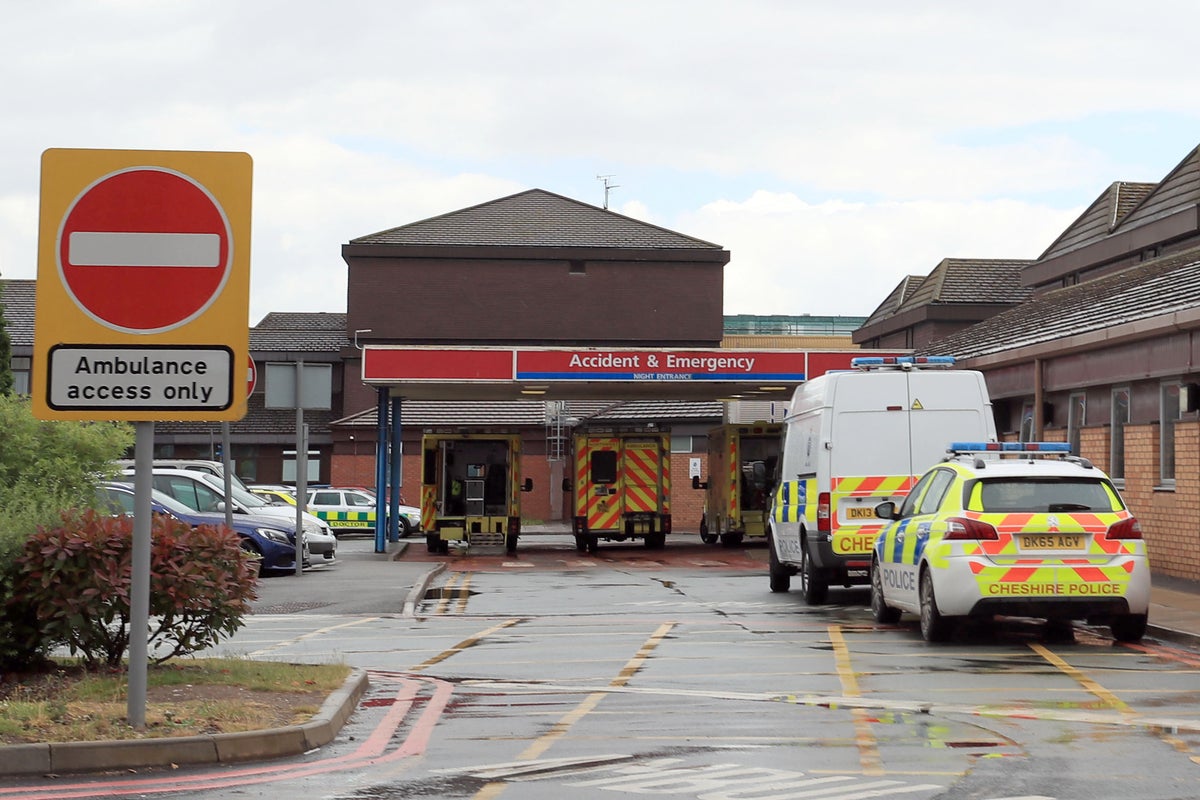
Morgue workers win £30,000 over failure to protect them from ‘splash back’ from bodies
Key Points
Morgue workers win £30,000 over failure to protect them from ‘splash back’ from bodies The pair worked at the same hospital Lucy Letby previously worked in - Bookmark - CommentsGo to comments Become an Independent member to bookmark this article Already a member? Log in Two morgue workers at Lucy Letby's former hospital have won almost £30,000 after complaining they did not have PPE to protect them from 'splashback' from the dead bodies. John Crayton and Thomas Jones complained that bodies...
Morgue workers win £30,000 over failure to protect them from ‘splash back’ from bodies
The pair worked at the same hospital Lucy Letby previously worked in
- Bookmark
- CommentsGo to comments
Become an Independent member to bookmark this article
Already a member? Log in
Two morgue workers at Lucy Letby's former hospital have won almost £30,000 after complaining they did not have PPE to protect them from 'splashback' from the dead bodies.
John Crayton and Thomas Jones complained that bodies were not properly covered and they were expected to perform beyond the duties the role would usually require.
However when they complained about the hygiene and 'psychological' issues they suffered from the uncovered deceased, a manager became enraged that they went behind his back to anonymously complain.
He revoked the porters' access to the mortuary, which meant they could not do their jobs and even led to rumours about Mr Crayton having done something 'inappropriate'.
The two men went off sick and took the hospital to an employment tribunal where they were awarded a combined sum of £29,561.
Mr Crayton and Mr Jones both worked as porters at Countess of Chester Hospital NHS Foundation Trust in Chester, Cheshire.
They would take deceased patients who had passed away either in the hospital or in the community to the hospital's mortuary.
On January 31, 2024, both men went to Jamie Cunningham, a lead mortuary technician, to discuss concerns they had regarding the hygiene of transporting the bodies.
In the same role at a previous hospital, Mr Crayton had always transported bodies when they were already in body bags and they were not responsible for transporting deceased people from the community to the refrigerators.
He said that while working at the Chester hospital, he had got 'splashback from fluid with no protection for the forearms due to the [hospital's] bare to elbow policy' and inadequate PPE.
They also said that bodies were often not properly covered up and there 'was a risk of psychological damage as a result of signs of a traumatic death and infection', and that they should not be the ones to deal with the valuables of the deceased.
Mr Cunningham 'had some understanding' of the porters' concerns but said that body bag use was discretionary.
In February, the pair took their concerns to Helen Ellis who was the hospital's Freedom To Speak Up Guardian under a policy that allowed staff to freely air their concerns.
They told her about 'the distress caused by exposed bodies the splashback of fluid, inadequate PPE, lack of infection control and the handling of valuables'.
Mr Crayton again complained, saying that: "Policy for transportation of deceased patients was not as robust as that under which he had worked at Wrexham and he was concerned for the safety of staff and the dignity of patients."
The tribunal explained: "It was agreed that Ms Ellis would raise the issues with Cathy Chadwick, the [hospital's] Chief Operating Officer without revealing the identity of those who had raised the concerns, in accordance with the Freedom to Speak Up policy.
"Ms Ellis emailed Ms Chadwick on the same date. In her email, Ms Ellis stated that her understanding of the policies operated in other hospitals for the transportation of a deceased patient/receipt of deceased member of the community was with the use of a body bag.
"Ms Ellis highlighted that it was the ward staff in other hospitals who were responsible for confirming the identity of a deceased patient and dealing with the property on that person."
Ms Ellis set out some of Mr Crayton's issues, including that there was no community death policy and that the patients were wrapped in sheets that became wet when the porters were required to remove the bodies.
Other issues included that they were required to check the identity of the deceased and that the ward staff, whilst responsible for infection control, 'were merely dealing with a tick box and that the community deaths were inadequately covered'.
Ms Chadwick reached out to Mr Cunningham so they could discuss the procedures, and he 'accepted that there were issues with the way the [hospital] dealt with the deceased'.
However when Mr Cunningham learned of the porters' identities - which was in violation of the hospital's policy on anonymous complaints - he became 'upset' that they had violated the chain of command and revoked Mr Crayton's access to the mortuary on February 16.
He claimed it was because he was suspicious that their complaints about DNA transference on the uncovered bodies meant they had 'something to hide', but when he was told to restore Mr Crayton's access four hours later he admitted he had been 'hot headed'.
Mr Crayton told colleagues he could not help them that day because he did not have access to the mortuary.
Him and Mr Jones both went off sick afterwards, and it became clear from colleagues' texts that they believed Mr Crayton had done 'something inappropriate' in the mortuary and that was why his access had been revoked.
They took their case to an employment tribunal in Manchester, alleging they had suffered detriments in the workplace after making protected disclosures.
Employment Judge Jennifer Ainscough agreed with the men, concluding: "Mr Cunningham was unhappy about Ms Chadwick’s email... Mr Cunningham was upset.
"[Mr Crayton's] role, as we know from the job description, involved mortuary duties. He was, for a number of hours, unable to fulfil his job description had he been required to do so.
"Mr Cunningham said in the grievance that he acted in haste and was hot headed and he was aware he should not have removed the access.
"The explanation given is that Mr Cunningham was concerned about [Mr Crayton's] comments that there could be DNA contamination. Ms Chadwick’s email to Mr Cunningham makes no reference to DNA contamination concerns.
"This was something raised by [Mr Crayton] on 31 January 2024 in conversation with Mr Cunningham.
"His decision to remove [Mr Crayton's] access was materially influenced by the disclosures made on 31 January 2024 and 8 February 2024."
The hospital has been ordered to pay Mr Crayton £2,121 net in compensation for wage loss and £15,000 in compensation for injury to feelings.
It must also pay Mr Jones £1,439 net in compensation for wage loss and £11,000 in compensation for injury to feelings.
Join our commenting forum
Join thought-provoking conversations, follow other Independent readers and see their replies
Comments
[Image text:] Ambulance
access only
Accident & Emergency
CHESHIRE POLICE
Morgue (ORG)
Lucy Letby (PERSON)
Independent (ORG)
Lucy Letby's (PERSON)
PPE (ORG)
John Crayton (PERSON)
Thomas Jones (PERSON)
Crayton (PERSON)
Mr Jones (PERSON)
Countess (PERSON)
Chester Hospital NHS Foundation Trust (ORG)
Chester (LOCATION)
Cheshire (PERSON)
Jamie Cunningham (PERSON)
Cunningham (PERSON)