
Science
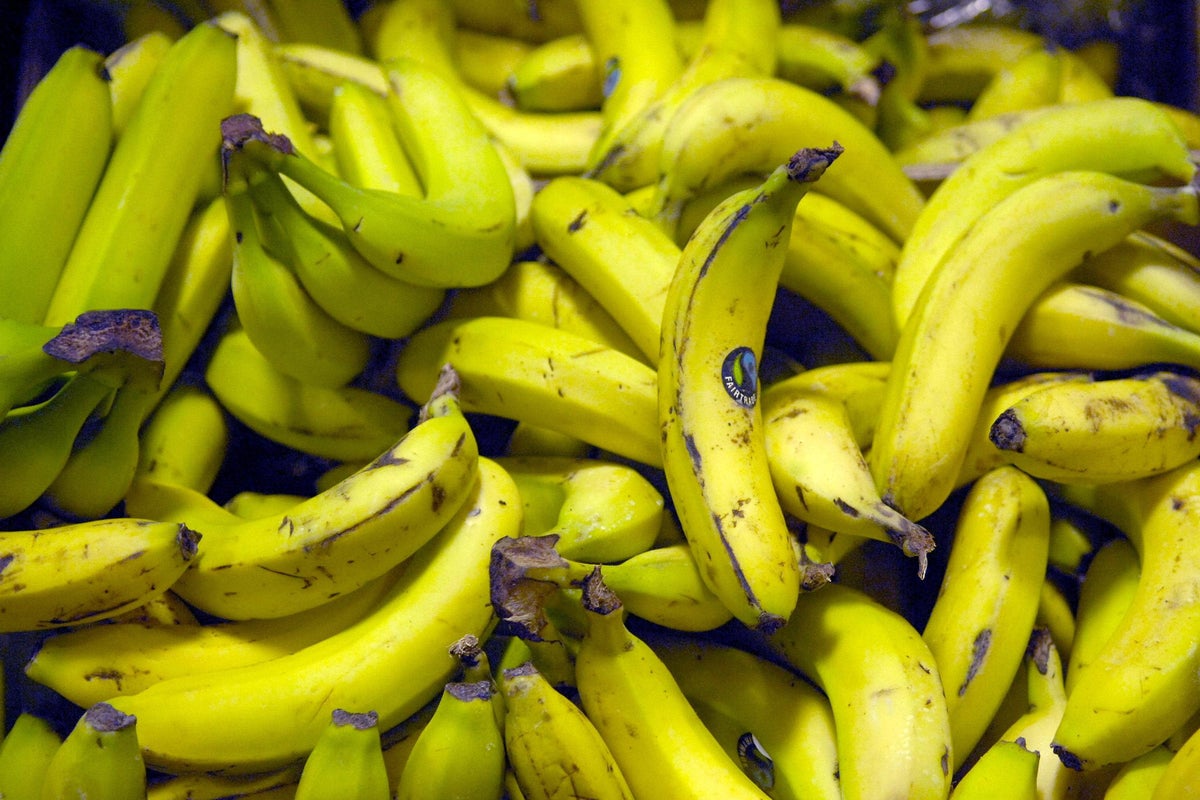
Bananas that don’t go brown could hit UK supermarkets after scientific breakthrough
Key Points
Bananas that don’t go brown could hit UK supermarkets after scientific breakthrough Company hopes gene-editing technique will reduce food waste - Bookmark - CommentsGo to comments Become an Independent member to bookmark this article Already a member? Log in Bananas that don’t go brown could hit UK supermarket shelves thanks to a breakthrough in gene editing. UK company Tropic Biosciences, based in Norfolk, has created the banana using a laboratory technique known as CRISPR-Cas9 to alter...
Bananas that don’t go brown could hit UK supermarkets after scientific breakthrough
Company hopes gene-editing technique will reduce food waste
- Bookmark
- CommentsGo to comments
Become an Independent member to bookmark this article
Already a member? Log in
Bananas that don’t go brown could hit UK supermarket shelves thanks to a breakthrough in gene editing.
UK company Tropic Biosciences, based in Norfolk, has created the banana using a laboratory technique known as CRISPR-Cas9 to alter three genes that cause fruit to brown.
The changes stop the plant from making an enzyme called polyphenol oxidase (PPO), which is responsible for the browning process.
The PPO enzyme is found in a variety of fruits and makes them turn brown once they are peeled and in contact with oxygen.
Tropic said work with retailers and processors had shown that the banana could retain its freshness for up to eight days after slicing.
The Environment Secretary has approved a marketing notice for the banana, but it must now go through checks by the Food Standards Agency (FSA).
England introduced the Precision Breeding Act in 2023 to allow scientists and farmers to make and sell fruits and vegetables which have used gene editing as long as it could have happened through traditional farming methods or naturally.
Browning causes around 20 per cent of banana yield losses, according to information gathered from the sector by Tropic, and is believed to be responsible for more than 50 per cent of yield losses across susceptible fruit.
The firm estimates that its non-browning bananas could reduce food waste and CO2 equivalent emissions along the supply chain by over 25 per cent, which could support an annual reduction in CO2 emissions of over nine million tonnes in the banana export market alone.
The non browning banana was considered a major scientific breakthrough when it was first announced last year, named as one of TIME’s best inventions in 2025.
Earlier this year the fruit received regulation approval to be imported, sold and consumed in Brazil and Japan. Brazil also approved for the non browning bananas to be grown there, deemed a major breakthrough as one of the world’s largest banana‑producing and banana‑consuming countries.
Join our commenting forum
Join thought-provoking conversations, follow other Independent readers and see their replies
Comments