
Technology
From cameras to cars, India’s chip startups chase an edge in AI
Key Points
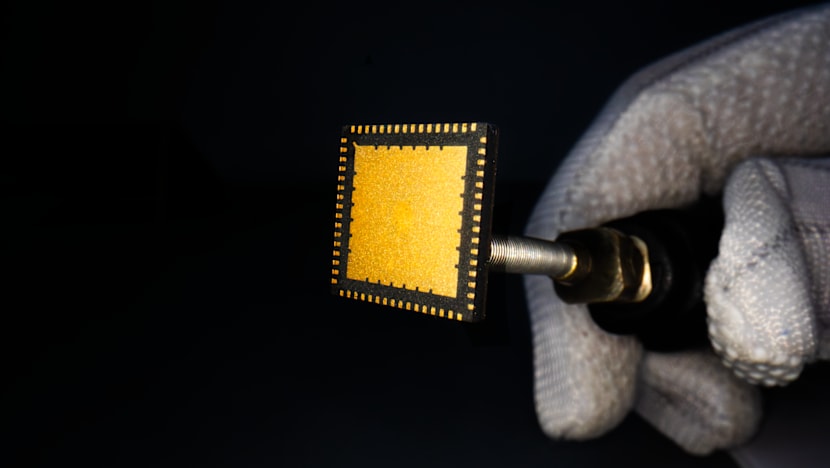
From cameras to cars, India’s chip startups chase an edge in AI In the second of a two-part series on India’s chipmaking ambitions, CNA looks at how homegrown startups are developing specialised AI chips for cameras, cars and other devices. Pratik Parmar pointed to a circuit board designed by his startup Atomo at the Semicon India 2026 conference this month.
From cameras to cars, India’s chip startups chase an edge in AI
In the second of a two-part series on India’s chipmaking ambitions, CNA looks at how homegrown startups are developing specialised AI chips for cameras, cars and other devices.
NEW DELHI: Pratik Parmar pointed to a circuit board designed by his startup Atomo at the Semicon India 2026 conference this month. It allows cameras and machines to spot fires, track the number of people or identify factory defects without constantly sending data to the cloud.
“You don't require the internet or cloud. What happens in your premises stays in your premises,” said Parmar.
Known as edge artificial intelligence (AI) chips, they power AI locally in cameras, cars and other electronics and can be tailored to specific devices and tasks.
Atomo’s circuit board currently relies on a US-designed Amlogic chip because suitable Indian alternatives were not mature enough when it chose one three years ago.
But that is changing. A nascent Indian industry around these specialised AI chips has emerged, with homegrown firms now moving their first products into customer testing and commercialisation.
Under a government chip-design programme, 105 startups and small businesses have gained access to advanced design tools, and have produced about 35 chip designs ready for manufacturing, according to India’s electronics ministry.
While India is late to the race to design chips for AI data centres, industry executives told CNA that the country still has room to compete.
“India does not have to build the world's fastest AI processor. Putting intelligence into cameras, vehicles and everyday electronics could be a more realistic opening,” said Ashok Chandak, president of industry bodies SEMI India and the India Electronics and Semiconductor Association.
“But software, scale and customer adoption remain the real tests.”
INDIA EYES AN AI CHIP OPENING
India’s semiconductor market is expected to triple from US$64 billion in 2026 to US$200 billion by 2035, with consumer electronics, automobiles and industrial applications accounting for 61 per cent of demand.
AI systems increasingly need to process data locally for faster responses rather than rely on distant data centres, experts said.
A car, for instance, needs to react immediately to an obstacle, while a factory camera may need to spot defects in real time.
G S Madhusudan, CEO of InCore Semiconductors, a company that develops processor technology for chip designers, said this kind of local intelligence is spreading across products ranging from cars and cameras to televisions and industrial equipment.
Such chips can continue working when internet connectivity fails, keep sensitive data on-site and reduce cloud costs, Atomo’s Parmar said.
For a factory safety camera, unreliable internet could delay critical alerts, while processing images locally allows it to keep working regardless of connectivity, he said.
India's cost-sensitive market and varying internet connectivity make those benefits particularly relevant, he added.
Atomo has also sent circuit boards for testing in markets including Japan, South Korea and the Middle East, where Parmar said response time, confidentiality and uninterrupted operation are equally important.
Globally, consumer devices accounted for 65.3 per cent of the edge AI chip market in 2025, driven by growing use in smartphones, laptops and smart speakers, according to a report by market research firm Grand View Research.
India’s market is projected to grow nearly 12 times, from US$984.1 million in 2026 to US$11.7 billion by 2033, the report said.
The size of that opportunity is one reason Indian chip designers are targeting the market, industry experts said.
INDIA AS A TESTING GROUND FOR EDGE AI
Sunil Kumar, whose startup BigEndian Semiconductors is developing an AI-enabled processor for surveillance cameras, said specialised chips can be tailored to individual markets.
A railway camera, industrial camera or vehicle, for example, can require different hardware and software, giving smaller companies more room to customise rather than compete primarily on raw computing power, Kumar said.
India also has a large chip-design workforce, with about 20 per cent of the world's semiconductor design engineers based in the country, according to Invest India CEO and former Intel India head Nivruti Rai.
Kumar said India’s scale and complexity could make it a testing ground for such technology, pointing to crowd management at the Kumbh Mela, a Hindu pilgrimage that drew more than 660 million people over 45 days in 2025.
“If I'm able to adapt to some place like … Kumbh Mela, solving the same crowd control issue in Finland is much easier,” he said.
Investors are putting more money into the sector. Indian edge AI chip startups raised US$17 million in 2026, nearly four times the US$4.27 million raised in 2022, and up from virtually nothing before 2020, according to data insights firm Tracxn.
The bigger challenge, however, is to persuade a company already using established foreign processors to switch to Indian chips, entrepreneurs building in the space told CNA.
SECURITY CONCERNS GIVE LOCAL CHIPMAKERS A CHANCE
Shashwath Ramkumar, co-founder of chip startup Mindgrove Technologies, said his company looks for moments when customers “want to change anyway” because regulations, technology or product requirements have shifted.
Mindgrove is currently working with Indian surveillance manufacturer Prama to develop its vision chip for security cameras.
India’s new cybersecurity rules for internet-connected CCTV systems, which took effect on Apr 1, have created opportunities for local chip firms as tighter rules affect some suppliers, experts said.
While India has not banned Chinese CCTV cameras outright, tighter security and sourcing rules have restricted the import of some surveillance equipment from the neighbouring country, industry experts added.
Chinese vendors accounted for about a third of India’s CCTV market in 2024, according to market research firm Counterpoint Research.
Similar pressures are appearing in other industries.
Tracxn co-founder Neha Singh said geopolitical issues along with efforts to diversify supply chains are making some Indian automotive, industrial and defence manufacturers more willing to evaluate locally designed chips.
FROM SAMPLES TO SCALE
Despite the market opportunities, turning them into actual orders remains a challenge for Indian chipmakers, experts told CNA.
The founders of Indian edge AI chip firms expect the coming year to be crucial.
Ramkumar said Mindgrove's work with Prama could take roughly another year to produce a commercial product.
BigEndian is preparing to put its first AI-camera chip into customers' hands by the end of this year.
Kumar said manufacturers may discuss their needs with chip designers, but are unlikely to place orders until they have a physical chip that has been tested in their products.
Kumar described 2026 as the “year of sampling”, with a meaningful scale potentially emerging in the second half of 2027.
Ramkumar said: “The packaging, testing and logistics are harder than design.”
The challenge is building a supply chain that can reliably deliver chips at scale, he added.
Ramkumar said India's chip-packaging capacity is beginning to expand, easing one part of the supply-chain challenge.
For instance, CG Semi, a joint venture between India's CG Power, Japan's Renesas Electronics and Thailand's Stars Microelectronics, began commercial production at its chip-packaging and testing facility in Sanand, Gujarat, in July.
The facility can package and test up to 300 million chips a year.
Under the government’s semiconductor mission, advanced chip packaging is a priority, with financial support offered for new assembly, packaging and testing facilities.
“The real test is whether Indian startups can make their chips easy for manufacturers to adopt, reliable at high volumes and competitive beyond India - turning customer trials into repeat orders at home and eventually winning large global customers,” said Tracxn's Singh.
India (LOCATION)
AI (LOCATION)
CNA (LOCATION)
Pratik Parmar (ORG)
Atomo (ORG)
the Semicon India 2026 (ORG)
Parmar (PERSON)
US (LOCATION)
Amlogic (ORG)
Indian (ORG)
Ashok Chandak (PERSON)
the India Electronics and Semiconductor Association (ORG)
INDIA EYES AN AI CHIP OPENING India’s (ORG)
G S Madhusudan (ORG)
InCore Semiconductors (ORG)