
Health
‘California Certified’: New label will boost non-ultra processed foods - and it’s not the only state taking action
Key Points
‘California Certified’: New label will boost non-ultra processed foods - and it’s not the only state taking action California was ‘clearing the way for the rest of the country to follow,’ Governor Gavin Newsom said this week - Bookmark - CommentsGo to comments Become an Independent member to bookmark this article Already a member? Log in A new “California Certified” label will soon be available for foods in the state that are not ultra-processed as a growing number of places take action on...
‘California Certified’: New label will boost non-ultra processed foods - and it’s not the only state taking action
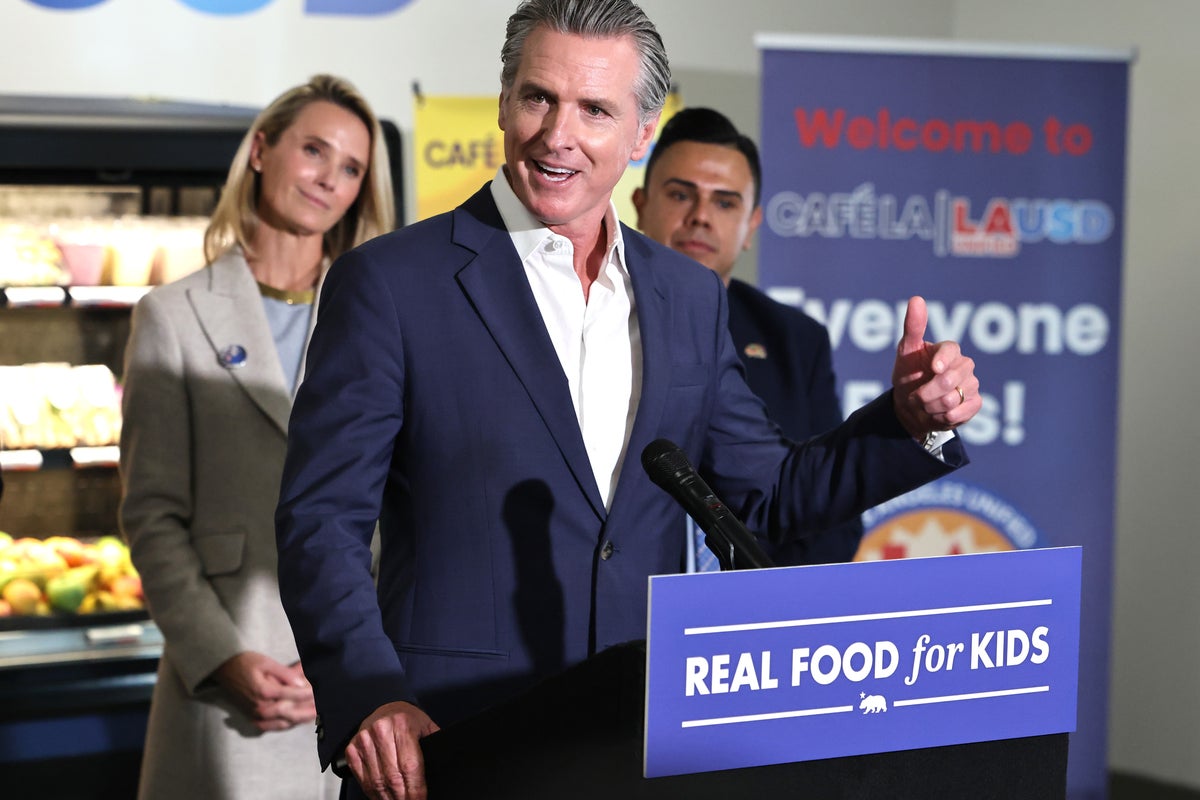
California was ‘clearing the way for the rest of the country to follow,’ Governor Gavin Newsom said this week
- Bookmark
- CommentsGo to comments
Become an Independent member to bookmark this article
Already a member? Log in
A new “California Certified” label will soon be available for foods in the state that are not ultra-processed as a growing number of places take action on products linked to serious health outcomes.
The new label, to be released some time in the next two years, could be slapped on certified breads, canned goods, fruits and more, and those items displayed prominently on grocery store shelves.
Food manufacturers must apply to the state’s health department to use the seal by June 1, 2028, with recertification needed every three years, according to legislation signed this week by California Governor Gavin Newsom. The governor said it was part of the state’s efforts to improve people’s health through access to healthy food and that California was “clearing the way for the rest of the country to follow.”
Ultra-processed foods are made with ingredients that wouldn’t be found in a kitchen, such as chemical preservatives, sweeteners and artificial colors and flavors, according to Johns Hopkins, like brightly colored chips and candy and smoked meats.
These foods have been linked to increased risk of cancer, cardiovascular disease, diabetes, obesity and premature death, dozens of studies have found. Yet, more than half of Americans’ daily calories come from these foods, federal data shows.
California isn’t the only state targeting ultra-processed foods and is also phasing them out in schools over the next decade. Arizona banned ultra-processed foods in schools this year and New York City has eliminated processed meats and restricted artificial colors and sweeteners in school meals and in other city facilities.
The Golden State, however, is the first to come up with a label for non-ultra-processed foods.
“California Certified” labels are modeled after the Department of Agriculture’s “USDA Organic”, which means a product was made without pesticides or fertilizers.
The state has also taken action to ban additives in ultra-processed food while the City of San Francisco filed a lawsuit against some of the nation's top food manufacturers, arguing that health care costs tied to ultra-processed foods have become a burden for states.
Nearly half of states are considering or have introduced separate legislation to regulate ultra-processed foods, according to the non-profit Environmental Working Group.
The Trump administration has also made moves to tackle ultra-processed foods led by Health Secretary Robert F. Kennedy, Jr’s “Make America Health Again” agenda.
The Health Department has pushed companies to transition away from artificial dyes in ultra-processed foods. “These poisonous compounds offer no nutritional benefit and pose real, measurable dangers to our children’s health and development,” RFK Jr said last April.
However, the department’s efforts have reportedly met with resistance within the White House, according to a report earlier this week in The Wall Street Journal. During a discussion about the definition of ultra-processed foods, White House staffers were allegedly concerned it may cover most food in grocery stores, with negative impacts for companies.
But HHS pushed back on this characterization.
”The idea that the White House is blocking the MAHA food agenda is false,” Calley Means, senior advisor at HHS, told The Independent in email on Wednesday, citing efforts to overhaul dietary guidance and artificial dyes.
“Together, HHS, USDA and the White House are driving these reforms while ensuring policies - including our work on ultra-processed foods - are scientifically rigorous, legally durable and deliver lasting results for American families,” she said.
Join our commenting forum
Join thought-provoking conversations, follow other Independent readers and see their replies
Comments
[Image text:] CAFE
Welcometo
CAFELAI
LA
USD
yeIvone
REAL FOOD for KIDS
California (LOCATION)
Gavin Newsom (PERSON)
Independent (ORG)
Johns Hopkins (ORG)
Americans (ORG)
Arizona (LOCATION)
New York City (LOCATION)
The Golden State (LOCATION)
the Department of Agriculture’s (ORG)
the City of San Francisco (LOCATION)
Environmental Working Group (ORG)
Trump (ORG)
Health (ORG)
Robert F. Kennedy (PERSON)
Jr (PERSON)