
Weather
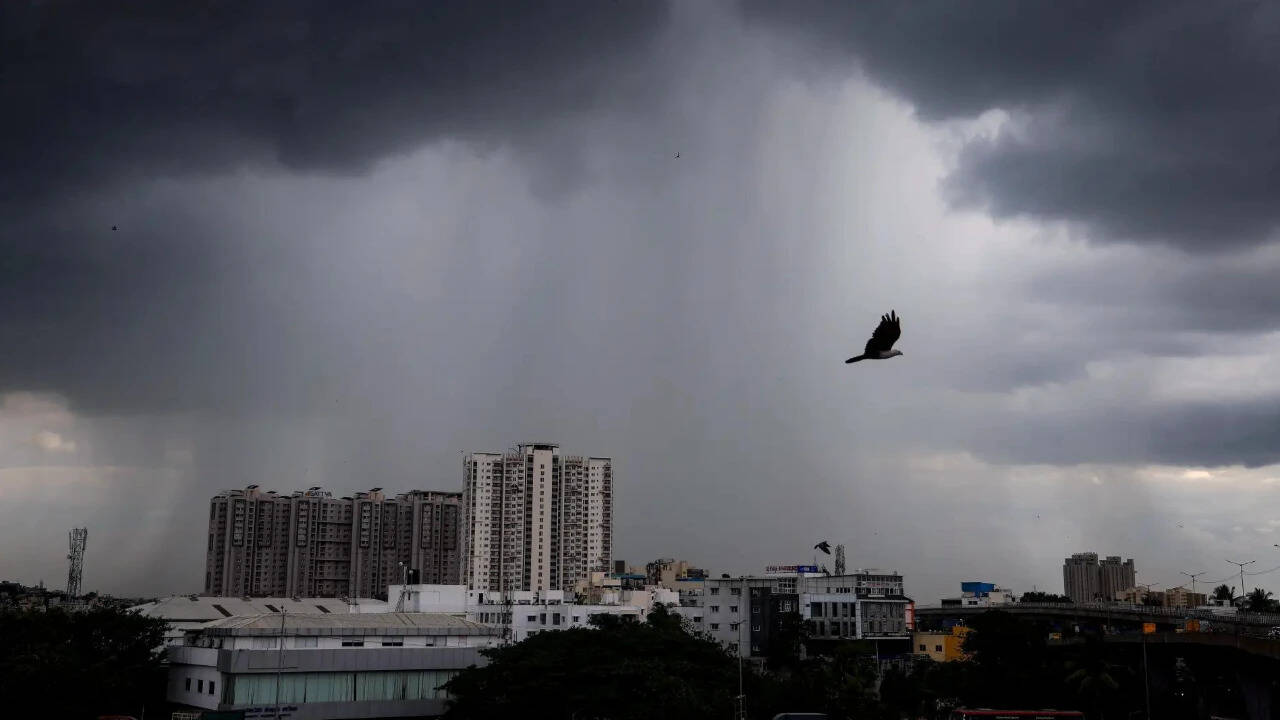
India's 13% rain deficit makes monsoon a drought year
Key Points
Overall, south Peninsular India receives 30% of its annual rainfall during northeast (winter) monsoon season. TN, Puducherry and Karaikal receive 48% of their annual rainfall during northeast monsoon season. The rainy season in India technically ended on Wednesday, with the summer (southwest) monsoon rainfall during June-Sept period recording a deficit of nearly 13% - a level of shortfall which is considered a drought.
Overall, south Peninsular India receives 30% of its annual rainfall during northeast (winter) monsoon season. TN, Puducherry and Karaikal receive 48% of their annual rainfall during northeast monsoon season.
NEW DELHI: The rainy season in India technically ended on Wednesday, with the summer (southwest) monsoon rainfall during June-Sept period recording a deficit of nearly 13% - a level of shortfall which is considered a drought. Significantly, this is the fourth lowest seasonal rainfall since 2001 and the 13th lowest since 1901.The situation is likely to be better during winter when northeast monsoon hits south Peninsular India between Oct 15 and Oct 21, with the IMD predicting 'normal' rainfall over Tamil Nadu, Puducherry, Karaikal, coastal Andhra Pradesh and Rayalaseema region, Kerala and south interior Karnataka during Oct-Dec period. However, the winter monsoon will bring cheer to limited regions.
Though most other parts of India are expected to receive 'below-normal' rainfall during the Oct-Dec period, some areas of northwest India (Punjab, parts of Haryana, Uttarakhand, Himachal and J&K) and southern parts of peninsular India are likely to get "normal to above-normal" rainfall. Incidentally, Punjab and peninsular India had to face huge rainfall deficit during the summer monsoon season, which led to drought in many districts.
Overall, south Peninsular India receives 30% of its annual rainfall during northeast (winter) monsoon season. TN, Puducherry and Karaikal receive 48% of their annual rainfall during northeast monsoon season. So, normal winter monsoon this year may bring relief to the region, which received the fourth lowest summer monsoon rainfall since 1901.“We cannot forecast exact date of arrival of winter monsoon in south Peninsula at this stage. It generally coincides with final withdrawal of summer monsoon and may hit the region any day during Oct 15-21,” said IMD chief Mrutyunjay Mohapatra. Though India as a whole received nearly 13% less than normal rainfall, east and northeast India faced the highest deficit of 25%, followed by south Peninsula (24%), northwest India (6%) and central India (3%). Mohapatra said there has been a recent trend of east & northeast India consistently reporting decrease in rainfall.
Vishwa Mohan is Senior Editor at The Times of India. He writes on environment, climate change, agriculture, water resources and clean energy, tracking policy issues and climate diplomacy. He has been covering Parliament since 2003 to see how politics shaped up domestic policy and India’s position at global platform. Before switching over to explore sustainable development issues, Vishwa had covered internal security and investigative agencies for more than a decade.
India (LOCATION)
Peninsular India (LOCATION)
TN (LOCATION)
Puducherry (LOCATION)
Karaikal (PERSON)
NEW DELHI (LOCATION)
northeast monsoon (ORG)
Peninsular (LOCATION)
IMD (ORG)
Tamil Nadu (LOCATION)
Andhra Pradesh (LOCATION)
Kerala (LOCATION)
Karnataka (LOCATION)
the winter monsoon (ORG)
Punjab (LOCATION)