
Science
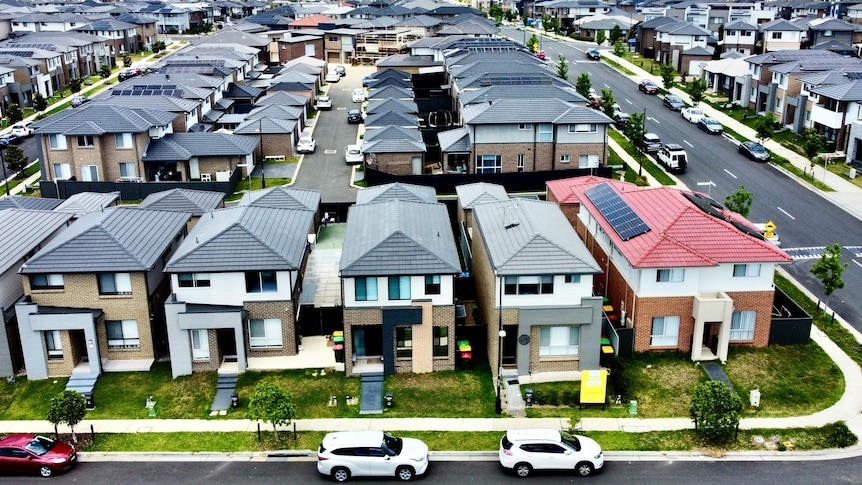
The key features Australian homes may have in the future
Key Points
How Australians see future home life: More space to WFH and affordable access to energy If you were to plan what your home life would be like in the future, what would be on your wishlist? A fridge always stocked with treats? An expensive electric vehicle in the garage?
How Australians see future home life: More space to WFH and affordable access to energy
If you were to plan what your home life would be like in the future, what would be on your wishlist?
A fridge always stocked with treats? An expensive electric vehicle in the garage?
Or would you settle for somewhere quiet to take meetings when you're working from home?
Researchers from Monash University, over a period of three years, have sought to understand what we want from our homes in the years to come.
The Foresights for Future Australian Home Life report included 49 participants from a range of backgrounds across the country.
"We're trying to understand how people will live in their homes, and what the implications will be for how they use energy," lead researcher Professor Sarah Pink says.
Multipurpose rooms
Participants were combining office zones with other parts of their homes, scheduling work and childcare around each other.
"They saw it as an opportunity often to do more than one thing at once," Professor Pink says.
So what could this mean when people are building new houses in the future?
University of Sydney associate professor of building science Jungsoo Kim says new homes could include more adaptable rooms or zones that provide visual and acoustic separation when needed.
"As well as good daylight, ventilation, thermal comfort, and access to power," he says.
"Some people need visual and acoustic privacy for concentration, meetings, or confidential conversations, while others may work effectively in shared, open areas.
"In smaller homes, flexible spaces that combine living and working functions may be more practical than a dedicated office.
"Movable screens, curtains, compact furniture, good storage, and task lighting can help create separation without requiring an additional room."
Working from home areas
Half of the households surveyed had one member working from home at least once a week.
Here is what some said about working from home.
It's so much easier when you work from home. You don't have to worry about traffic being terrible to get you to work. You don't have to worry about the train deciding to cancel … I also have a disability, so public transport's not viable for me a lot of the time.
The flexibility … [of] being able to drop the kids off, pick the kids up if you need to duck out or be here for an electrician to do something in the other room you can be here. You don't have to reschedule your whole life to do that. I can still keep working.
"You find people imagining their next home would have more space so that they could have a dedicated working-from-home room," Professor Pink says.
But that doesn't necessarily have to mean bigger houses, Associate Professor Kim says.
"Instead, people may prioritise homes that use space more efficiently, with flexible areas or some spatial separation to support working alongside other household activities."
'Bloody expensive' EVs
Australians' relationship to their homes and cars is changing, as the energy transition shifts how electricity is generated and delivered across the network, according to the researchers.
An electric vehicle (EV) is being sold every 100 seconds in Australia and EVs are projected to make up almost one-quarter of all new car sales this year, according to the Electric Vehicle Council.
But one-quarter of the survey participants felt they couldn't afford the costs associated with owning EVs from purchasing to maintaining and installing chargers.
Only 4 per cent of those earning less than $40,000 a year said they were currently using or intended to own an EV, compared to 22 per cent of people earning more than $241,000 a year.
It also found about one-third of households that owned or planned to purchase an EV or plug-in hybrid wanted affordable charging options, such as solar power or off-peak electricity tariffs.
Here is what some study participants said about EVs.
I think it's a great idea but they're so bloody expensive. Like who can afford to buy a brand new electric car? I'd love to but financially, it's just out of reach.
We would love to charge at home. We don't want to go outside and wait for hours. It's better to … if we have that, we'll get it charged at home.
I feel like saying Canberra is the Tesla town … People here may be able to afford electric cars, but I don't know, well, I can't, but how are people going to afford these new technologies?
Cheaper access to energy transitions
One in three homes in Australia has rooftop solar, with about 300,000 systems being installed annually.
The survey found adoption increased with income, with households earning under $80,000 more likely to report having no intention of installing solar.
It also found some participants felt excluded from the energy transition, such as the purchase of EVs and solar infrastructure, because these purchases felt targeted to more affluent groups.
"The cost-of-living crisis is an important dimension [in the energy transition]," Professor Pink says.
"One of our participants imagined themselves possibly living in their car in the future, [rather than] being able to purchase an electric vehicle."