
Business & Finance
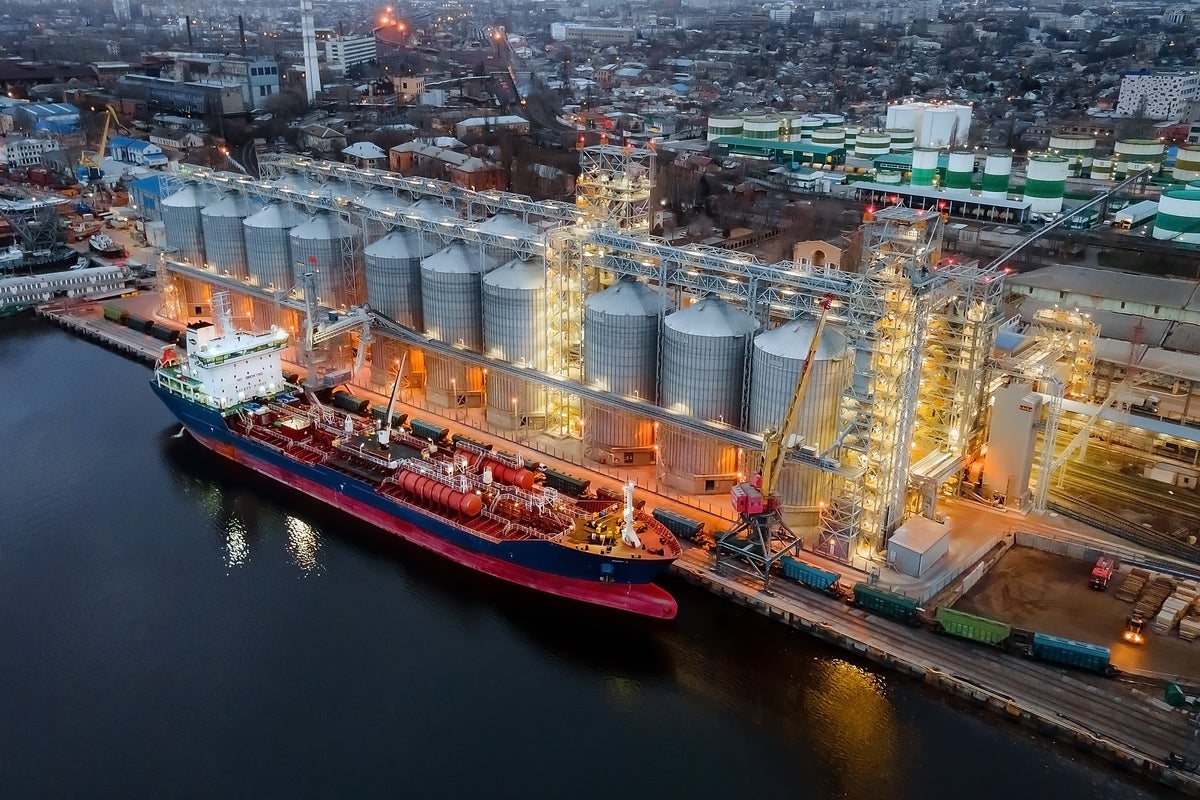
How deadlock in the Ukraine war is crippling global food prices
Key Points
How deadlock in the Ukraine war is crippling global food prices Two of the world’s largest exporters of grain, locked in war for more than four years, have seen exports plunge even further over the last year. Prolonged conflict around the Black Sea threatens both economies - and those most in need, writes James C. Reynolds - Bookmark - CommentsGo to comments Become an Independent member to bookmark this article Already a member? Log in Global food prices could climb by more than nine per...
How deadlock in the Ukraine war is crippling global food prices
Two of the world’s largest exporters of grain, locked in war for more than four years, have seen exports plunge even further over the last year. Prolonged conflict around the Black Sea threatens both economies - and those most in need, writes James C. Reynolds
- Bookmark
- CommentsGo to comments
Become an Independent member to bookmark this article
Already a member? Log in
Global food prices could climb by more than nine per cent this year as a deadly escalation between Russia and Ukraine around the Black Sea threatens vital grain exports, analysts have warned.
Ukrainian exports fell an astonishing 75 per cent year-on-year in the first two weeks of August as Russia stepped up its attacks, striking ports more than 70 times in July and early August and hitting vessels on 62 occasions, according to port authorities.
Kyiv says the attacks threaten $40bn in crucial export revenue, worth 1.5 per cent of GDP, while hundreds of millions of people reliant on Ukrainian grain around the world stand to go without.
Pablo Meijer, assistant industry economist at advisory firm Oxford Economics, told The Independent that they now expect the World Bank food price index to rise by around 9.3 per cent in 2026, easing to around 4.4 per cent in 2027.
“Ukraine's exports have fallen sharply with Odesa shut, and world wheat trade is running around 7 per cent lower,” he said, noting Russia’s grain export volumes also contracted by 71 per cent in August, down 83 per cent year on year for the first 10 days of September.
How important is grain to Ukraine and the world?
Russia is the largest exporter of grain in the world while Ukraine is the fifth. Between them, they supply nearly a third of the world’s wheat demand.
A flare up in hostilities has seen Russia’s Black Sea grain exports fall to their lowest level in 15 years, down 65 per cent year on year in July, according to Lloyd’s List. Ukraine has seen an even larger fall of three quarters, according to government data.
Evghenia Sleptsova, senior economist at Oxford Economics, warned that Ukraine’s position has further deteriorated since August as ports remain shut and farmers are advised to plan for them to stay closed into the new year.
Grain exports totalled just 774,000 tonnes last month, down 79 per cent from the 2023-25 average for August, and around 1.4m tonnes in September, she said.
“On current rates, 2026/27 grain exports look closer to 20m tonnes, roughly half the pre-blockade forecast – and only if alternative routes reach capacity,” she said.
Agriculture is worth around 60 per cent of Ukraine’s export revenues and the current de facto blockade is estimated to be costing Ukraine as much as $70m per day, according to Economichna Pravda.
In recent seasons, Ukraine has provided around 6 per cent of global wheat exports and 11 per cent of corn. The disruptions, if prolonged, could start to eat away at global markets.
The United Nations’ World Food Programme (WFP) is among those reliant on Ukrainian agricultural exports due to their cost and location, meaning a drop in output threatens people in some of the most vulnerable parts of the world.
Before the war, Ukrainian food exports - largely wheat, vegetable oil and peas - fed around 400 million people each year, according to the WFP.
Jean-Martin Bauer, director of the WFP's food security and nutrition analysis service, said that the organisation sourced more than 880,000 metric tons of food from Ukraine in 2021.
But since 2022, they have transported more than 1 million metric tons from Ukraine to countries in need.
“The initial closure of Black Sea ports in 2022 contributed to a sharp surge in global food prices, pushing food prices to levels not seen in a decade and making it harder for vulnerable families to access basic foods,” he said.
“While markets have adapted since then, more recent attacks on ports, vessels and export infrastructure remain a concern because they increase transport and insurance costs, reduce the predictability of grain exports, and risk putting additional pressure on food prices - particularly when combined with current disruptions in the Red Sea and the Strait of Hormuz.”
Is there a way out of the crisis?
Since the full-scale invasion, the European Union has tried to facilitate alternative transport routes for goods to move into and out of Ukraine.
These ‘Solidarity Lanes’, transporting goods by rail, road and rivers, were still carrying 95 per cent of Ukraine’s non-agricultural exports in July, but only 20 per cent of Ukraine’s grain, oilseeds and related products.
Sea remains the most efficient way of moving big shipments over long distances, and the remaining 80 per cent of goods were still passing through the Black Sea shipping corridor - albeit in depressed quantities.
Oxford Economics warned that alternative routes could only hope to replace around 17m tonnes of missing grain, even if they build in more capacity. And even these are not currently safe from Russian strikes.
Dr Sleptova said the slide in exports from last year reflects the perception of risk rather than a lack of capacity.
“Ukraine's self-controlled corridor worked through 2025 and volumes ran at 2.5m to 3.5m tonnes a month. From late July, Russia began striking civilian vessels and port infrastructure directly, underwriters withdrew cover, and shipowners stopped calling.
“That is why volumes collapsed even though the ports were never formally closed, and it is also why they could recover quickly if the attacks stopped,” she said.
Mr Meijer noted they had reduced their earlier estimate of how much the World Bank food price index would rise - previously 11.8 per cent this year - as the disruption “has proved to be a problem of movement rather than availability”.
Global wheat supply is essentially unchanged from last year, he said, even if the war continues to create obstacles to shipping it.
In a renewed bid to reopen shipping in the Black Sea, Turkey, India, Egypt and other Middle Eastern nations took part in talks at the end of last week, according to Ukrainian president Volodymyr Zelensky.
Turkey and the UN helped to mediate the so-called Black Sea Grain Initiative in July 2022 to allow for the safe export of Ukrainian grain amid the war, but Russia withdrew from the agreement the following year, complaining that its own food and fertiliser exports faced serious obstacles.
Natia Seskuria, senior research fellow at the Royal United Services Institute (RUSI), said the chances of a durable reopening of the Black Sea corridor are still low, but a limited arrangement is a possibility.
“The Kremlin has little reason to make concessions, because its strikes on Ukrainian ports and energy infrastructure are a source of political leverage in any wider negotiation,” she explained. “The blockade also hits Ukraine where it is most exposed, since agriculture brought in more than half of the country's export revenue last year.”
“For Russia it is an effective way to pressure Kyiv, so the most realistic outcome is therefore a limited, time-constrained arrangement rather than a lasting corridor.
Join our commenting forum
Join thought-provoking conversations, follow other Independent readers and see their replies
Comments
the Ukraine war (EVENT)
the Black Sea (LOCATION)
James C. Reynolds - Bookmark - CommentsGo (PERSON)
Independent (ORG)
Russia (LOCATION)
Ukraine (LOCATION)
Ukrainian (ORG)
Kyiv (LOCATION)
Pablo Meijer (PERSON)
Oxford Economics (ORG)
World Bank (ORG)
Odesa (PERSON)
Black Sea (LOCATION)
Lloyd’s List (ORG)
Evghenia Sleptsova (PERSON)