
Politics
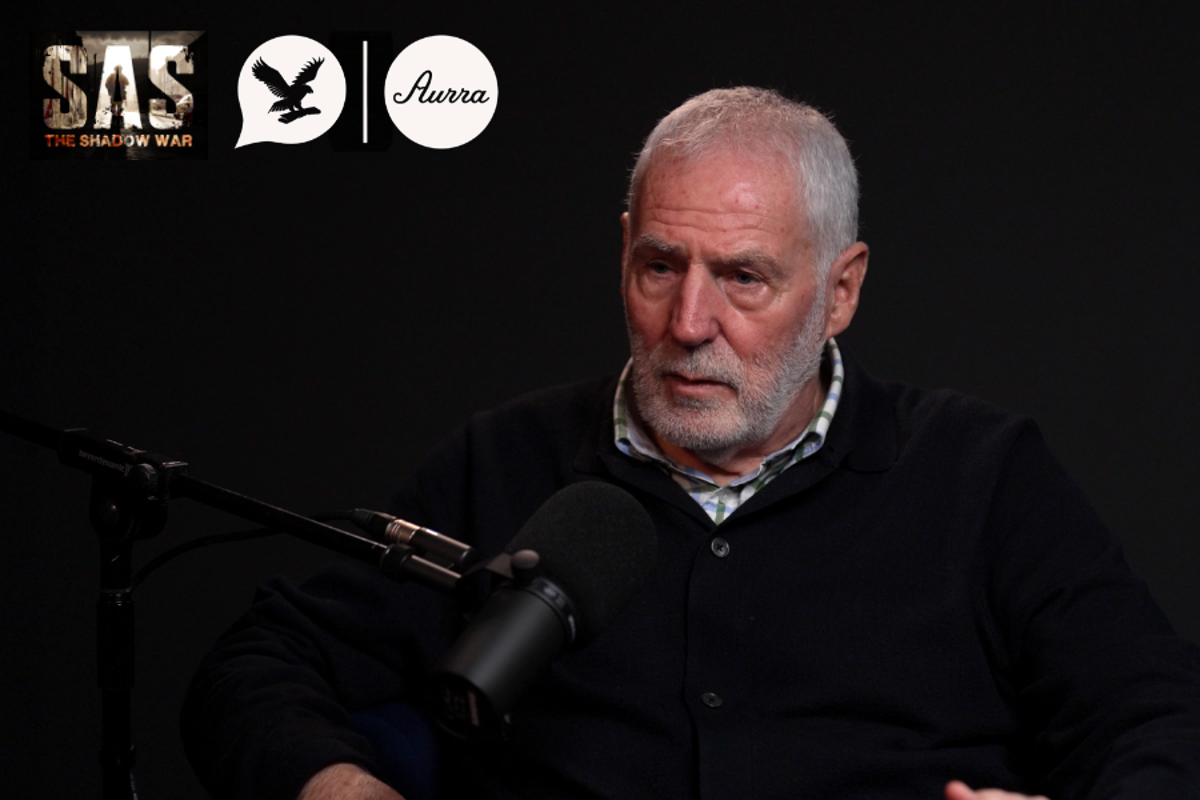
I was the bait to lure the IRA into a deadly confrontation with SAS
Key Points
Become an Independent member to bookmark this article Already a member? Log in George Simm removed the wheel of his coal truck to simulate a breakdown. Dressed in a donkey jacket and overalls, he fiddled about, waiting on a roadside close to Drumnakilly in County Tyrone, four miles south of Omagh.
Become an Independent member to bookmark this article
Already a member? Log in
George Simm removed the wheel of his coal truck to simulate a breakdown. Dressed in a donkey jacket and overalls, he fiddled about, waiting on a roadside close to Drumnakilly in County Tyrone, four miles south of Omagh.
George wasn’t stranded and he wasn’t a real coal delivery driver. He was the “decoy” or the “tethered goat” - both his words - pretending to be the intended target of an Irish Republican Army Active Service Unit.
It was August 30 1988. George has never spoken publicly about what happened that day. Now he is breaking cover from a shadowy world to tell his side of a story that ended in death from which the fallout still rumbles on today.
Listen to the full three episodes of SAS: The Shadow War here, or become an Independent Member for exclusive access to all eight episodes:
The incident proved deeply controversial, with the families of those killed - dubbed by supporters as the Drumnakilly martyrs - and Irish Republicans claiming it was a clear example of state-sponsored “shoot-to-kill” policy.
For more than an hour that day, George waited for what British intelligence said was a three-man team from the IRA intent on killing the real coal truck driver, who was also a part-time member of Northern Ireland’s security services.
Surveillance teams reported suspicious movement, and police suggested ending the operation, but George, communicating via a radio concealed under his jacket, felt differently. He decided to wait a little longer by that truck for men intent on killing him.
After more tinkering on the wheel and more silence by the roadside, he heard a car “over-revving” as it raced towards him.
“At about 30 yards from where I was, out popped, who I now know to be young Martin Harte, and opened fire on me,” he recalls. “I counted his rounds. I said 15… It was 16 [later investigations found].”
George describes bullets cracking under and around the truck, and him, as he moved to the other side for cover from the IRA hail.
“I remember thinking… I wonder where those rounds had gone. I hope nobody’s hurt, because it was a long burst,” he says now.
The car then passed him and stopped. George recalls several seconds of silence as doors opened.
“Then there was holy hell on, because all the guys just opened up on them,” he says.
The “guys” were the rest of his team from the Special Air Service (SAS) who had been hiding in silence in a hedgerow on the verge of the road.
George describes one of the IRA men moving around the lorry towards his blind side before being shot by another SAS soldier. Within moments, all three members of the IRA team were dead.
According to George, the Special Forces ground commander for what was known as Operation Triennial, the decision to open fire against a live attack by gunmen was automatic. There was no possibility of arresting the men mid-firefight.
Gerard Harte, his younger brother Martin Harte and Brian Mullan were killed by the SAS team. Contemporary Irish government records say the three had hijacked a car shortly beforehand and were armed; an RUC statement at the time said two rifles were recovered.
George’s account features in SAS: The Shadow War, The Independent and Aurra Studios’ eight-part podcast in which former members of Britain’s special forces describe operations that have remained largely secret for decades.
The ambush took place during one of the most violent periods of “The Troubles”. Ninety-four people were killed in Northern Ireland in 1988, including 21 regular soldiers, 12 members of the Ulster Defence Regiment, six police officers and 55 civilians, according to figures compiled by the CAIN conflict archive.
That year had already seen the SAS shoot dead three IRA members in Gibraltar in March, an operation that intensified controversy over allegations that British security forces were operating a “shoot-to-kill” policy.
Days later, two British Army corporals who drove into an IRA funeral in Belfast, were dragged from their car, beaten and shot dead.
By that summer, the IRA was mounting a sustained campaign against the security forces. Six soldiers were killed by a bomb attached to their van after a charity run in Lisburn in June. Then, on 20 August, eight soldiers were killed when a large IRA roadside bomb destroyed their bus near Ballygawley, outside Omagh.
The IRA claimed its Tyrone Brigade was behind Ballygawley. George insists on SAS: The Shadow War that the three men killed at Drumnakilly were all involved in the attack, but no one has been convicted for Ballygawley and later accounts differ over which of the three men was suspected of being involved.
Brian Rowan, the veteran BBC Northern Ireland security correspondent, says the region at the time was in a state of real conflict with no prospect of peace.
“In the late 1980s, I don’t think anyone here was thinking about peace,” he says. “We were in conflict. We were in war.”
Even as the killing intensified, the first tentative architecture of the peace process was forming.
On the same day that the SAS killed three men at Drumnakilly, Unionist leader John Hume and Gerry Adams, a leader of the Republican Sinn Fein, held a final meeting of a series that had been going on through the year of violence.
Hume was trying to persuade the Republicans that Irish unity had to be won through consent rather than violence. Sinn Féin still rejected the proposition that Britain was a neutral power in Northern Ireland. Yet the arguments first explored between them would, five years later, become part of the foundations of the peace process.
Drumnakilly has remained controversial. The families of the three dead men have long questioned whether the operation was an ambush intended to kill rather than arrest them.
In 2023, the High Court declared that the Police Ombudsman had unlawfully failed to investigate alleged RUC wrongdoing surrounding the case within a reasonable time. That ruling did not establish that the SAS killings themselves were unlawful.
George rejects the allegation that his unit was operating under a shoot-to-kill policy. He says the IRA men opened fire first and remained an immediate threat.
SAS veterans and former commanders are speaking publicly now in part because they have become participants in a renewed political and legal battle over how The Troubles should be investigated.
Men such as George, now in their sixties and seventies, face continuing civil proceedings, legacy investigations and the possibility that shootings examined decades ago could be scrutinised again — a process they call “lawfare”, while victims’ families argue that effective investigation is a legal right.
The Labour government is now replacing the Conservatives’ controversial 2023 Legacy Act with a new Northern Ireland Troubles Bill. The proposed legislation abolishes the previous scheme offering conditional immunity from prosecution.
The new legislation remains at the centre of parliamentary wrangling. Veterans are claiming that soldiers are not being protected from being repeatedly investigated over events nearly half a century old.
“They’re trying to say you were a murderer,” George says, referring to the subsequent scrutiny. “Well, you’re not. And the fact is, I stood there and a bloke opened fire on me.”
For George, the event remains simple: “You tried to kill somebody and you got killed.”
Listen to the first three instalments of SAS: The Shadow War now, or become an Independent Member for exclusive access to all eight episodes. Available on Apple Podcasts and Spotify
Join our commenting forum
Join thought-provoking conversations, follow other Independent readers and see their replies
Comments
[Image text:] SAS
THESHADOW WAR
IRA (ORG)
SAS (ORG)
Independent (ORG)
George Simm (PERSON)
Drumnakilly (LOCATION)
County Tyrone (LOCATION)
Omagh (LOCATION)
George (PERSON)
Irish Republican Army Active Service Unit (ORG)
The Shadow War (EVENT)
Irish (ORG)
Republicans (ORG)
British (ORG)
Northern Ireland’s (LOCATION)
Martin Harte (PERSON)