
Sport
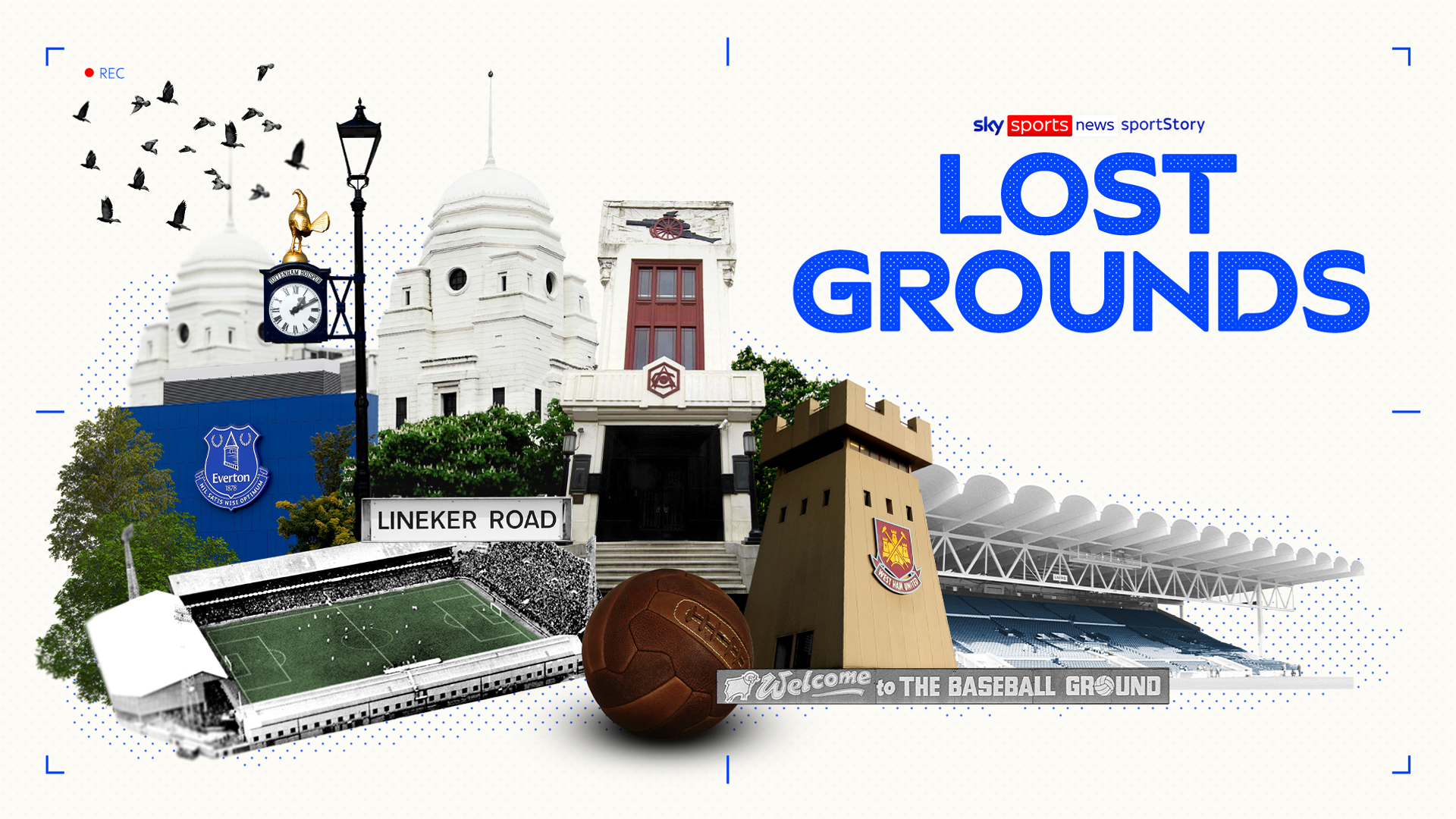
Lost Grounds: Football's most iconic former stadiums
Key Points
Football grounds are not just where the game is played but where it is remembered. They are the places where generations return to the same turnstiles, climb the same steps and take their place in the same stands. They become landmarks in their own right — woven into the identity of a club and the neighbourhood around it.
Football grounds are not just where the game is played but where it is remembered.
They are the places where generations return to the same turnstiles, climb the same steps and take their place in the same stands. They become landmarks in their own right — woven into the identity of a club and the neighbourhood around it.
But football is always changing. Stands and terraces have been demolished beneath new developments. Clubs have moved across towns and cities. Where thousands once gathered on a Saturday afternoon, there may now be a supermarket, a housing estate or nothing at all.
Yet a football ground rarely disappears completely. Its name survives in old photographs. Its outline remains faintly visible in the streets around it. Supporters remember where they stood, where they celebrated, where they watched their team win — and where they said goodbye.
These are the stories of football's lost grounds: the iconic stadiums that once formed the backdrop to the game, and the traces they left behind.
Maine Road
Manchester City
1923-2003
Manchester City played at Maine Road for 80 years before moving to the City of Manchester Stadium built for the 2002 Commonwealth Games.
Maine Road had a capacity of 35,150 but its record attendance was more than double that when 84,569 supporters watched their FA Cup sixth-round tie against Stoke in 1934.
Man City beat Man Utd in the final Manchester derby at Maine Road with help from a mistake by Gary Neville.
Maine Road was demolished in 2003 and is now a housing estate with a circular plate symbolising the centre spot.
Burnden Park
Bolton Wanderers
1895-1997
Bolton Wanderers played at Burnden Park for 102 years before moving to the Reebok Stadium in 1997.
One of the most iconic aspects of the ground was the railway track where trains would run behind the stand and it was captured in the 1955 film The Love Match.
Burnden Park was also the scene of one of the worst tragedies in British football history when 33 Bolton fans were crushed to death and another 400 injured during an FA Cup quarter-final second-leg tie against Stoke City in 1946.
There was estimated to be a crowd of 85,000 at the game, which was at least 15,000 more than the ground's capacity.
The stadium was demolished in 1999, two years after Bolton moved out, and is now a supermarket.
Roker Park
Sunderland
1898-1997
Roker Park was Sunderland's home for 99 years before the club moved to the Stadium of Light.
The 'Roker Roar' was said to be able to be heard five miles away.
The ground's capacity was originally designed to accommodate a crowd of 60,000.
Its capacity was gradually reduced to around 22,500. Roker Park's record attendance was 75,188 for Sunderland's FA Cup tie against Derby in 1933.75,118.
During the 1966 World Cup, Roker Park hosted three group stage games and the quarter-final between the Soviet Union and Hungary.
England's men's team also played there on three occasions plus one England women's match.
Roker Park is now a housing estate with the roads named Midfield Drive, Roker Park Close, Promotion Close and Clockstand Close.
Victoria Ground
Stoke City
1878-1997
Stoke City played at the Victoria Ground for 199 years.
When they left in 1997, it was the oldest operational stadium in English football.
The Victoria Ground was home to some of English football's greats such as Sir Stanley Matthews and Gordon Banks.
The site lay derelict for 20 years before it was redeveloped into a housing estate.
Frank Soo Street sits among the houses in honour of the former Stoke player who made more than 250 appearances for the club, was the first person of Asian heritage to appear in the Football League and the first to represent England.
Soo, whose father was Chinese, played in nine England wartime matches between 1942 and 1945.
Gay Meadow
Shrewsbury Town
1910-2007
The troublesome River Severn...
Located on the banks of the River Severn, Shrewsbury Town began playing at Gay Meadow in September 1910 and, only a few months later, a match was abandoned for the first time due to flooding - a sign of things to come!
All aboard!
Shrewsbury fan Fred Davies became a legandary figure at the club for his unique role as a ball boy. He would board a coracle and paddle into the river to collect stray footballs, as demonstrated by Sky Sports News' Ben Ransom!
Life after Gay Meadow
Shrewsbury moved into the New Meadow, a 10,000-seat stadium, in 2007. Gay Meadow was converted into flats.
Ayresome Park
Middlesbrough
1903-1995
Ayresome Park was Middlesbrough's home for 92 years, between 1903 and 1995, before they moved to the Riverside Stadium.
It was the venue for one of the biggest shocks in World Cup history, when North Korea beat Italy 1-0 in July 1966, courtesy of a goal from Pak Doo-ik.
Members of the North Korea squad returned to Teesside in 2002 after a bronze casting of a football boot imprint was unveiled to mark the spot on the housing estate where the goal was scored. It was declared a national monument of the nation.
The gates of Ayresome Park have since been erected outside the main entrance of the Riverside.
Millmoor
Rotherham United
1925-2008
Millmoor was first home to Rotherham County from 1907 to 1925, then, when they merged with Rotherham Town, it was Rotherham United from 1925 until 2008.
The Millers moved on to the Don Valley Stadium in Sheffield, then the New York Stadium, but Millmoor continued to stand.
For the best part of the last 10 years, football continued to be played at the stadium, but demolition began in the summer and is expected to be completed by the end of 2026.
Filbert Street
Leicester City
1891-2002
Filbert Street was Leicester's home for more than 100 years and hosted its last match in May 2002, before the Foxes made the move to the Walkers Stadium - now the King Power - just a stone's throw away.
Within 12 months, the stadium was razed to the ground and, on part of the site, student accommodation was built, as well as a new road named after Leicester legend Gary Lineker.
Until recently, the rest was left as wasteland, and there is little to mark its former history, but work is now under way to build housing on the remaining land.
Griffin Park
Brentford
1904-2020
Brentford had five temporary homes before they moved into Griffin Park - built on the site of a former orchard - in 1904.
It became well-known for the uniqueness of having a pub on every corner: The Griffin, The Princess Royal, The New Inn and The Royal Oak.
One of the most memorable days came in April 2013, when forward Marcello Trotta hit the crossbar with a last-minute penalty that, had it been scored, would have sent Brentford into the Championship.
The final match in front of fans was the 5-0 win over Sheffield Wednesday in March 2020, with the last first-team game a 3-1 win over Swansea in the Championship play-offs just under five months later.
Griffin Park has since been demolished and the site is currently flat, though there are plans to build new homes in the near future.
Highbury
Arsenal
1913-2006
Arsenal only arrived in north London in 1913. The club had been based at the Manor Ground in Plumstead, south-east London.
Chairman Henry Norris believed they needed a more prosperous location and a larger potential supporter base. Highbury's proximity to the Underground was a major attraction.
The move was controversial with Tottenham Hotspur and Clapton Orient objecting to Arsenal establishing themselves so close.
The famous Clock End was introduced by Herbert Chapman in the 1930s. It originally provided a 45-minute countdown, but the FA objected because it could undermine the match officials' authority, so it was changed to a conventional clock.
Highbury eventually accommodated more than 70,000 spectators before becoming an all-seater stadium. By the time Arsenal left in 2006, capacity was around 38,000.
Arsenal won their first league title there in 1931, then nine more before leaving, including the famous 2003/04 Invincibles season.
Highbury is now a private garden surrounded by Highbury Square, a residential development of more than 650 apartments.
Arsenal announced plans to leave Highbury in 1999, with Ashburton Grove - less than half a mile away - chosen for the new Emirates Stadium offering 60,000 seats.
In 2004, Arsene Wenger, Thierry Henry and Patrick Vieira were among those involved in placing a capsule at the new stadium containing memorabilia and keepsakes from Highbury
Plough Lane
Wimbledon
1912-1991
The Taylor Report - which came from the inquiry into the 1989 Hillsborough disaster - ruled that major stadiums were required to become all-seater by the summer of 1994.
Wimbledon's board decided that was not a viable option for Plough Lane, so the Dons shared Selhurst Park with Crystal Palace from 1991 to 2003. The two clubs' reserve teams played at the stadium until 1998.
They never returned home, though, and were instead controversially reformed as MK Dons from the 2003/04 season onwards. Plough Lane was demolished in 2002 and a housing development was completed in 2008.
However, the 'new' Plough Lane Stadium, built just 200 yards from the old one, was completed in 2020 and has been the home of AFC Wimbledon ever since.
White Hart Lane
Tottenham Hotspur
1899-2017
White Hart Lane started life as a nursery. Spurs moved to the site in 1899, when it was a disused market garden owned by the Charrington brewery. Greenhouses and even remnants of the old nursery were still discovered during pitch work in 1952.
It wasn't originally called White Hart Lane. The ground was initially called the High Road ground or White Hart grounds.
White Hart Lane's record league crowd was 70,882 against Manchester United in 1951. The ground's eventual capcity was 36,000.
The Tottenham Hotspur Stadium opened in April 2019 and has a capacity of 62,850, making it the third-largest ground in England.
The £1bn ground has become the benchmark for modern stadia and occupies the same site as White Hart Lane meaning the club has effectively been playing football here since 1899 — more than 125 years.
The South Stand holds 17,500, making it the largest single-tier stand in the UK. The famous golden cockerel, around for more than a century, sits above it.
The stadium was designed to be much more than a football ground. Its retractable pitch can divide into sections, allowing the venue to host NFL, concerts, boxing and rugby as well as Spurs matches.
Wembley Stadium
England
1923-2000
The original Wembley Stadium was opened in April 1923, when Bolton beat West Ham 2-0 in the FA Cup final in front of a crowd of 126,047 - a record that was never beaten.
England played their first match there 16 days short of a year later, drawing 1-1 with Scotland and in 1966 won the World Cup for the first and only time so far, beating West Germany 4-2, thanks to Geoff Hurst's famous hat-trick.
Their final appearance there came in October 2000, when Dietmar Hamann sealed a 1-0 win for Germany, which preceded Kevin Keegan's resignation as manager.
Wembley's famous Twin Towers were given Grade II listed status in the mid-1970s, but demolished in 2003 in preparation for the construction of the 'new' Wembley, which opened in 2007.
The Dell
Southampton
1898-2001
Southampton moved to The Dell in 1898, 15 years after they were founded, but started to put plans in place for a new stadium in the wake of the Taylor Report. Requirements for top-level stadiums to become all-seater meant the capacity was reduced to just 15,200 - the lowest in the Premier League.
The move to St Mary's was announced in the summer of 1999 and construction began later that year.
The 2000/01 season was the club's last at The Dell, and they said farewell in perfect fashion, by coming back from 1-0 down to beat Arsenal 3-2, with club legend Matt Le Tissier scoring the winner.
Saints made the move a couple of miles down the road to their new home at the start of 2001/02, by which time The Dell had been demolished.
A housing estate was built on the site, with, the former centre circle marked by a garden in the middle of the development.
The Goldstone Ground
Brighton & Hove Albion
1902-1997
Leaving the Goldstone...
The Goldstone Ground was Brighton's home for 95 years until the club sold the freehold to clear debts, despite having arranged no alternative home ground and facing protests from supporters.
The final match at the ground was a crucial 1-0 victory over Doncaster Rovers, which moved Brighton off the bottom of the Division Three table before a draw at Hereford on the final day kept them up.
The site was redeveloped into a retail park.
The Withdean Stadium
Brighton initially groundshared at Gillingham, over 70 miles away, before returning to Hove at the Withdean athletics stadium in 1999.
Brighton spent over 10 seasons there, rising to the Championship while a new stadium in Falmer eventually achieved planning permission and was built.
Boleyn Ground
West Ham United
1904-2016
The Boleyn Ground, also known as Upton Park, was West Ham United's home in East London until it was demolished for housing, with the club moving to the London Stadium in Stratford.
Sir Bobby Moore, Sir Geoff Hurst and Martin Peters, England World Cup winners in 1966, all played for West Ham at the time and are immortalised with a bronze statue outside Upton Park.
The 35,000-capacity stadium witnessed a dramatic 3-2 victory over Manchester United in its final game in 2016.
Moving to the Olympic Stadium wasn't popular among many West Ham supporters and it has proved to be a difficult transition both emotionally and physically.
The club were unable to consistently improve in the Premier League and have since been relegated to the Championship.
London Stadium LLP runs the stadium and is owned by the Greater London Authority, so its losses of £19m a year are ultimately met by taxpayers.
The stadium, rather than the club, covers the costs of stewarding, policing and pitch maintenance. West Ham pay up to £2.5m a year in rent under its 99-year deal, signed in 2013.
[Image text:] LINEKER ROAD
LOST
sky sports news sportStory
gROUNDS
Maine Road (ORG)
Manchester City (LOCATION)
the City of Manchester Stadium (LOCATION)
Commonwealth Games (ORG)
FA Cup (EVENT)
Stoke (LOCATION)
Manchester (LOCATION)
Gary Neville (PERSON)
Bolton Wanderers (PERSON)
Burnden Park (LOCATION)
the Reebok Stadium (LOCATION)
British (ORG)
Bolton (PERSON)
an FA Cup quarter-final (EVENT)
Stoke City (LOCATION)