
Business & Finance
‘Many complex engineering challenges’ behind Johor Bahru-Singapore RTS Link: Operator
Key Points
‘Many complex engineering challenges’ behind Johor Bahru-Singapore RTS Link: Operator “(It) may seem relatively straightforward, as it only has two stations. But a safe and reliable journey depends on careful engineering,” says the CEO of RTSO, the rail link operator. SINGAPORE: The Johor Bahru-Singapore Rapid Transit System (RTS) Link may appear straightforward, but it involves “many complex engineering challenges” that require various systems to work seamlessly together, the rail operator...
‘Many complex engineering challenges’ behind Johor Bahru-Singapore RTS Link: Operator
“(It) may seem relatively straightforward, as it only has two stations. But a safe and reliable journey depends on careful engineering,” says the CEO of RTSO, the rail link operator.
SINGAPORE: The Johor Bahru-Singapore Rapid Transit System (RTS) Link may appear straightforward, but it involves “many complex engineering challenges” that require various systems to work seamlessly together, the rail operator said on Tuesday (Oct 6).
“(It) may seem relatively straightforward, as it only has two stations. But a safe and reliable journey depends on careful engineering,” RTS Operations (RTSO) CEO Marzuki Ariffin said in a Facebook post.
Outlining the engineering, testing and cooperation involved in the cross-border rail project, Marzuki identified some challenges that must be addressed to ensure safe and reliable operations, though he stopped short of citing them as reasons for the delay announced four days earlier.
Singapore and Malaysian authorities announced on Oct 2 that passenger services on the RTS Link are now expected to begin in February 2027, later than the previously targeted end-2026 opening.
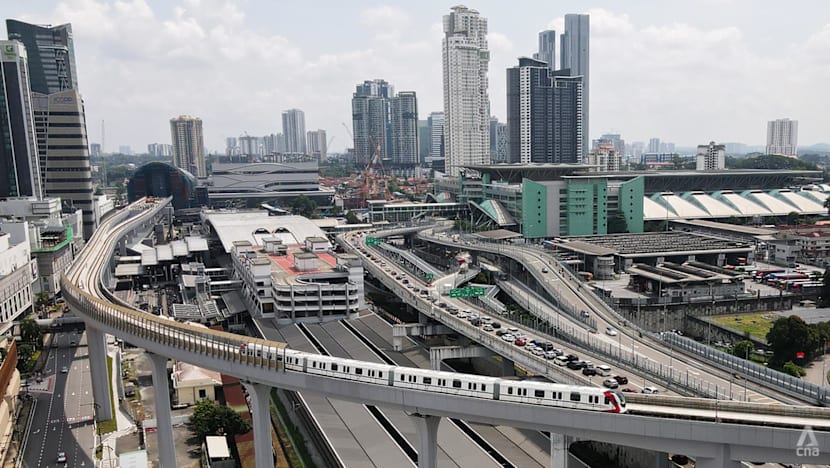
The 4km rail link will connect Singapore’s Woodlands North station with Bukit Chagar station in Johor Bahru.
Among the challenges highlighted by Marzuki were the gradient of the elevated rail structure and the impact of wet weather, which he said had to be addressed to ensure “every safe and comfortable journey”.
“It involves many hours of design thinking, testing and teamwork,” he said.
The elevated rail structure has a gradient of up to 3 per cent, the maximum allowed for train operations on the RTS link, according to Marzuki.
As trains descend along the slope from the bridge’s highest point towards ground level, they must maintain a safe speed, while stopping smoothly and accurately at the station, he said.
“This requires careful coordination of the track design, braking and signalling systems,” Marzuki added.
Wet weather is another challenge.
“Rain can reduce grip between the wheels and rails. This affects how trains accelerate and brake,” the chief executive of the rail service operator said.
“Thorough testing is therefore essential to ensure safe and reliable operations in different weather conditions.”
In the Facebook post on Tuesday, Marzuki also thanked engineers and project teams from both countries for their hard work and dedication.
RTSO expects to complete final system tests and trial runs for the RTS Link by Dec 31, 2026.
Singapore's Transport Minister Jeffrey Siow said on Oct 2 that the original plan had been for safety certification and licensing to be completed before the end of this year, "but it was not to be".
He added that the aim is for the service to open before Hari Raya Puasa, which falls on Mar 10, 2027.
Transport experts previously told CNA that opening the delayed cross-border rail service around holiday periods could put its passenger-handling arrangements to an early test.