
Breaking News
Utah officials warn of fatal overdoses involving kratom and cat’s claw after Ole Miss deaths
Key Points
Utah officials warn of fatal overdoses involving kratom and cat’s claw after Ole Miss deaths U.S. poison control centers have reported a 1,200 percent increase in calls about kratom from 2015 to 2025 - Bookmark - CommentsGo to comments Become an Independent member to bookmark this article Already a member? Log in Utah health officials have issued an urgent public health warning following four deaths linked to “high-potency” and illegal chemical compounds found in herbal supplements. Details...
Utah officials warn of fatal overdoses involving kratom and cat’s claw after Ole Miss deaths
U.S. poison control centers have reported a 1,200 percent increase in calls about kratom from 2015 to 2025
- Bookmark
- CommentsGo to comments
Become an Independent member to bookmark this article
Already a member? Log in
Utah health officials have issued an urgent public health warning following four deaths linked to “high-potency” and illegal chemical compounds found in herbal supplements.
Details about the fatalities have yet to be made public but authorities said Monday that the supplements include cat’s claw and kratom, substances tied to the deaths of two Mississippi college students in September.
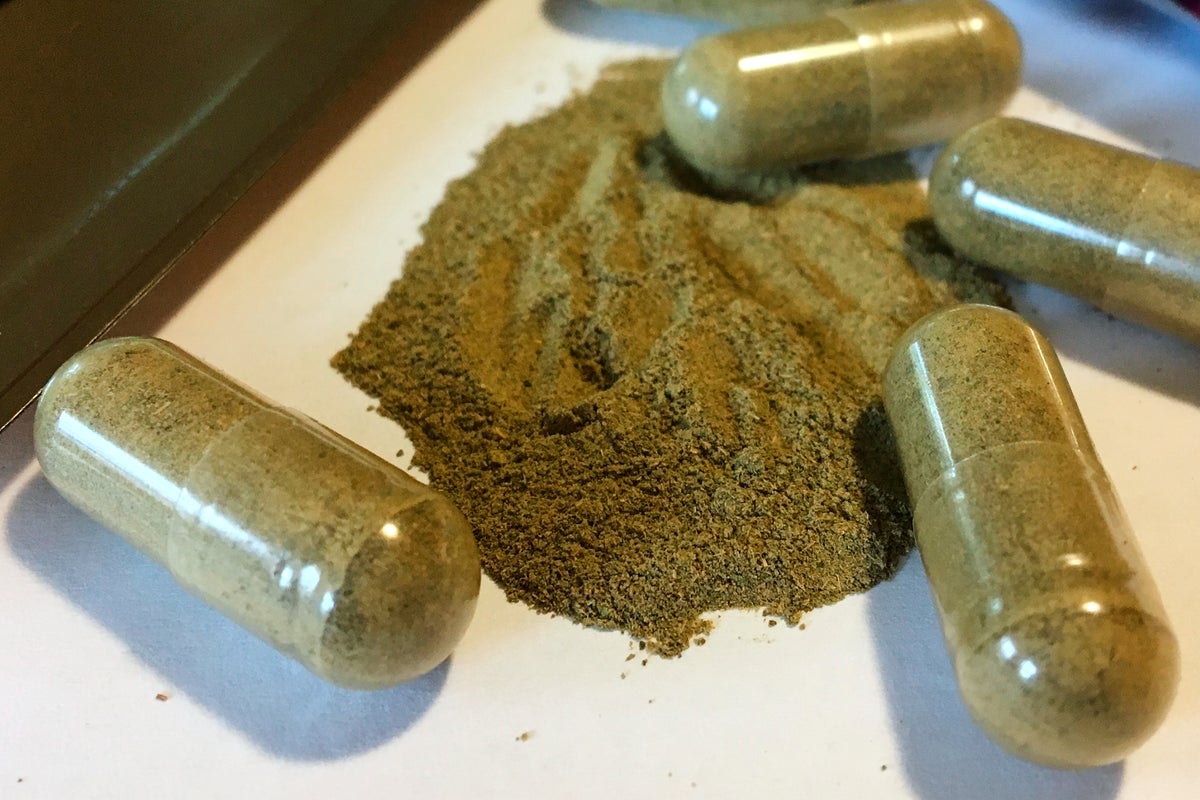
Kratom is a plant-based psychoactive drug made from the leaves of a Southeast Asian tree that acts as a stimulant in low doses but has sedative effects in high doses.
Cat’s claw is made from a vine grown in Central and South America and often used to treat inflammation but can lead to overdoses when mixed with kratom.
Neither are approved for use by the U.S. Food and Drug Administration, but are still sold in convenience stores, smoke shops and gas stations. Sometimes, cat’s claw and kratom are combined with harmful effects, the Utah officials warned.
Cat’s claw products may contain MGPI and MGM-15, compounds that act as powerful opioids. These substances are stronger than morphine and addictive.
These products are often sold under brand names like “Buzzers” and are labeled as containing cat’s claw.
The labels often claim the products are legal and free of kratom. But they can also state the products are only for use in adults over the age of 21 and produce strong psychoactive effects, the department noted.
One death tied to a Buzzers product that had been mislabeled was reported by Utah in July.
Exo Club, the manufacturer of Buzzers, did not immediately respond to a request for comment Tuesday.
Last month, two students at the University of Mississippi were found dead with packaged kratom at the two separate scenes. The students were identified as 18-year-old Aidan Hamilton and 20-year-old Robert Strang.
It is unclear whether kratom contributed to either death, but federal prosecutors said both fatalities appear consistent with drug overdoses. A store owner and his son have been charged with selling the kratom.
Poison control centers across the U.S. have reported a 1,200 percent increase in calls about kratom from 2015 to 2025, according to the Centers for Disease Control and Prevention.
Several states have taken action to ban the substance, including Alabama, Arkansas, Connecticut, Indiana, Louisiana, Tennessee, Vermont and Wisconsin. More states have proposed bans, including California, New Mexico, Minnesota and Kentucky.
Only pure and natural leaf kratom products are legally sold in Utah.
Join our commenting forum
Join thought-provoking conversations, follow other Independent readers and see their replies
Comments
Utah (LOCATION)
Ole (ORG)
U.S. (LOCATION)
Independent (ORG)
Mississippi (LOCATION)
Kratom (PERSON)
Southeast Asian (ORG)
Central and South America (LOCATION)
the U.S. Food and Drug Administration (ORG)
Buzzers (ORG)
Exo Club (ORG)
the University of Mississippi (ORG)
Aidan Hamilton (PERSON)
Robert Strang (PERSON)
the Centers for Disease Control and Prevention (ORG)