
Science
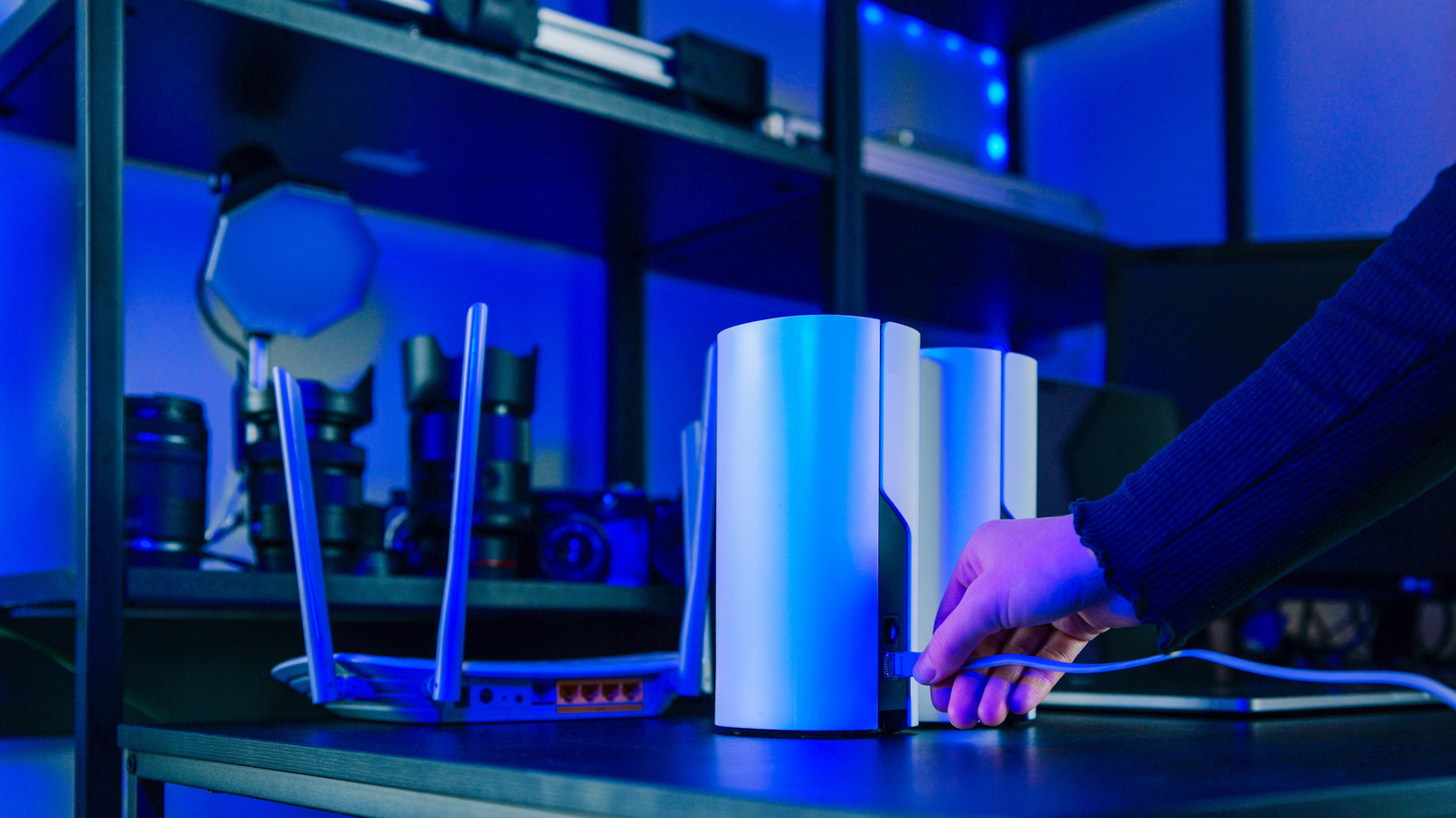
Why don't you see external antennas on mesh Wi-Fi systems?
Key Points
Why don't you see external antennas on mesh Wi-Fi systems? Mesh systems tend to look like minimalist decor. In just about any space larger than an apartment, it's hard to deny the value of mesh Wi-Fi routers.
Why don't you see external antennas on mesh Wi-Fi systems?
Mesh systems tend to look like minimalist decor.
In just about any space larger than an apartment, it's hard to deny the value of mesh Wi-Fi routers. They do have drawbacks — primarily their price-to-performance ratio — yet top speed is meaningless if coverage isn't consistent. You might liken it to owning a Porsche 911 in a place like the West Texas desert, where gas stations are so far apart that you could conceivably run dry on a high-speed drive.
Something we hadn't really thought about much until recently is the fact that most mesh routers are missing external antennas. They do have antennas, naturally — they're just under the surface. You'd think, though, that with coverage being a priority, gear makers would want every possible boost to signal strength.
As it turns out, burying antennas is not only fine, but actually a technical advantage given the goals of mesh systems. There are also additional business factors, although this is one case in which companies aren't cutting corners. You're likely getting a better product.
The benefits of your mesh router's internal antennas
Although external antennas do maximize range, that's actually less of a priority with mesh systems, for a reason that's glaringly obvious when you think about it for a second: A mesh network is already designed to repeat signals and fill in gaps. The most distant devices a mesh router has to talk to are usually its siblings, establishing a backhaul connection to your main router. All other devices are going to be a room or two away, at most.
Where things get interesting is the nature of internal antennas. These are often omnidirectional rather than focused, which aids in another important element of mesh technology: seamless connection and handover. With a wide net, routers can quickly detect nearby devices and switch connection duties, maintaining relatively consistent bandwidth the entire time.
In fact, there's higher potential for things to go wrong with external antennas. If they're adjustable, misaligning them can reduce connection strength to some devices. And let's not forget that external antennas are long and can be broken, whether that's during a move or by accidentally knocking a router off a tall surface. If you don't need to introduce these risks, it's logical not to.
Speaking of fragility, it's worth noting that better mesh routers may actually need more antennas than usual, since they provide a dedicated backhaul instead of splitting that bandwidth with your devices, slowing them down. A forest of external antennas would become not just more vulnerable, but unsightly and complex to manufacture. More on these points in a moment.
There are downsides to internal antennas. Apart from sacrificing range, there is hypothetically more potential for interference from nearby components. As you can tell, however, this issue has been dealt with in a way that minimizes any impact.
Boiling it down to the cool factor
Manufacturing costs offer an incentive to move things inside, too. External antennas naturally require more parts and materials. For an individual router, the price increase is going to be negligible. But spread across thousands or even millions of units, the bill quickly adds up. Considering the networking advantages, moving antennas inside is a win-win scenario for mesh Wi-Fi vendors.
Even better, internal antennas permit minimalist designs that a lot of shoppers find appealing. That's particularly important when you're going to have two or three units scattered through your home. For optimal performance, any router also needs to sit out in plain sight, and it might be easier to sell your partner on that with something that looks decorative, rather than like the radio tower it actually is.