
Breaking News
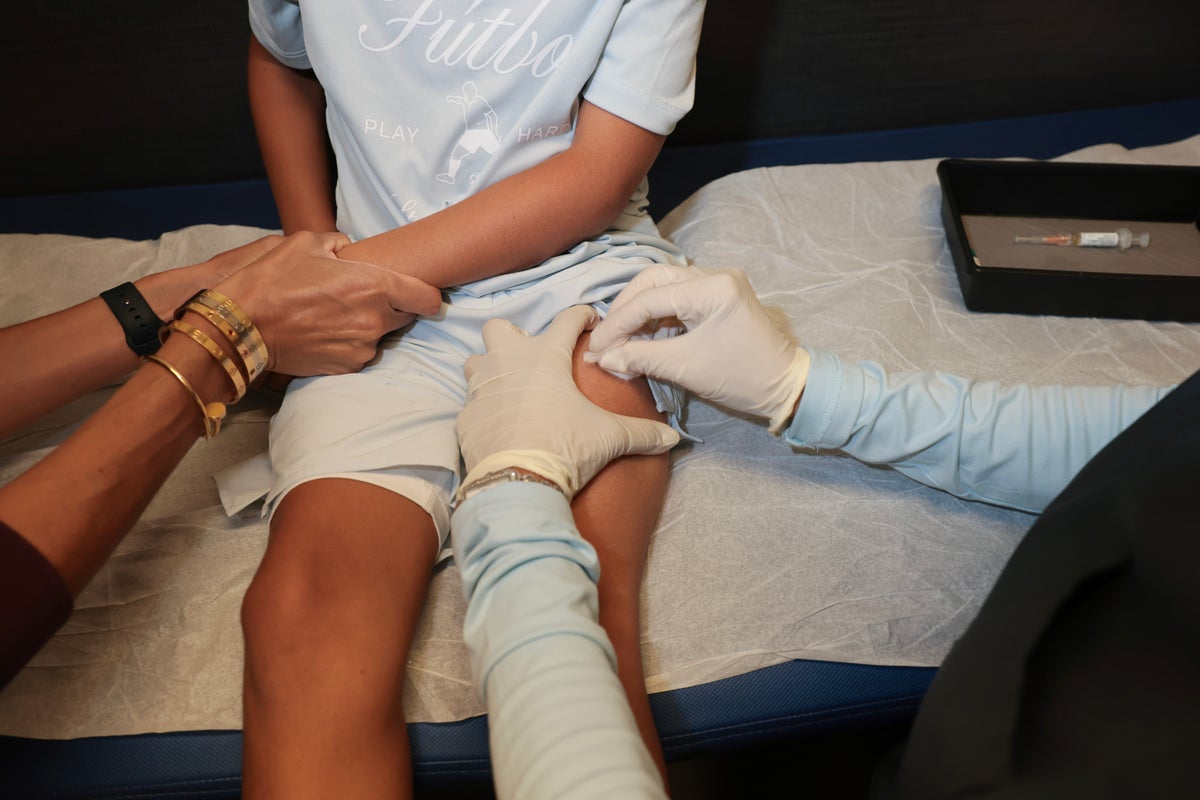
Measles outbreak mapped: New York declares state of emergency after virus wreaks havoc in Pennsylvania
Key Points
Measles outbreak mapped: New York declares state of emergency after virus wreaks havoc in Pennsylvania This has been the most active year for measles nationwide since the 1990s - Bookmark - CommentsGo to comments Become an Independent member to bookmark this article Already a member? Log in Measles is surging at historic levels in the United States with nearly 3,900 cases reported in 47 states and Washington, D.C. this year so far.
Measles outbreak mapped: New York declares state of emergency after virus wreaks havoc in Pennsylvania
This has been the most active year for measles nationwide since the 1990s
- Bookmark
- CommentsGo to comments
Become an Independent member to bookmark this article
Already a member? Log in
Measles is surging at historic levels in the United States with nearly 3,900 cases reported in 47 states and Washington, D.C. this year so far.
New York Governor Kathy Hochul declared a state of emergency due to the virus Monday after 109 cases were reported - the most since a 2019 outbreak.
Pennsylvania has experienced the nation’s largest measles outbreak in over three decades with infections surpassing the 1,000 case threshold this week.
The state has reported five deaths linked to measles but that has been disputed by federal health officials who only confirmed two fatalities. Health Secretary Robert F. Kennedy, Jr. claimed in August that Pennsylvania’s measles deaths were “fabricated” and ordered the CDC to change how it counts such fatalities.
Cases have surged over the past year in largely unvaccinated communities. Health experts say vaccine hesitancy and misinformation have led to falling child vaccination rates. The majority of 2025 and 2026 cases are in children and teens, CDC data shows.
South Carolina had a six-month outbreak of nearly 1,000 cases between October 2025 and April 2026. An ongoing outbreak in Utah has led to 724 infections since June 2025.
Measles is a highly-contagious virus that can cause high fever, rash, cough, runny nose and red, watery eyes. If it becomes a serious case, it can cause brain-swelling, pneumonia and death.
The majority of infections are in people who are unvaccinated.
Infections spread easily after a person with measles coughs or sneezes, but the viral droplets they produce can linger in the air for up to two hours or contaminate surfaces.
Receiving two doses of the MMR vaccine, that targets measles, mumps and rubella, provides lifelong protection against infection.
Only 10 states have reported kindergarten vaccination levels at 95 percent - the level needed to ensure sufficient immunity to the disease so that it no longer spreads easily.
Vaccination against measles has been proven effective and the virus was declared eliminated from the U.S. in 2000 after most Americans had been vaccinated.
It’s likely that the U.S. will lose its elimination status this year, according to medical experts in Boston. This status indicates there has not been continuous spread of the disease for more than a year.
It has been the most active year for measles in the U.S. since the 1990s.
“Strengthening vaccination efforts, reducing exemption rates and interrupting ongoing local transmission will be essential to reverse this trajectory,” the researchers said in a letter in May.
Join our commenting forum
Join thought-provoking conversations, follow other Independent readers and see their replies
Comments