
Science
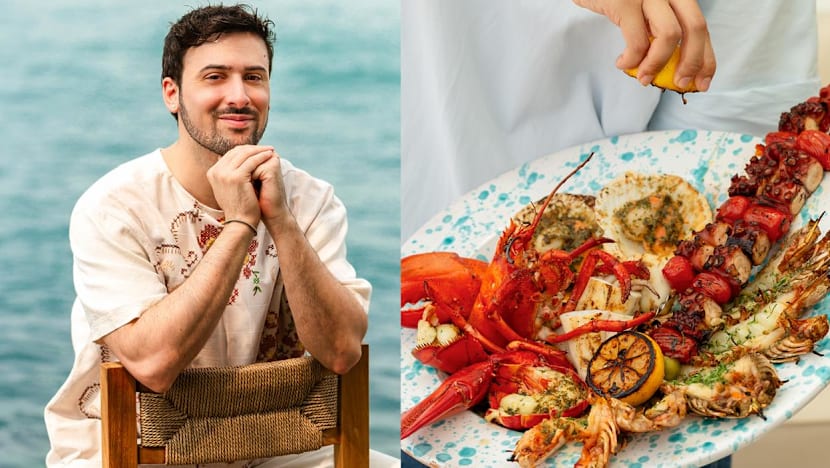
Fico and Somma chef Mirko Febbrile keeps saying he needs a break. Instead, he keeps building
Key Points
Fico and Somma chef Mirko Febbrile keeps saying he needs a break. Instead, he keeps building With a second Fico now open at Tanjong Beach Club and creative studio Verso taking him beyond the restaurant, chef Mirko Febbrile is busier than ever. He talks about the art, travel and Pugliese roots shaping his ambitious creative world.
Fico and Somma chef Mirko Febbrile keeps saying he needs a break. Instead, he keeps building
With a second Fico now open at Tanjong Beach Club and creative studio Verso taking him beyond the restaurant, chef Mirko Febbrile is busier than ever. He talks about the art, travel and Pugliese roots shaping his ambitious creative world.
Mirko Febbrile has been talking about taking a break for some time. I know because I have known the Italian chef closely for years, and he has been saying so since he opened Somma, his fine-dining restaurant, two years ago. Yet, if his restaurants and projects are anything to go by, the 35-year-old is busier than ever.
First, there’s Fico, his casual Pugliese restaurant in East Coast Park, which earned a Michelin Bib Gourmand in its first year and recently spawned a second outlet at Tanjong Beach Club. There’s also Somma at New Bahru, which earned a place on 50 Best Discovery in July, Bar Somma upstairs, and now, Verso, the creative studio he launched in August to create food-led experiences for luxury clients.
“I guess I’m not just one thing, you know?” he said in his unique Singa-talian accent, shaped by learning to speak English in a Singaporean kitchen and honed over 10 years of living and working here. “I like design, I like art. I like to travel. I like to explore. I’m a very curious person.”
A HEART FOR ART AND BEAUTY
Febbrile grew up in Puglia in a family of creatives. His father painted, his mother stitched elegant patterns on fabric, and his aunt and grandmother were seamstresses before dabbling in jewellery. Among his earliest memories was creating window displays for his parents’ furniture shop, all the while imagining a career as an interior designer or artist. He initially chose to attend art school, but his mother encouraged her teenage son to go to cooking school instead. “People will never stop eating,” she told him. “Cooking is an industry that will never die.”
Although he heeded her advice, Febbrile’s love for beauty and fascination with fashion endured. “I think I fall in love with everything beautiful, like a piece of fabric, a table, a couch, anything really,” he said.
Growing up with 20 cousins and aunts in the same building, and at family gatherings that could stretch to 60 people around the Christmas table, was just as influential in shaping his career. As a child, Febbrile would style the table, invent themes for family meals and create Mother’s Day breakfast trays strewn with rose petals, complete with a handwritten menu even if breakfast was simply eggs and pastries. “It was always just about giving, and there was always food involved.”
All this goes some way towards explaining the restaurants he’s created. Febbrile’s eateries, created in partnership with The Lo & Behold Group, are highly considered visually, from Fico’s rustic elegance to Somma’s seasonal botanical arrangements. Since opening, Somma has also sought to challenge diners’ ideas of what modern Italian food can be. Febbrile said he develops Somma’s menus using ingredients and techniques to evoke the landscapes and traditions of his native Puglia rather than simply reinterpreting familiar dishes.
The result is courses that can feel unexpected and unfamiliar. Among the most talked-about is the Spaghettone, made from ancient Khorasan wheat and coated in a glossy sauce produced by reducing 20kg of red carrots to a single litre. In its early days, the dish was overwhelmingly sweet. Febbrile and his team have since refined it, finishing the sauce with house-made grapefruit vinegar and other techniques to create a signature dish balancing sweet, briny and umami flavours.
THE CREATIVE PROCESS
Febbrile’s approach and eye for design caught the attention of Apple, which invited him last June to give a presentation on how he uses the iPad in his creative process. “I visualise the season, with its landscapes, colours and textures, and even the feeling of what I want to communicate before we start translating that to the guest experience,” he explained. “I often draw the idea and movement of the dish on my iPad, where the ingredients sit, the shapes and textures, and how I imagine the guest seeing it for the first time.”
In Somma’s research kitchen are mood boards, photos, sketches and notes taped to cabinet doors and written on glass windows in much the way a creative director or fashion editor creates their visual language for each season or issue.
To further sate this passion for experiential beauty, Febbrile introduced Verso, which grew out of one-off events he’d created for brands like Hermes and Aesop. “I feel there’s a gap in the market, and I want to create experiences that are not necessarily linked to the restaurant. It’s the whole experience – the table set-up, colour palette, lighting, the room and guest journey… only after that comes the food,” he said. “In this way, I’m not the chef anymore, but the creative director, bringing this experience together.”
Juggling his restaurants, bar and Verso means Febbrile’s life is pretty circumscribed. Grand ambitions aside, the point of any enterprise is profit-making, after all. His occasional reward between this grind is travel, which feeds his appetite for new perspectives and inspiration. “Sometimes, when the stars align, I get to travel for work, which is always inspiring.”
During a recent trip through New Zealand, Febbrile was struck by the pride people took in what they had and the honesty with which they presented it. One particular encounter that stayed with him was with the second-generation owner of family restaurant Cazador, who had returned from working in Europe with ideas of his own. “They’re trying to evolve, but at the same time, not dilute or change the soul of the concept, or do away with dishes that guests have been coming back for for 20 years,” Febbrile said. It was a lesson that resonated with his own ambitions: how to keep moving forward without losing sight of what makes his work and heritage distinctive in the first place.
HOME AND AWAY
Which brings us back to Fico, his first restaurant, inspired by the food he eats when he returns home to Puglia but without the rustic clichés of a traditional trattoria. “Honestly, it was an overwhelming project because it was not something I planned to do so quickly (after joining the Lo & Behold Group),” he admitted. Fico’s seaside location at East Coast Park and its rapid success, however, convinced him that the concept could travel. “If you have a coast, if you have sun, then you can have a Fico.”
On Sep 28, the second Fico opened at Tanjong Beach Club. This sophomore incarnation is lighter and more playful, with seafood, salads and a charcoal-fired grill dome that nods to the Pugliese tradition of cooking over fire.
When I asked him if that break he’d been meaning to take was anywhere on the horizon, he laughed: “You mean, like, taking a break from life?”
“Honestly, I’m living a version of the dream I had when I was younger, so I don’t really feel the need to step away from it. I’m genuinely excited by what I am building and I feel like there’s still so much I want to create. But I do want to make space for a few trips in between: to eat, travel, meet people, see different places and come back home with new energy and ideas. For me, that’s part of the work too.”