
Business & Finance
Analysis:Vietnam's banks tap investors for $7 billion as economy runs red hot
Key Points
Analysis:Vietnam's banks tap investors for $7 billion as economy runs red hot HANOI, Oct 7 : Vietnamese banks are planning nearly $7 billion in share sales as the country's fast-growing economy fuels demand for capital, opening a window for foreign investors to expand in the tightly controlled sector. Communist-run Vietnam, which reported growth of nearly 10 per cent in the last quarter, has one of Asia's fastest-growing banking industries but access has been restricted, with cumulative...
Analysis:Vietnam's banks tap investors for $7 billion as economy runs red hot
HANOI, Oct 7 : Vietnamese banks are planning nearly $7 billion in share sales as the country's fast-growing economy fuels demand for capital, opening a window for foreign investors to expand in the tightly controlled sector.
Communist-run Vietnam, which reported growth of nearly 10 per cent in the last quarter, has one of Asia's fastest-growing banking industries but access has been restricted, with cumulative foreign ownership capped at 30 per cent, individual stakes limited to 20 per cent and offshore borrowing subject to strict limits.
But in recent months, top leader To Lam's drive to turbocharge economic growth with major infrastructure spending has ushered in a more open approach, as policymakers view larger foreign participation as necessary to meet growing credit demand amid a domestic funding squeeze.
As a result, bank share sales could raise nearly $7 billion by the end of next year, according to Reuters calculations based on public disclosures and a Fitch Ratings report, which noted that this was likely Vietnam's largest-ever wave of capital raisings by lenders.
The ceiling on offshore borrowing was also raised this year by 11 per cent to $6.1 billion and it could rise further. Three local lenders have been allowed to increase their foreign ownership limits to 49 per cent, while stock-market reforms secured Vietnam's upgrade to emerging status by index provider FTSE Russell last month. Separate plans to set up international financial centres also promise more foreign capital inflows.
A couple of foreign lenders involved in equity talks with Vietnamese partners cited gains on their financial investments and greater access to the country's growing consumer market for products like insurance as reasons to expand there, according to two people familiar with the discussions who requested anonymity because the matter was private.
Vietnam is allowing more foreign capital into its banks as "it is beginning to rethink how its next phase of growth will be financed," said Quynh Nguyen, a finance lecturer at Hoa Sen University in Ho Chi Minh City. She cautioned, however, that the move was selective and did not amount to a wholesale liberalisation.
SHARE SALES, OFFSHORE FUNDING
The share offers have increased foreign interest, "particularly from strategic investors who are already familiar with Vietnam and are now considering deeper exposure," Quynh said.
Japan's Sumitomo Mitsui Banking Corp (SMBC) is in talks with Vietnamese partner VPBank to raise its stake to 20 per cent from 15 per cent as VPBank seeks a private placement worth $560 million at current market prices, Reuters reported in September. VPBank is allowed to raise its foreign ownership cap to 49 per cent.
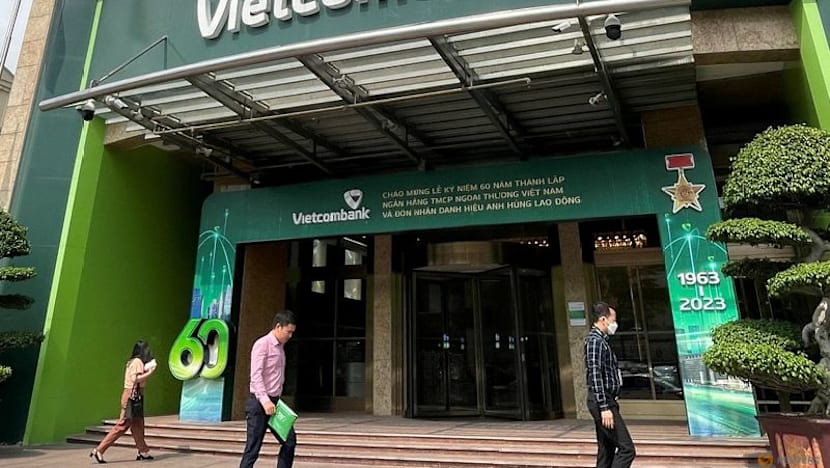
Vietcombank, the country's largest lender, has also unveiled plans to sell 6.5 per cent of its shares by the end of this year in a transaction worth around $1.2 billion at current prices. Japan's Mizuho Bank, its current largest foreign investor with a 15 per cent stake, "may potentially increase its holding," according to minutes from a Vietcombank shareholder meeting in April. Mizuho declined to comment.
BIDV, Vietnam's second-largest lender, sold roughly 3 per cent of its shares to dozens of investors in March and intends to sell almost another 11 per cent by the end of next year for a total value of approximately $1.4 billion, according to public disclosures.
Its top foreign shareholder, South Korea's KEB Hana, did not participate in the first placement but is considering whether to participate in the new plan, a spokesperson said.
"We see some opportunities among the smaller banks to score some tie-ups down the line, provided Vietnam can maintain its growth story," Fitch's Willie Tanoto said.
HDBank has said it plans to sell a 10.7 per cent stake by the end of next year. The private bank - linked to Vietnam's largest private airline Vietjet - does not have a large foreign investor and is allowed to raise its foreign ownership to 49 per cent.
Separately, Techcombank, one of the country's largest private lenders, has discussed a stake sale with foreign lenders, Reuters reported in August.
Meanwhile, Vietnamese banks and corporations disclosed offshore borrowing plans for an aggregate value of $5.3 billion this year, according to FiinRatings, an S&P Global partner.
The finance ministry is also considering an offshore sovereign bond sale that would be the country's first since 2014. Banks are also weighing offshore bonds while large municipalities may be able to tap international capital markets with debt offerings under new rules.
MORE EQUITY SALES?
The equity sales have been driven by the need to bolster capital as Vietnam transitions to stricter global Basel III requirements by 2030. The need has become pressing because of rapid loan growth, which Moody's-backed VIS Rating said could further deteriorate loss-absorption buffers.
The government's push for annual economic growth of at least 10 per cent through 2030 is also fuelling the inflation of asset prices, particularly in the real estate sector, which accounts for roughly a quarter of all loans and where bad debts are rising quickly, according to an August internal report from the central bank.
Fitch said the capital-raising drive "is unlikely to materially improve most banks' capitalisation" because the fresh funds will be rapidly deployed into new lending.
Yet those risks may also create new opportunities as "further large capital injections are likely to be needed in the coming years," Fitch said.
[Image text:] Vietcombank
VADON NHAN DANH HIEU ANH HUNG LAO DONG
1963
2023