
Health
Why are dengue cases surging in Florida this year? An 'unlucky' combination of factors, experts say
Key Points
Why are dengue cases surging in Florida this year? An 'unlucky' combination of factors, experts say Dengue fever infections are booming in Florida this year, with more local cases than usual and the state's first dengue-related death in nearly a century. Cases of dengue fever are surging in Florida, spurring several counties to declare a state of emergency.
Why are dengue cases surging in Florida this year? An 'unlucky' combination of factors, experts say
Dengue fever infections are booming in Florida this year, with more local cases than usual and the state's first dengue-related death in nearly a century. Why?
Cases of dengue fever are surging in Florida, spurring several counties to declare a state of emergency.
The state has seen 497 reported cases so far this year. Of those, 252, or about 51%, were caught locally, rather than brought to the state by travelers. The Florida Department of Health confirmed one woman's death from dengue fever in early September, marking the state's first known dengue death in almost a century.
Prior to the past few years, most dengue cases reported in Florida were the result of travel. In other words, people caught the disease in other countries and then traveled to Florida, where their case was then diagnosed. At 245, the number of travel-related cases reported this year is not unusually high, Caroline Waddell, a public health researcher at the University of Florida, told Live Science in an email. However, the number of cases caught from local mosquitoes is more than five times higher than at this point in the year compared with any of the previous four years, she said.
Why are local dengue cases especially high this year? Live Science spoke with experts to find out.
A growing global health concern
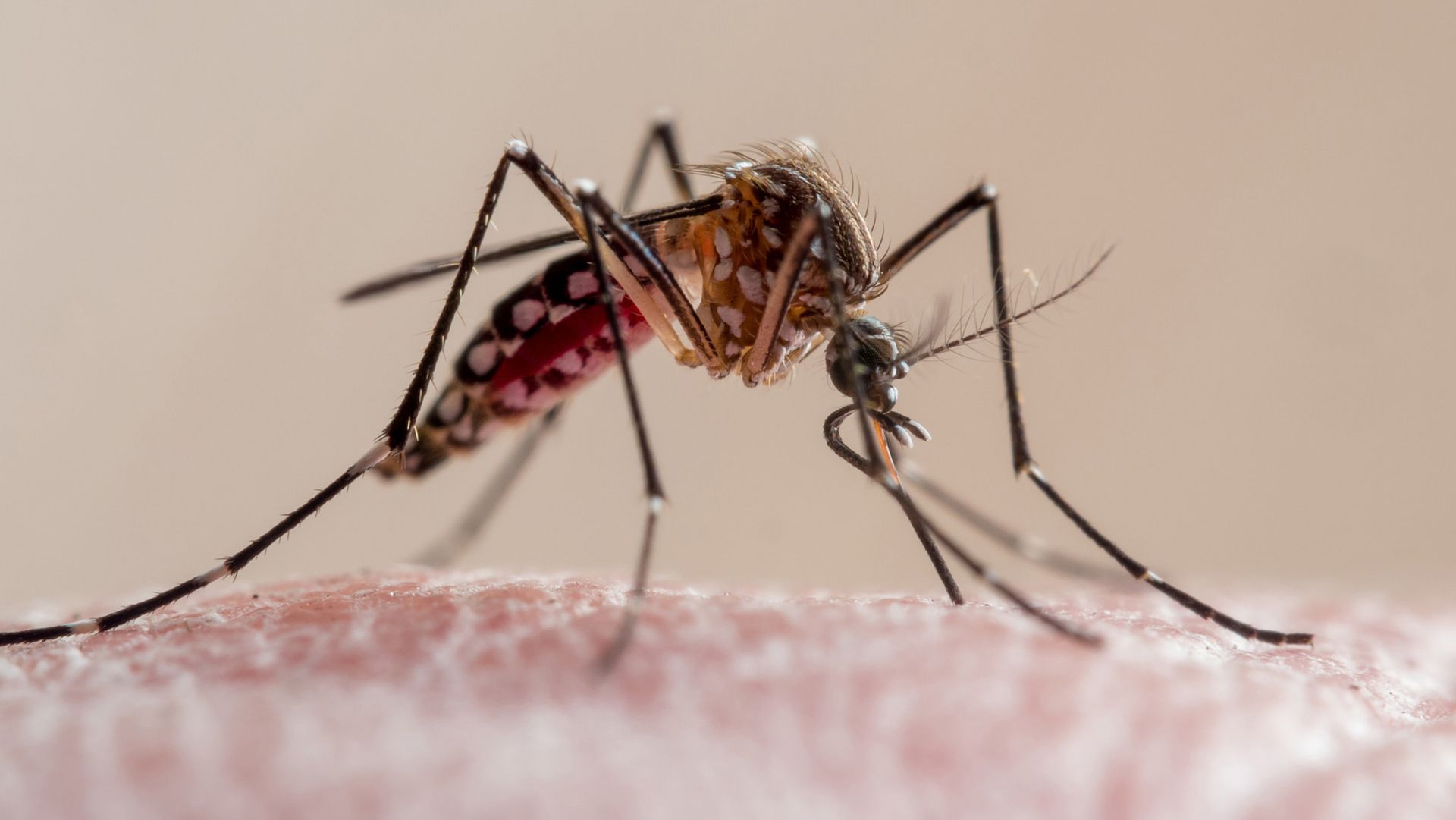
Dengue fever is caused by the virus Orthoflavivirus denguei, which spreads from mosquitoes to people through the pests' bites; it doesn't spread from person to person. Aedes aegypti and Aedes albopictus mosquitoes transmit the virus to humans, and the same species can also carry the viruses behind yellow fever, Zika and chikungunya.
About 100 million to 400 million dengue infections happen annually worldwide, with about 800 cases reported in the U.S. historically, although that number has increased recently. Only about 1 in 4 people exposed to the dengue virus develop symptoms, which can include fever, headache, body aches, nausea and rash. About 1 in 20 cases become severe, and immunocompromised people, children, older adults and pregnant people are especially susceptible to these serious infections.
Severe symptoms can include abdominal pain, vomiting, difficulty breathing and bleeding of the gums or nose. The most severe forms of the infection can lead to leaky blood vessels, severe bleeding, shock, organ dysfunction and death. There is no specific treatment for dengue, so care focuses on managing symptoms and maintaining patients' vital signs.
Dengue has escalated as a global health concern in the past few decades. Between 2000 and 2019, global cases of dengue increased tenfold; between 1990 and 2021, dengue-related deaths doubled. Scientists say this surge is likely driven by climate change, since rising temperatures expand Ae. aegypti mosquitoes' range, in turn exposing more people to the insects' bites. Plus, warmer conditions speed up mosquitoes' life cycles and the dengue virus's replication rate, thereby boosting transmission.
International travel also factors into these rising case counts. In 2023, dengue spikes around the world were attributed to the resurgence of global travel following the COVID-19 pandemic.
Zooming in on Florida
As the global picture has worsened, dengue cases in the U.S. have also increased.
Nearly 3,800 cases were reported in 2024 — an increase of more than 300% above the annual average for the previous 10 years. The uptick was tied to a rise in travel-associated cases, reflecting the wider global surge, as well as to warming temperatures that brought dengue-carrying mosquitoes to new regions of the U.S.
Each year, Florida experiences dengue outbreaks in the southernmost parts of the state, such as Miami and the Florida Keys, Panpim Thongsripong, a disease ecologist at the University of Florida, told Live Science. Historically, outbreaks in Miami typically totaled around 50 or fewer cases. But then a 2019 outbreak resulted in over 200 cases, and from 2022 to 2024, outbreak totals have ranged from about 500 to 675 cases.
The outbreak currently unfolding in Florida centers on Hillsborough County, which is farther north and includes Tampa. This is unusual, Thongsripong said, as this region of the state normally sees just a few sporadic cases. Hillsborough County has reported 223 of the state's 252 locally acquired cases this year, and it's where the one dengue-related death took place.
Florida's health department regularly traps mosquitoes and tests them for viruses. So far this year, 20 pools of mosquitoes have tested positive for dengue across seven counties, and 19 of those positive pools were sampled from the greater Tampa area. In 2025, only four mosquito pools throughout the state tested positive, and in 2023, one mosquito pool did.
"Finding positive mosquito pools is rare in Florida because dengue is not endemic to the state," said Keira Lucas, deputy executive director of the Collier Mosquito Control District. "In many ways, it can be like looking for a needle in a haystack," she told Live Science.
Routine mosquito trapping is a relatively inefficient method for detecting viruses, though, Lucas said. As such, detecting dengue-positive mosquito pools may indicate that a large amount of transmission is already unfolding. "Since approximately 75% of dengue infections are asymptomatic, the virus can circulate within a community without being readily detected for some time," Lucas explained.
In addition to Hillsborough, neighboring Pasco and Pinellas counties have declared local states of emergency over dengue.
An unlucky combination of factors
So what's driving the unusual dengue activity this year?
In the past, Florida's local dengue outbreaks tended to be concentrated in the South, which saw moderate rainfall, warmer temperatures and more travel-related dengue cases compared with the rest of the state, according to a 2022 study in the journal Insects. With the outbreak concentrated farther north this year, that could suggest changing climatic patterns are making additional parts of the state especially hospitable to mosquitoes and the virus. That wouldn't necessarily explain why Tampa is seeing more local cases than Miami this year, but it could nonetheless be a factor in the overall trend.
For the virus to persist in local mosquitoes, dengue still needs to be reintroduced periodically through travel-related cases. Because the virus is not yet endemic to the state, it doesn't regularly circulate in local mosquitoes; however, a somewhat predictable "dengue season" has been emerging that coincides with upticks in international travelers carrying the virus to Florida.
This year, though, the high number of locally acquired dengue cases suggests a shift from predominantly imported infections toward outbreaks spurred by local Florida mosquitoes. Scientists hypothesize that climate change could increase local transmission in Florida even more in the future.
This year, Florida has also been enduring its most intense drought in over a decade. In theory, that might be expected to limit mosquito populations because the pests need water to breed, Lucas said. However, when it's dry, people tend to run their sprinklers more, creating mosquito breeding grounds when puddles form or containers fill up, she noted. This could bring mosquitoes closer to people, as it creates opportunities for them to breed.
Ae. aegypti mosquitoes are especially well adapted to living alongside humans, as they prefer to breed in human-made containers. Droughts can also drive dehydrated mosquitoes to bite more as they hunt for fluids.
"It's almost like an unlucky [combination]," Thongsripong said. "Everything coming together at the right time and right place, and boom, you have the conditions for an outbreak to occur."
The true number of dengue cases may be even higher than reported, Waddell said. The cases captured in the data include infected individuals who went to a doctor to get tested. Because many infections are mild or asymptomatic, additional people may have contracted the virus but never got counted.
What can be done
It's too early to definitively say what factors have increased Florida's dengue cases this year, Thongsripong said, as scientists are still gathering information. Despite the unknowns, she thinks the health and housing infrastructure in the U.S. will stop dengue from becoming too dangerous here.
To get dengue under control, it's key for government-level mosquito control efforts to coordinate and for the public to be aware of the virus, Lucas said. The mosquito control district coordinates with the health department for the latest data to best target where to spray larvicide, which kills mosquito offspring before they can bite people, she said.
Exclusive to Live Science Pro
- The super El Niño could cause torrential rainstorms. Americans may need to stock up on food to prepare, experts say.
- 'Mpox has not disappeared': Why the infectious disease is still spreading in the US and may be here to stay
- Infectious diseases will seed new ground as the planet warms — here's where they'll spread
It's important for people to use mosquito repellent when going outside, Thongsripong said, as well as to empty water from objects that can collect water and become a mosquito breeding ground, such as pets' water bowls, plant saucers, buckets or discarded tires.
Due to this year's strong El Niño, Florida is expecting a rainier winter, which could mean even more mosquitoes than usual, Lucas noted. That, in turn, could fuel additional dengue cases.
"Cases with September onsets are still being reported," Waddell said, "so we're not out of the woods."
This article is for informational purposes only and is not meant to offer medical advice.
Olivia Ferrari is a New York City-based freelance journalist with a background in research and science communication. Olivia has lived and worked in the U.K., Costa Rica, Panama and Colombia. Her writing focuses on wildlife, environmental justice, climate change, and social science.
You must confirm your public display name before commenting
Please logout and then login again, you will then be prompted to enter your display name.