
Business & Finance
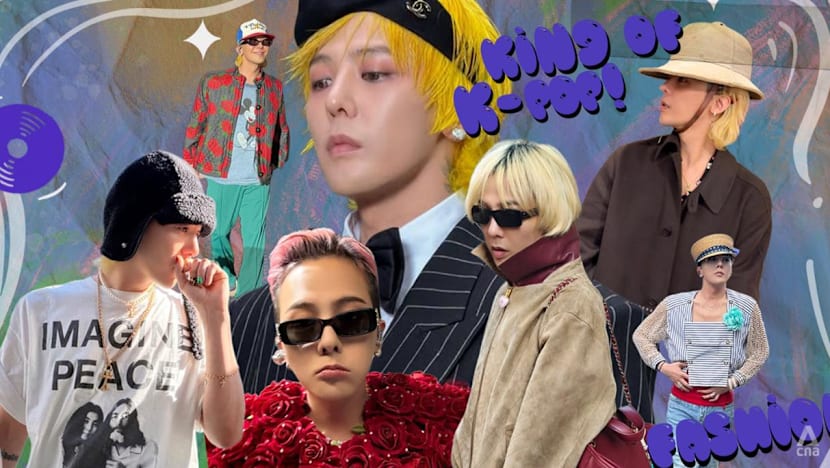
7 reasons why G-Dragon is still K-pop’s ultimate fashion icon, 20 years on
Key Points
7 reasons why G-Dragon is still K-pop’s ultimate fashion icon, 20 years on From becoming Chanel’s first Asian global ambassador to creating sold-out Nike sneakers, G-Dragon has spent two decades breaking fashion rules – and inspiring a generation of K-pop stars to do the same. In 2015, the influential platform Business of Fashion included G-Dragon in its BoF 500, an annual index of the people shaping the global fashion industry. That year, he was the only K-pop idol on the list, and the...
7 reasons why G-Dragon is still K-pop’s ultimate fashion icon, 20 years on
From becoming Chanel’s first Asian global ambassador to creating sold-out Nike sneakers, G-Dragon has spent two decades breaking fashion rules – and inspiring a generation of K-pop stars to do the same.
In 2015, the influential platform Business of Fashion included G-Dragon in its BoF 500, an annual index of the people shaping the global fashion industry.
That year, he was the only K-pop idol on the list, and the first Korean pop star ever included. More importantly, it cemented him as one of the rare musicians helping shape the global fashion conversation.
Over a decade later, that influence hasn’t waned.
This year alone, the BigBang leader has delivered a string of headline-making looks, from the dramatic faux fur Chanel coat he wore at Coachella to his powder-pink Tom Ford suit at the Los Angeles County Museum of Art’s opening gala.
This year also marks BigBang’s 20th anniversary (they’re set to perform at the National Stadium in October as part of their reunion tour), renewing appreciation for the group’s musical legacy – and its frontman’s enduring hold on fashion.
That influence sits within a much bigger phenomenon. Pinterest says global searches for “K-pop style” increased 19 per cent year on year, as fans increasingly turn to artists not just for entertainment, but for ideas about how to dress and express themselves.
“People rarely stop at the artist themselves,” Ayumi Nakajima, Pinterest’s senior director of content partnerships (APAC), told CNA Lifestyle over email. “They often start with a look they like, then explore ideas, save inspiration and shape it into something that reflects their own style.”
G-Dragon has been doing this for two decades – turning his own fashion instincts into a cultural influence that stretches well beyond K-pop. Here are seven reasons why he’s one of the genre’s most influential fashion icons.
1. HE TURNED THE FRONT ROW INTO HIS RUNWAY
G-Dragon first started showing up at fashion weeks in the early 2010s. While most celebrities arrived in head-to-toe looks picked out by the brand hosting the show, he’d mix off-the-runway pieces from Chanel, Givenchy and Saint Laurent with avant-garde streetwear labels like Ambush, Hood By Air, and KTZ, then topped it off with stacked jewellery, oversized hats, or a riot of scarves.
Even formal dress codes couldn’t tame him. At Chanel’s casino-themed Autumn/Winter 2015 haute couture show, he paired a sharp black tuxedo with a vivid red pompadour.
It wasn’t long before fashion editors and street style photographers treated his arrivals as events in themselves. Invitations from houses like Chanel, Saint Laurent and Lanvin became a regular fixture on his calendar, with anticipation over what he’d wear often rivalling the runway itself.
2. KARL LAGERFELD MADE HIM A “CHANEL BOY”
If one relationship cemented G-Dragon’s fashion credentials, it was Chanel’s.
His association with the house began in the mid-2010s, but his rapport with late creative director Karl Lagerfeld set him apart from other celebrity guests. Lagerfeld personally photographed him for three Vogue Korea covers in 2016 – the same year G-Dragon was named Chanel’s first Asian global ambassador.
The partnership was unusual for another reason: Chanel didn’t – and still doesn’t – have an official menswear line. G-Dragon made its codes his own anyway, pairing tweed jackets with distressed denim, layering pearl necklaces over graphic T-shirts, and piling on brooches, rings and chains.
His irreverent take broadened perceptions of who could wear Chanel, and how – earning him a global luxury platform few Asian male celebrities had access to at the time, and a nickname to match: “Chanel Boy”.
3. HE NEVER DRESSED BY THE RULES
Years before luxury brands fully embraced streetwear, G-Dragon was already treating fashion like a collage, pulling from luxury, streetwear, vintage and pop culture until the result became unmistakably his own.
His 2013 Crooked music video is perhaps the clearest snapshot of that approach. Across the video, he appeared in 16 distinct outfits, jumping from a Vivienne Westwood suit to punk tees, distressed skinny jeans, oversized fur coats, and wearing Chrome Hearts jewellery throughout.
G-Dragon also embraced gender-fluid fashion before it entered the mainstream. He wore pearl necklaces as naturally as silver chains, painted his nails, carried handbags and embraced delicate loafers, brooches and scarves – choices that many male celebrities would have avoided at the time.
Notably, he never presented these choices as a statement or a provocation; they were simply part of how he dressed. In doing so, G-Dragon was among the earliest Asian stars to show that masculinity and self-expression didn’t need rigid boundaries.
4. WHATEVER HE WEARS, PEOPLE WANT
Nicknamed "Wanpannam" in Korea, which literally translates to “sold-out man”, G-Dragon has a Midas touch that routinely turns anything he wears into massive commercial success.
In 2023, when he arrived at a Seoul police station for questioning over allegations of drug use (he was later cleared of the suspicion). The S$1,300 glasses he wore from LA-based brand Jacques Marie Mage quickly sold out.
Impressively, his influence isn’t limited to luxury. When G-Dragon wore S$17 acupressure slippers from Korean e-commerce platform Coupang in behind-the-scenes photos from his Power music video in 2024, the unexpected footwear became a talking point among fans, and subsequently sold out as well.
It’s a phenomenon G-Dragon himself has referenced in his own music. In One Of A Kind, he raps about being the one who sets trends rather than follows them, unbothered by anyone trying to copy his lane.
5. PEACEMINUSONE ISN’T JUST CELEBRITY MERCH
Launched in 2016 with longtime stylist Gee Eun, G-Dragon’s label Peaceminusone sits somewhere between fashion, art and design, releasing limited-edition apparel, accessories and collaborations that feel more like collectibles than fan merchandise.
In 2025, Peaceminusone partnered with luxury watchmaker and jeweller Jacob & Co on limited-edition pendants and earrings inspired by its signature daisy motif, following the unveiling of the US$1 million Astronomia Solar G-Dragon timepiece. More recently, it teamed up with Pixar on a Toy Story collection that reworked the daisy motif through the franchise’s characters and graphics.
From haute horlogerie to a beloved animated franchise, Peaceminusone moves between world’s most celebrity labels never even attempt – a testament to the creative vision that has kept it relevant for a decade.
6. HIS NIKE COLLABS ARE MODERN GRAILS
Nothing captures G-Dragon’s ability to create hype quite like his Nike sneakers.
His first collaboration, the Peaceminusone x Nike Air Force 1 Low "Para-noise", was launched in November 2019. The sneaker looked like a classic black-and-white Air Force 1, but beneath its painted leather upper lay hidden artwork by G-Dragon, designed to gradually reveal itself through wear so no two pairs would age the same way.
The sneakers sold out worldwide within hours, and were spotted on celebrities and athletes, from football stars Kylian Mbappe and Erling Haaland to Taiwanese singer Jay Chou and Chinese actor Wang Yibo.
A Korea-exclusive edition fetched resale prices of up to US$4,000, while standard pairs still trade for several times their original US$200 retail price.
Subsequent Para-noise releases, along with the Kwondo 1 – a brogue-meets-sneaker hybrid inspired by his eclectic style – generated similar hype. In Singapore, this year’s World Cup collection drew long queues outside Chamber, with several items reportedly selling out within half an hour.
7. HE IS PROBABLY YOUR IDOL’S IDOL
BTS’s Jungkook has spoken openly about him as a role model, telling Japanese media outlet Oricon that the BigBang leader was the reason he wanted to become a singer.
Even as a global superstar in his own right, Jungkook still shows his admiration for his senior – including singing G-Dragon’s songs during Weverse livestreams.
Ateez’s Hongjoong has named him a role model too, and his own penchant for customisation, bold accessories and unconventional styling regularly draws comparisons to the BigBang frontman.
But the significance goes beyond a handful of idols naming G-Dragon as an inspiration. He helped establish the idea that an idol’s personal taste could be part of their creative identity – not just something decided by a stylist or entertainment company.
That shift is particularly relevant to younger consumers, said Nakajima. Pinterest’s research found that 91 per cent of Gen Z respondents believe “the mainstream is over” – rather than following a single dominant trend, they are exploring a wider range of influences that reflect what matters to them. It’s a mindset G-Dragon’s own fans, and the idols who grew up admiring him, likely share.
And perhaps that is G-Dragon’s most lasting contribution to fashion. Two decades after his debut, G-Dragon remains a blueprint for what a fashion icon can be: someone who doesn’t just set trends, but gives others the confidence to develop a style of their own.