
World News
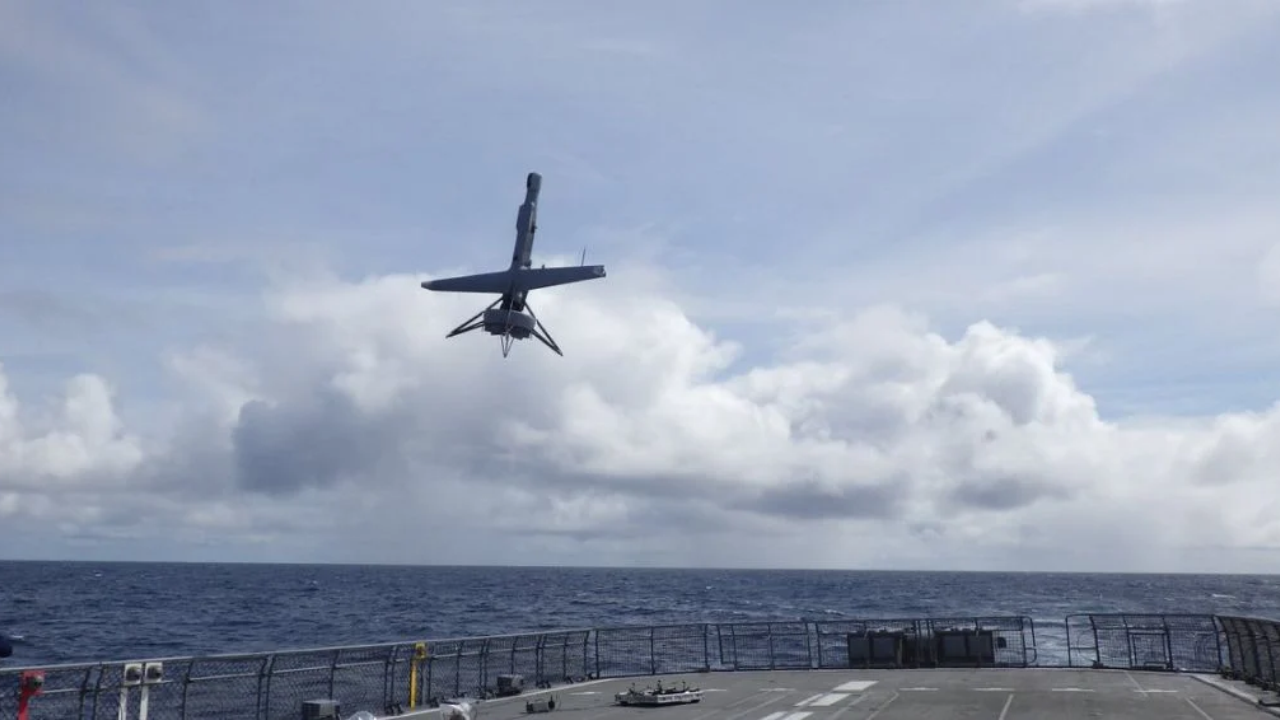
Can a warship become a mini aircraft carrier? India, US are testing two different answers
Key Points
Can a warship become a mini aircraft carrier? India, US are testing two different answers India is advancing its Naval Shipborne Unmanned Aerial System programme after receiving clearance from the Defence Acquisition Council. The systems will enhance intelligence, surveillance, and reconnaissance for naval operations and support various missions.
Can a warship become a mini aircraft carrier? India, US are testing two different answers
India is advancing its Naval Shipborne Unmanned Aerial System programme after receiving clearance from the Defence Acquisition Council. The systems will enhance intelligence, surveillance, and reconnaissance for naval operations and support various missions. The Indian drones aim for at least 60% indigenous content and face operational challenges from the maritime environment. Meanwhile, the United States is developing advanced AI-piloted drones for naval warfare without requiring a runway.
The idea of turning a warship to a miniature aircraft carrier is moving from concept to contract, with India and the United States both building shipborne drone capabilities, though at very different ends of the spectrum. Unmanned aircraft that can take off from a moving deck are changing what a warship can see, and in the American case, what it can strike.India's effort is the Naval Shipborne Unmanned Aerial System programme. After the Defence Acquisition Council cleared it in July 2026, the Navy issued an industry notice to move the acquisition forward, with the process meant to be completed by January 31, 2027. The Navy plans to buy around 40 systems for warships longer than 100 metres, each originally envisaged as two unmanned aircraft, a primary control station and a standby control station. The requirement was first outlined through a Request for Information in 2022.The drones will mainly handle intelligence, surveillance and reconnaissance, tracking suspicious vessels and feeding real-time imagery and sensor data to a warship's command centre. They are also expected to support anti-piracy, counter-terrorism, search-and-rescue and battle damage assessment tasks. Electro-optical and infrared sensors will allow imaging by day and detection at night, while radar and electronic intelligence payloads could pick up radar emissions and communications signals.
End of Article