
Business & Finance
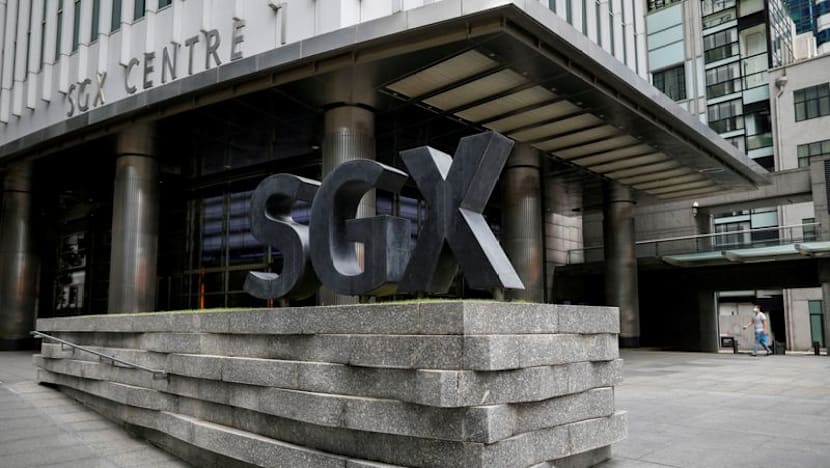
Commentary: Liquidity fix for small and mid-caps on SGX requires more to be done
Key Points
Commentary: Liquidity fix for small and mid-caps on SGX requires more to be done SGX says it should not be faulted if stocks have poor liquidity. It has a point, but the bourse can do more, says former editor and financial journalist Ven Sreenivasan. SINGAPORE: Singapore Exchange (SGX) chairman Koh Boon Hwee stirred up some chatter recently with his comments on liquidity in the local stock market.
Commentary: Liquidity fix for small and mid-caps on SGX requires more to be done
SGX says it should not be faulted if stocks have poor liquidity. It has a point, but the bourse can do more, says former editor and financial journalist Ven Sreenivasan.
SINGAPORE: Singapore Exchange (SGX) chairman Koh Boon Hwee stirred up some chatter recently with his comments on liquidity in the local stock market.
Speaking at an event on Oct 1, he said small- and medium-sized enterprises (SMEs) should not depend on SGX to boost their valuations, as the bourse does not create liquidity nor demand and supply.
Instead, listed firms should proactively communicate their strategies so that investors can better understand their businesses and growth prospects.
“The exchange can’t do that for you, neither can it guarantee that your counter will be liquid,” Mr Koh said.
PERENNIAL PROBLEM FOR SMALL AND MID-CAPS
These comments must have been painful for the many small and mid-cap stocks on SGX that continue to see thin trading despite the broader gains in the local market.
The benchmark Straits Times Index (STI) has surged from around 3,800 at the start of 2025 to well over 5,000 points today. Yet, this has been driven largely by the three local banks, which together account for more than half of the index’s weightage.
This masks the perennial issue that many small and mid-caps, especially those with market capitalisation of below S$200 million (US$156 million), remain rangebound and thinly traded.
Poor liquidity prevents proper price discovery, which in turn makes it difficult for these companies to use their shares as currency to raise capital or engage in meaningful merger and acquisition activity.
Mr Koh is right to say that companies have to take responsibility for raising market awareness of their worth. Good investor relations and communications can yield results but for many SMEs that have put in significant effort such as by holding detailed investor engagement exercises, their shares can still be thinly traded for days at times. Companies like ISOTeam, Nordic Group and Sasseur REIT come to mind.
The bourse has done its part by profiling several of these companies through investor education activities, including seminars.
Wider market revitalisation measures are also under way, such as the S$6.5 billion Equity Market Development Programme (EQDP) which have brought on a burst of liquidity in the local market. Two weeks ago, the Monetary Authority of Singapore appointed the third batch of five asset managers under the programme, placing a total of S$1.45 billion with the likes of Amundi and Franklin Templeton.
But while the EQDP has created primary demand for initial public offerings and share placements, it does not seem to have done much for secondary trading and liquidity on SGX.
Maybank, in an Oct 2 report, noted that while S$5.4 billion of the EQDP funds has since been allocated, it has “yet to meaningfully appear as institutional buying in the market”.
Year to date, the market’s outperformance has been limited to large-cap financials, which are up 42 per cent, while the rest of the STI is flat. The iEdge Singapore Next 50 index, which is SGX’s new mid-cap index, is 12 per cent higher, but still significantly trails the financials, the report said.
PRIVATISATION SHOULD NOT BE A DEFAULT OPTION
In his recent comments, SGX’s Mr Koh also made the point that privatisation could be an option for those whose shares are thinly traded. This echoed what he wrote in his annual letter to SGX shareholders days before that “privatisation is not a tragedy but a rational and often healthy outcome”.
To be sure for such firms, the benefits of going private outweigh the gains of remaining listed, which would involve forking out large compliance costs and management efforts to meet the regulatory requirements.
While there may be no shame in delisting, it should not be a default option.
A listing still carries some prestige value, especially for companies engaged in global business. It raises visibility of the company and lends credibility in the financial and investor arena.
It also enables a company to raise capital more efficiently for acquisitions and strategic transactions. Listed shares can also be valuable for employee reward, remuneration and retention.
MORE CAN BE DONE
In short, the true challenge is to lift overall secondary trading liquidity in SMEs on the SGX, and more can be done.
One possibility is to remove SGX clearing and trading fees to reduce friction costs for proprietary traders and market makers. Encouraging and attracting proprietary trading and market making to the SMEs can help improve the bid–ask spreads – the difference between the highest price a buyer is ready to pay and the lowest price a seller is willing to accept – and improve liquidity and trading activity.
Another could be to encourage SGX member brokerage firms to hire in-house proprietary traders who trade using a firm’s own capital, rather than client funds, and can provide trading liquidity to the market, as was the case during the heydays of the market prior to the 2013 penny stock crash. To be sure, some level of regulatory policing might be needed to prevent the creation of a false market.
Lastly, reporting templates in SGX announcements could be created for half and full-year results where companies can provide more explicit and detailed forward earnings guidance and outlook. These fields in the template can be made compulsory.
Delisting may make sense. But before making this the default way out, other options should be looked at. Investors deserve that much, at the very least.
Ven Sreenivasan is a former editor and journalist who has covered financial markets, economic and corporate news and aviation for more than 30 years.
SGX (ORG)
Ven Sreenivasan (PERSON)
SINGAPORE (LOCATION)
Singapore Exchange (ORG)
Koh Boon Hwee (PERSON)
Koh (PERSON)
Straits Times (ORG)
STI (ORG)
ISOTeam, Nordic Group (ORG)
Sasseur (LOCATION)
EQDP (ORG)
the Monetary Authority of Singapore (ORG)
Amundi (PERSON)
Franklin Templeton (PERSON)
Maybank (ORG)