
Technology
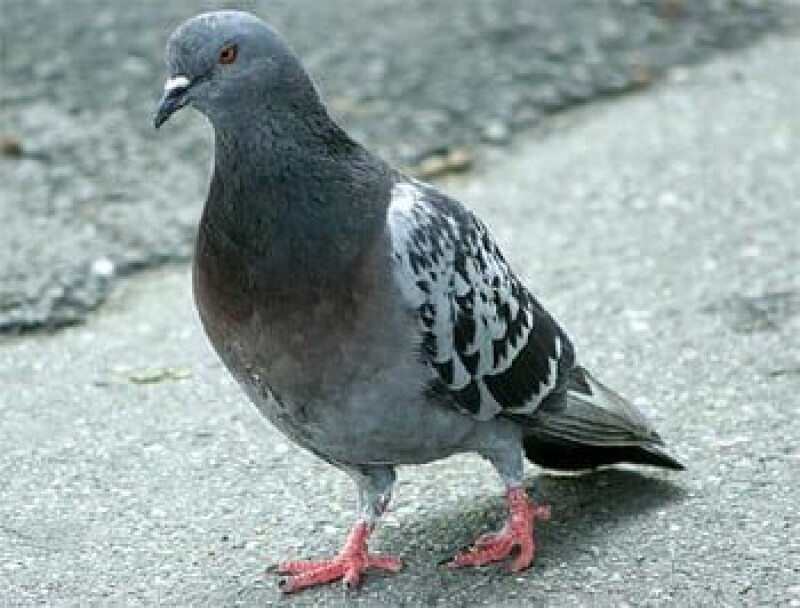
Pigeon-powered internet packet goes under the hammer at Christie's
Key Points
A piece of internet history that once traveled strapped to a pigeon's leg is up for auction at Christie's, where someone has already bid $4,000 for what might be the world's most expensive ping. The unusual lot is a surviving IP packet from a 2001 experiment in which Norwegian Linux enthusiasts decided to find out whether the internet could, in fact, run on birds. The idea dates back to April 1, 1990, when American network engineer David Waitzman published RFC 1149, titled A Standard for the...
A piece of internet history that once traveled strapped to a pigeon's leg is up for auction at Christie's, where someone has already bid $4,000 for what might be the world's most expensive ping. The unusual lot is a surviving IP packet from a 2001 experiment in which Norwegian Linux enthusiasts decided to find out whether the internet could, in fact, run on birds. The idea dates back to April 1, 1990, when American network engineer David Waitzman published RFC 1149, titled A Standard for the Transmission of IP Datagrams on Avian Carriers. Written in the wonderfully dry language of an official internet standards document, the April Fools' proposal outlined how carrier pigeons could transport IP datagrams between locations. It noted that avian carriers could provide high bandwidth, although latency would be another matter entirely. Most people appreciated the joke and moved on. The Bergen Linux User Group (BLUG), however, decided to actually build the thing. On April 28, 2001, the group put RFC 1149 to the test using racing pigeons, printers, and scanners. IP packets were printed as hexadecimal strings on strips of paper, attached to the birds' legs, and flown between two lofts 5km (roughly 3 miles) apart. The results hardly amounted to a ringing endorsement of pigeon-powered networking. Nine packets were dispatched, but only four replies came back, giving the experiment a packet-loss rate of about 56 percent. Still, the network worked, at least in the loosest possible sense of the word. Actual IP packets had traveled through the air without a single router, fiber-optic cable, or telecoms provider getting involved. One of those packets has now resurfaced at auction house Christie's as part of its Fine Printed Books & Manuscripts Including Americana and Science auction. The item is a small scroll of paper measuring just 41mm by 210mm, complete with creases from being rolled up and attached to the pigeon's leg. It is now framed, with an inscription on the reverse identifying it as the property of Waitzman, to whom it was presented in 2002. Christie's initially estimated the packet would fetch between $2,000 and $3,000, but bidding has already reached $4,000. The auction closes on October 13. The auction house describes the experiment as an example of the internet's tradition of the "artful hack," celebrating the technical ingenuity and sense of humor of its early community. There is, of course, something rather fitting about an internet packet that took to the skies 25 years ago now commanding thousands of dollars. Most packets disappear into the ether once they've served their purpose. This one ended up in a frame and is being sold by Christie's. Not bad for something delivered by a pigeon. ®