
Technology
The tech behind your car's adaptive cruise control
Key Points
The tech behind your car's adaptive cruise control A radar sensor and a camera, that’s it. Somewhere in the world right now, a car that nobody's feet are actively in control of has noticed the truck ahead of it is slowing, and eased off by itself. That's adaptive cruise control.
The tech behind your car's adaptive cruise control
A radar sensor and a camera, that’s it.
Somewhere in the world right now, a car that nobody's feet are actively in control of has noticed the truck ahead of it is slowing, and eased off by itself. That's adaptive cruise control. For most of the last three decades, it's a technology that has fundamentally come down to a hidden radar in the car's nose, joined over the last decade or so by a camera behind the rearview mirror.
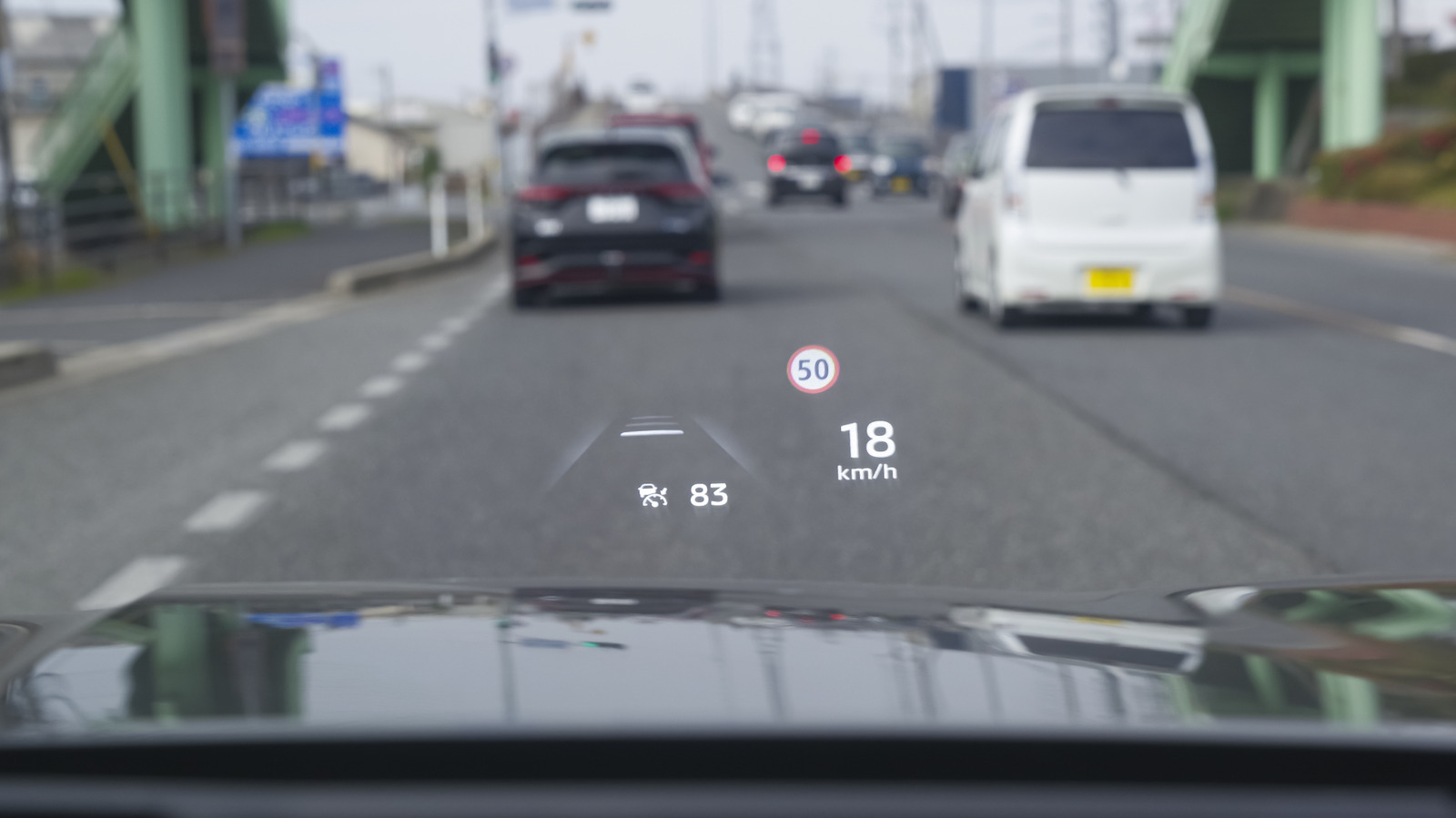
How it works in a Honda is a pretty typical example: A millimeter-wave radar and a camera measure the gap to the vehicle in front, and how quickly that gap is closing. Meanwhile, the car works the pedals to hold whichever of four following distances you've configured the car to maintain.
But since its introduction in the late '90s, adaptive cruise control has come a long way in terms of the software wrapped around it. Ford's BlueCruise, for example, can slow your car ahead of a bend using map data, while Hyundai's Smart Cruise Control studies how you drive so it can copy you.
How a car can see
This comes down to two sensors. Radar is one, sitting low in the front-end of a car, usually behind the emblem or the grille. It works by bouncing a radio signal off the car ahead and timing the echo, which gives it both a distance and closing speed measurement in the dark or fog. Because of this, a lot of owners can self-sabotage their adaptive cruise control by doing things like adding number-plate frames or stickers, or bumping into objects while parking.
The second sensor, a camera, has a much easier life up behind the windshield. One of its jobs is to monitor lane markings, so the system knows which car is the right one to follow. Honda says that's also how the system knows when somebody inevitably cuts you off. Some automakers supplement these sensors with other systems for a more seamless user experience. Ford's BlueCruise, for example, adds GPS maps, The Drive reported after a ride with Ford's engineers.
The hardware in adaptive cruise control systems peaked a while back. Bosch's long-range radar could already "see" about 250 meters back in 2014, and its successor "sees" 530. The more interesting changes since have been in terms of what a car does with the pictures. Honda's Low Speed Follow, for example, taught it to stop behind a queue and pull away again when you tap a button or the accelerator, making it genuinely useful in a traffic jam.
Rain and heavy traffic are still off limits
Despite the advances made with the tech, it's still only useful in favorable driving conditions. Toyota, for example, says its radar cruise control shouldn't be used in rain, fog or snow, on slippery surfaces, in heavy traffic, on sharp bends or down steep hills. The slippery-surface warnings are there because a computer-held throttle would carry the same speed into standing water, which is how a car hydroplanes, and a downpour blinds the hardware, too; Volvo says that its radar's ability to detect the car in front is reduced significantly during a heavy downpour.
Volvo also tells owners not to use adaptive cruise in dense traffic or at junctions, and admits that its sensor can be late detecting a car that suddenly cuts in close ahead. Honda, meanwhile, tells owners to only use the feature on relatively straight roads that will require little braking.
Other systems, such as Ford's Predictive Speed Assist, cut the set speed before a bend and drops it to a new posted speed limit before you get to the sign, while GM LiDAR-scans the roads its Super Cruise expansion adds 750,000 miles of rural roads to. In 2019, Hyundai built an adaptive cruise control that mimics your driving style via machine learning.
What adaptive cruise control won't do
Volvo, in that same manual, says that adaptive cruise control isn't a collision avoidance system, and that it doesn't brake for people or animals, for small vehicles like bicycles, or for oncoming, slow-moving or stationary vehicles; that includes a car sitting stationary in your lane. The system watches moving traffic, so a vehicle that's already stopped or at the back of a traffic jam might not register, meaning that you keep hurtling at speed toward it.
It's alarming then, that drivers have been found to put the wrong kind of trust in these systems. IIHS and MIT's AgeLab gave 20 volunteers cars for a month, half with adaptive cruise alone and half with cruise plus lane centering. By the end of the study, the lane-centering group was more than three times as likely to be playing around with a phone or the console as in week one, and 17 times as likely to drive with both hands off the wheel as at the start. An earlier IIHS study found that drivers with adaptive cruise switched on were 24%(!) more likely to speed on highways, and sped by higher margins when they did.
All this driving complacency has come from what is, at the end of the day, a simple system that manages a gap and a set speed. With that in mind, it's frankly scary to imagine how bad driving habits might manifest when self-driving cars that promise to handle all the driving become a more frequent sight on the road.
[Image text:] 83
50
18
km/h