
World News
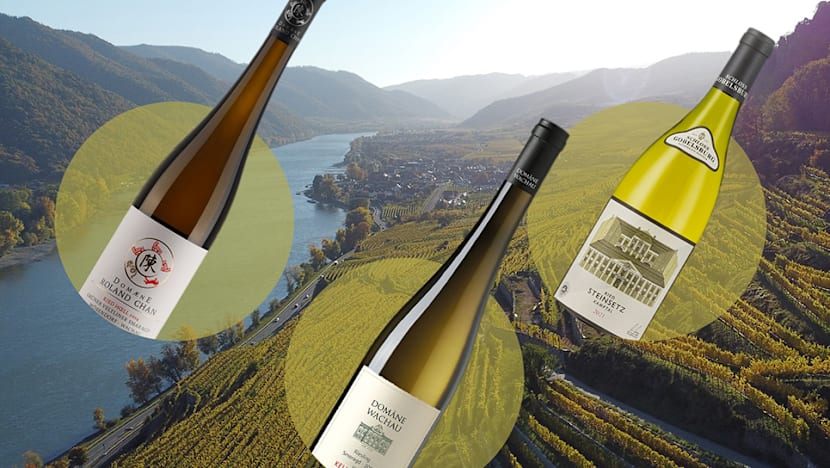
Beyond Chardonnay and Sauvignon Blanc: Discover Austria’s Gruner Veltliner
Key Points
Beyond Chardonnay and Sauvignon Blanc: Discover Austria’s Gruner Veltliner Crisp, peppery and surprisingly versatile, Austria’s signature white grape comes into its own in the vineyards of Wachau and neighbouring Kamptal. The name Gruner Veltliner doesn’t exactly roll off the tongue. By the time you’ve mastered the five syllables, you could have already finished a glass of Chardonnay and poured a second.
Beyond Chardonnay and Sauvignon Blanc: Discover Austria’s Gruner Veltliner
Crisp, peppery and surprisingly versatile, Austria’s signature white grape comes into its own in the vineyards of Wachau and neighbouring Kamptal.
The name Gruner Veltliner doesn’t exactly roll off the tongue. By the time you’ve mastered the five syllables, you could have already finished a glass of Chardonnay and poured a second.
But the wine has a way of making the effort worthwhile. In the glass, Gruner Veltliner can be many things: pale, bright and energetic, with citrus and orchard fruit, white pepper, crisp acidity and steely minerality; or, in its richer, more developed expressions, a commanding wine with real depth and complexity. On wine lists, it sits under Austria and is increasingly championed by sommeliers looking beyond the usual Chardonnay, Sauvignon Blanc and Riesling.
GRUNER VELTLINER’S WACHAU HEARTLAND IS A UNESCO WORLD HERITAGE SITE
The Wachau Valley is an epicentre of Gruner and one of Austria’s greatest wine regions. The Danube river meanders gently through it, flanked by steep hillsides and dry-stone vineyard terraces. Gruner and Riesling both stake their claim. Small villages sit between the river and the hills, while church towers, glorious abbeys and the remnants of castles and forts punctuate the landscape. In summer, apricot trees hang heavy with ripe fruit as cruise boats drift past below. It’s a spellbindingly beautiful riverine stretch.
This summer, I based myself in the postcard-perfect village of Durnstein, in the heart of the valley. From there, I visited three wineries, each offering a different interpretation of Gruner Veltliner and a glimpse of how the region balances history and modernity.
DOMANE WACHAU
Durnstein is home to Domane Wachau, the region’s largest producer, which traces its winemaking roots to the 12th century. It may look like an estate winery, with its inviting reception room and wine display, but it is in fact a cooperative of around 200 Wachau growers, each farming individually owned parcels. They work under winery director and Master of Wine Roman Horvath and chief winemaker Heinz Frischengruber.
“The ownership is super fragmented and highly atomised,” said Horvath, pointing to the 11-hectare Kellerberg vineyard behind us, which is shared among 50 owners. Domane Wachau farms just 2.5 hectares across five owners. “We work with 2,000 plots, exactly demarcated and defined. One vineyard could be two to three rows. The next four rows belong to another grower.”
Among its sites are some of Wachau’s most celebrated vineyards, including Achleiten, Kellerberg and Singerriedel, set on the region’s crystalline gneiss bedrock.
Horvath and Frischengruber work closely with their growers, sharing research on climate change and helping to determine picking dates. The result is a collection of spectacular single-vineyard wines and regional wines in two styles: Federspiel, lighter, lifted, lower in alcohol, and Smaragd – named for the emerald lizard often found on the sunbaked terraces – a riper, more commanding version with gravitas and an impressive ability to age.
“Quality is established in the vineyard,” Horvath said. “Selective hand harvesting, strict quality work in the vineyards, organic farming and micro-vinification give us an extraordinary level of precision.”
SCHLOSS GOBELSBURG
A short drive from the Danube, in Kamptal – neighbouring Wachau but a separate wine region – sits Schloss Gobelsburg. This 75-hectare estate is one of the region’s oldest wineries. It has belonged to the Cistercian Monastery of Zwettl since 1171 and is now managed by Michael Moosbrugger and his wife, Eva, on a long-term lease.
“Gobelsburg is a reflection of the history of Austria,” Moosbrugger said. “Unlike Burgundy, where monastic wine culture secularised after the French Revolution, Austria retained the culture under the Habsburg rulers.” Vineyard ownership in Austria also became highly fragmented over generations, resulting in the patchwork of small holdings that can exist within a single vineyard today.
The winery is housed in a historic castle with a serene, cavernous barrel cellar that draws on Cistercian monastic architecture. On its walls is the old Cistercian saying: “Qui bon vin boit, Dieu voit” – loosely, one who drinks good wine sees God.
Kamptal’s appellation system differs from Wachau’s and works similarly to that of Burgundy. It follows a three-tier hierarchy: regional wines, village wines, and single-vineyard wine, the latter known as Ried. Gobelsburg produces 40 wines across this range, from an entry-level village wine sourced from Langenlois to the single-vineyard bottlings like the Ried Steinsetz Gruner Veltliner and the Ried Lamm – an Erste Lage (first growth) site prized for loess soils that suit Gruner particularly well.
At the winery, Moosbrugger poured a flight ranging from village wines to single-vineyard bottlings. He spoke little about technique, beyond emphasising his preference for Austrian rather than French oak as a more authentic expression of the region. Instead, he returned to drinkability: “Our customers judge us not only on how the wine smells and tastes. It’s a question of how easily we can drink the wine; how fast you reach for the second sip.” By his own logic, each glass was as drinkable as the last.
Between pours, he offered a tip to home drinkers: “You should enjoy these wines either in the beauty of youth in the first two to three years, or after six to eight years. In between, they’re going through puberty-neither young nor mature.”
DOMANE ROLAND CHAN
Not every Wachau winery follows the cooperative model or has centuries of monastic history. Domane Roland Chan offers a very different counterpoint. The boutique winery was founded by Singapore-based, Austrian-born Roland Muksch and his wife, Dr Sharon Chan.
“You can’t buy a winery in Austria. That does not work,” Muksch explained. The family bought a holiday home in the region, integrated with the local community, and sent out feelers. Today, he owns five steep Wachau plots, totalling three hectares.
At the cellar door, we tasted two precise Gruners: a fuller Smaragd-style wine from Ried Holl and a lighter Federspiel from old vines in Ried Bach. Both are single-vineyard wines, aged on their lees and bottled unfiltered.
Muksch then piled us onto his golf cart for the climb up the 300-metre hillside to see the vineyards whose wines we had just tasted. Holl and Bach were treacherously steep, tended by hand from vine to terrace wall. “These are plots which other people would not necessarily like to work because they are all handwork. There are no machines which we can get in, so it’s much tougher work,” he said.
The wines have also picked up awards at the International Wine & Spirit Competition (IWSC). “We just have great terroir,” he said. “We were very lucky to be in one of the best white wine regions in the world, and we were very lucky to get fantastic plots.”
Muksch spent over a decade in Asia and understands Asian gastronomy: “Gruner Veltliner speaks to the Asian palate. It pairs very well with aromatic, beautiful Asian dishes, and the acidity comes through. It has enough weight to basically hold up on its own.”
Back in Singapore, Gruner Veltliner from Wachau and the neighbouring Kamptal and Kremstal wine regions is relatively easy to find by the bottle or glass. Beyond the three producers I visited, look for Emmerich Knoll and FX Pichler from Wachau, and Loimer and Brundlmayer from Kamptal.
Age it, if you can resist. “With some age, it’s not that easy to tell the wines apart in a blind tasting,” Horvath told me. “Gruner picks up this kind of biscuity, nutty aromas with some years of age.”
A 1968 Domane Wachau Gruner Veltliner Kabinett offered compelling proof: still surprisingly vibrant, with notes of honey, beeswax, toast and hazelnut.
[Image text:] WAMANE
H
SENSET
Sauvignon Blanc (LOCATION)
Austria (LOCATION)
Gruner Veltliner (PERSON)
Gruner Veltliner Crisp (PERSON)
Wachau (ORG)
Kamptal (ORG)
Chardonnay (ORG)
Riesling (PERSON)
GRUNER (PERSON)
WACHAU HEARTLAND (ORG)
UNESCO WORLD HERITAGE SITE (ORG)
Wachau Valley (LOCATION)
Danube (LOCATION)
Durnstein (LOCATION)
DOMANE WACHAU (PERSON)