
Education
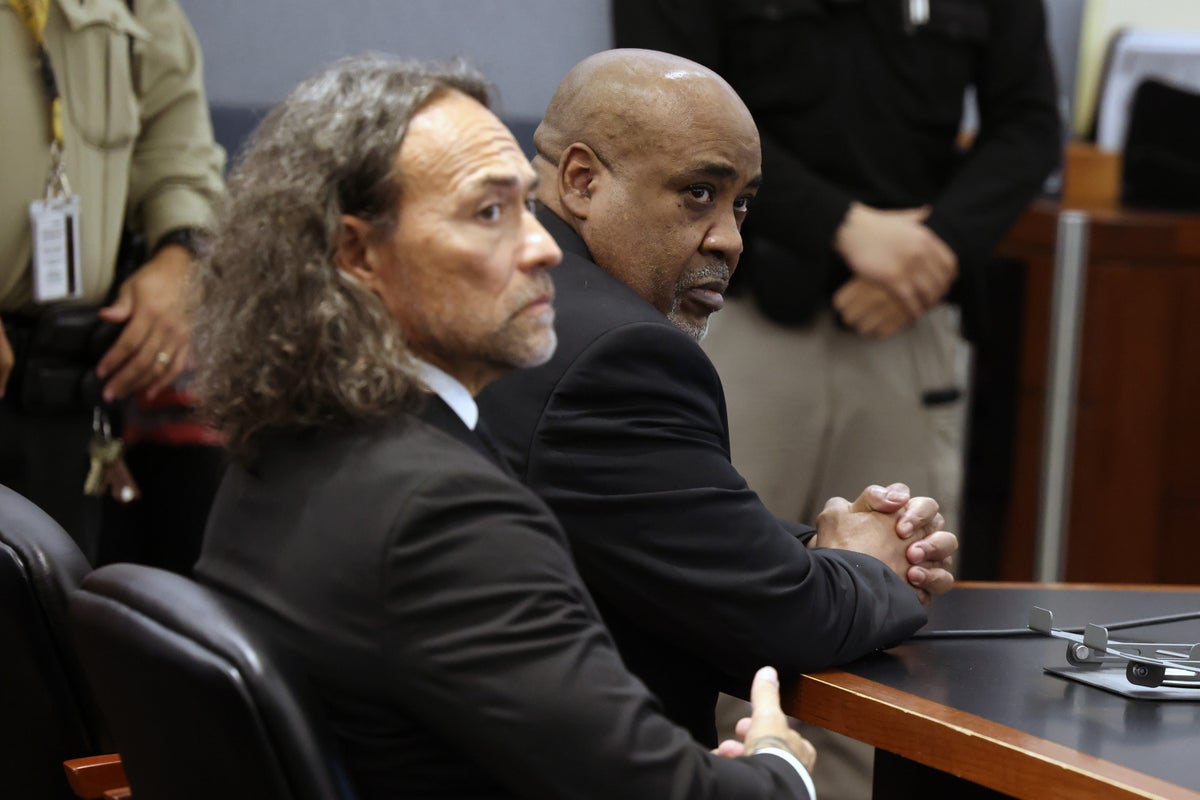
Tupac’s murder mastermind faces life after his own boasts helped convict him
Key Points
Tupac’s murder mastermind faces life after his own boasts helped convict him Duane “Keffe D” Davis is set to be sentenced Tuesday for orchestrating the murder of rap icon Tupac Shakur - Bookmark Become an Independent member to bookmark this article Already a member? Log in The man convicted of orchestrating the murder of rap legend Tupac Shakur is set to be sentenced Tuesday, more than 30 years after the 25-year-old superstar was gunned down in a drive-by shooting near the Las Vegas Strip....
Tupac’s murder mastermind faces life after his own boasts helped convict him
Duane “Keffe D” Davis is set to be sentenced Tuesday for orchestrating the murder of rap icon Tupac Shakur
- Bookmark
Become an Independent member to bookmark this article
Already a member? Log in
The man convicted of orchestrating the murder of rap legend Tupac Shakur is set to be sentenced Tuesday, more than 30 years after the 25-year-old superstar was gunned down in a drive-by shooting near the Las Vegas Strip.
Duane "Keffe D" Davis, 63, faces life in prison without the possibility of parole after a jury found him guilty in August of first-degree murder with the use of a deadly weapon.
Davis, a former leader of the South Side Compton Crips gang, is the only person ever charged in connection with the September 1996 killing, which became one of the most notorious unsolved murders in music history.
His conviction followed years of public statements in which he discussed his involvement in the shooting, including interviews and a 2019 memoir detailing how the attack unfolded.
Prosecutors argued that Davis orchestrated the murder as retaliation for a confrontation involving his nephew and Shakur's entourage just hours earlier.
Although Davis was not accused of firing the fatal shots, prosecutors said he supplied the gun used in the attack.
His attorneys maintained that there was no physical evidence linking him to the killing and portrayed his public confessions as fabricated stories intended to generate publicity and money.
After a weeks-long trial, jurors deliberated for just three hours before returning a guilty verdict.
Davis has said he intends to appeal.
How Tupac Shakur was gunned down in Las Vegas
On September 7, 1996, Shakur was riding in the passenger seat of a black BMW driven by Death Row Records co-founder Marion "Suge" Knight.
The pair were stopped at a red light near the Las Vegas Strip when a white Cadillac pulled alongside them and someone inside opened fire.
Shakur was struck multiple times and died six days later. Knight survived the shooting.
The murder came at the height of Shakur's fame, as the rapper was enjoying enormous commercial success and establishing himself as an actor.
His music, which explored poverty, racism, violence and the struggles of Black Americans, helped establish him as one of hip-hop's most influential figures.
His death at just 25 cemented his status as a cultural icon, while decades of speculation about who ordered the killing fueled one of the music industry's most enduring mysteries.
Investigators long suspected the shooting was connected to a violent rivalry between the South Side Compton Crips and the Mob Piru gang.
Hours before Shakur was shot, he and members of his entourage had assaulted Davis' nephew, Orlando "Baby Lane" Anderson, at a Las Vegas casino.
Davis later acknowledged that he wanted revenge.
In his memoir and interviews, he described riding in the front passenger seat of the Cadillac and passing a gun to someone in the back seat, from where the fatal shots were fired.
He had previously spoken with investigators about the murder under an agreement that protected him from prosecution based on those statements.
But prosecutors later built their case around his subsequent public accounts of the killing.
During the trial, they relied heavily on statements Davis had made to investigators, documentary filmmakers and others.
His defense argued that those accounts were unreliable and that Davis had exaggerated or invented his involvement for financial gain.
The jury rejected that defense.
Tupac's family prepares to confront convicted killer
Shakur's relatives are expected to address the court during Tuesday's sentencing, including his siblings Maurice "Mopreme" Shakur and Sekyiwa "Set" Shakur.
For the family, the conviction marked a long-awaited breakthrough after three decades without a criminal prosecution.
Following the guilty verdict, prosecutor Binu Palal said the case was about far more than the death of a global music star.
To millions of fans, Shakur was an icon, Palal said, "but to the family, Tupac Shakur was a brother, a son, a cousin, a loved person ripped from them 30 years ago."
The prosecutor also condemned Davis for repeatedly discussing his involvement in the murder while Shakur's family continued to grieve.
Palal said relatives had endured years of Davis "bragging about killing someone they loved."
"They loved that man. And the arrogance that Mr. Davis had in expressing his joy in killing that man ultimately was his undoing," Palal said.
Diddy allegations raised during murder trial
The trial also revived longstanding allegations involving Sean "Diddy" Combs, whose name surfaced repeatedly during testimony.
Witnesses said Combs had used members of the South Side Compton Crips to provide security for his Bad Boy Records label.
In his memoir and previous public statements, Davis alleged that Combs had offered him money to kill Shakur and Knight.
Combs has repeatedly denied any involvement in Shakur's murder and has not been charged in connection with the shooting.
The music mogul is serving a four-year prison sentence following his conviction on prostitution-related offenses.
Davis remains the only person charged or convicted over Shakur's killing.
The three other men believed to have been inside the Cadillac, including Anderson, whom Davis identified as the gunman, have since died.
Clark County District Attorney Steve Wolfson said after the verdict that prosecutors did not have sufficient evidence to charge anyone else.
However, he left open the possibility of further action if new evidence emerges.
"But like any other case, if we come into more information, more evidence, we can always consider filing additional charges," Wolfson said.
"But today, we don't believe that's the appropriate move to make."