
Technology
AI could give terrorists access to bioweapons if guardrails fail – MI5 chief
Key Points
AI could give terrorists access to bioweapons if guardrails fail – MI5 chief Sir Ken McCallum gave his annual speech on threats to the UK at Thames House on Tuesday. Bookmark Become an Independent member to bookmark this article Already a member? Log in AI could give terrorists access to bioweapons or generate new pathogens if guardrails on the technology fail, the head of MI5 has said.
AI could give terrorists access to bioweapons if guardrails fail – MI5 chief
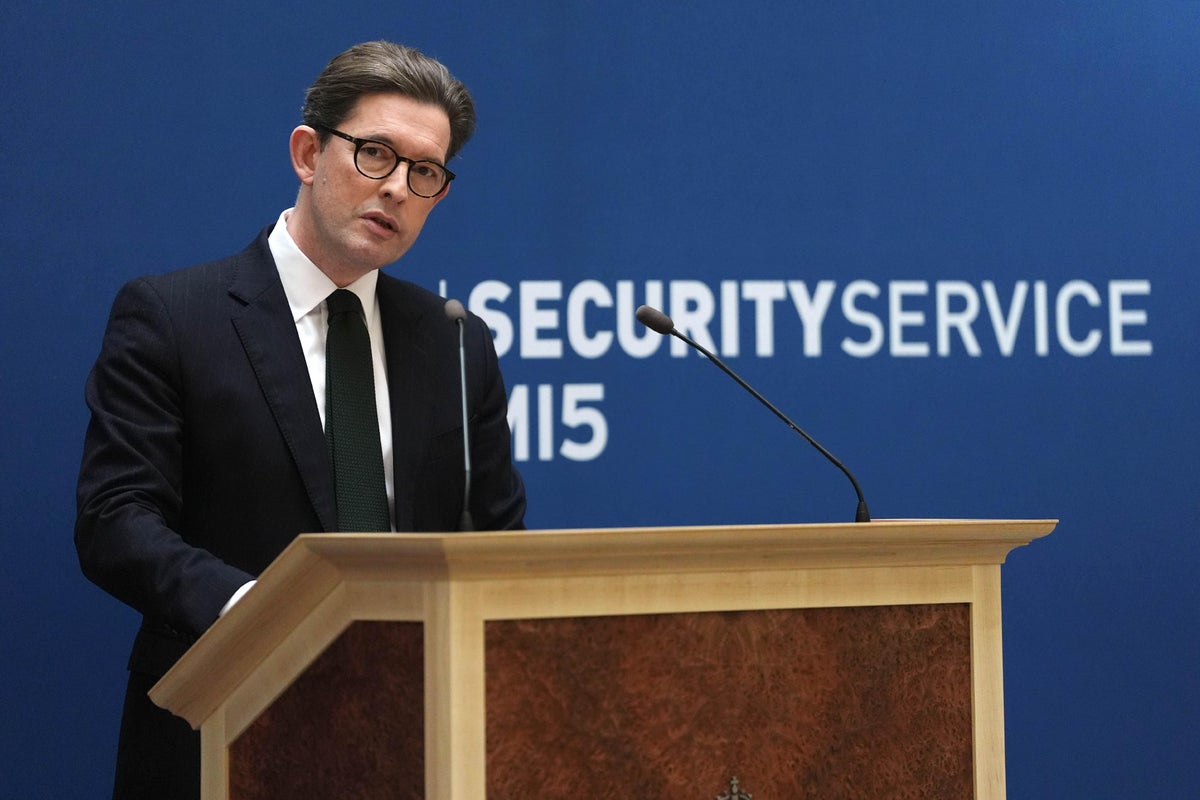
Sir Ken McCallum gave his annual speech on threats to the UK at Thames House on Tuesday.
- Bookmark
Become an Independent member to bookmark this article
Already a member? Log in
AI could give terrorists access to bioweapons or generate new pathogens if guardrails on the technology fail, the head of MI5 has said.
In a speech at Thames House on Tuesday, Sir Ken McCallum gave his annual update on terror threats facing the UK.
The security service chief said among the potential ways that humans could misuse AI, bioweapons are a key concern.
He told audience members: “AI is already supercharging the cybersecurity contest between attackers and defenders.
“It can produce propaganda and radicalising material tailored to the individual.
“We’ve caught terrorists seeking to exploit AI to improve their reconnaissance and attack methodologies, with AI-enabled drones adding a new twist.
“Not yet realised – but the misuse case to which I’d attach greatest weight – is AI’s potential to change the stakes on existing or even new bioweapons.”
He announced the launch of a new AI Threat Assessment Centre, which will be part of MI5 working with the National Crime Agency and the National Cyber Security Centre, which is part of GCHQ.
This will work to assess the potential risks posed by developing AI.
In a question and answer session after the speech, he said: “One concern would be that comparatively low sophistication actors may have a capability uplift in the AI era if these guardrails do not function as intended.
“For the last 25 years I suppose, if you look at where al Qaida was in the 9/11 era, it has long been the case that many terrorists would dearly love to have some kind of capability around chemical or biological or radiological weaponry but that hasn’t been easy for them to achieve.
“One risk, this is not yet manifest, but one risk is that AI could enable dangerous knowledge to get into the hands of people we would all rather didn’t have that knowledge.
“A second and different risk… is the possibility that AI could generate novel pathogens not previously seen.”
He said the potential of AI to out-think humans “deserves the serious attention it is getting”.
“Beyond misuse of AI by human adversaries sit the potential risks posed by AI itself: what those working in the field call the alignment problem.
“Put at its simplest, human history has given us no experience of facing an actor which is smarter than we are, is capable of out-thinking us.
“This is genuinely novel. And deserves the serious attention it is getting, including in MI5.”
Sir Ken also used his speech to issue a rallying cry to the British public to be prepared to play a part in protecting national security and boosting resilience.
He set out three key areas: systemic resilience of the UK’s critical infrastructure, societal resilience in terms of cohesion, and technological resilience.
Sir Ken said: “Today I want to talk directly to the British public.
“When you hear national security don’t just think of Ukraine, subsea cables, armed drones or cyber weapons.
“Think of the place where you live, where you work.
“Think of a flicker in the power grid supplying your home. Think of your local synagogue or mosque having to install enhanced security measures.
“Think of a toxic or manipulative post on social media. Think perhaps of what online algorithms are feeding your teenagers in their bedrooms.
“We all have a stake in our national security.”
He said a “true whole-of-society effort” is needed to build national resilience.
“We’ve seen hackers attacking energy and water infrastructure, including in the US.
“European defence companies targeted by arson attacks and even violent intent. Here in the UK, a destructive cyber attack on an energy generator.
“It would be comforting to think of all this as someone else’s problem. But a hack of your banking app could lock you out of your accounts.
“A drone on an airport runway could leave you stranded far from home. A cyber-attack on your local hospital could delay your treatment.”
Community cohesion has become a national security front line, he said, with Britain’s enemies aiming to sow division.
“Those who mean us harm are trying – often with a helping hand from polarising algorithms – to divide our communities and turn us against one another.
“The sharpest form this takes is lethal violence. We were all horrified by the murder of Ann Widdecombe in July.
“The individual facing trial has no also been charged with terrorist offences against the leader of Reform UK.
“With the prosecution pending, I’m limited in what I can say. But sadly the case is part of a concerning trend of violence targeted at political figures, religious or community groups and more.”
Authoritarian regimes “invest heavily in trying to distort and divide our society, weaponising whatever frictions they notice”, he said.
“Their trolls aren’t geniuses by the way; they only get a foothold if we give them one.”
MI5 will contribute to the review of security arrangements for political figures announced yesterday by Home Secretary Shabana Mahmood.
[Image text:] SECURITYSERVICE
115